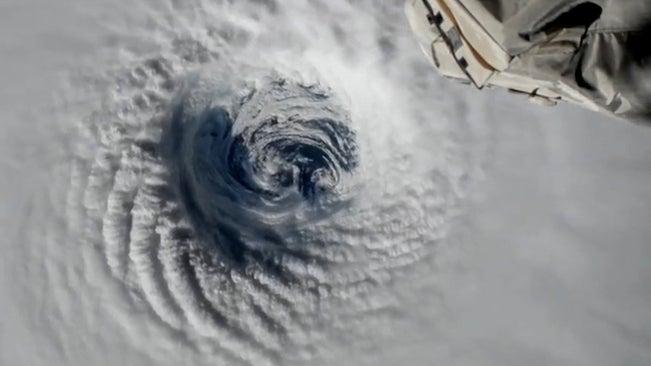
Africa-Press – Eswatini. Eswatini is not out of danger from the predicted intense Tropical Cyclone Freddy.
This was confirmed by Eswatini Meteorological Services Department yesterday during an advisory.
Forecaster Phephisa Sihlongonyane said currently, the centre of the cyclone was at the north of Mauritius, which is about 3 000 to 4 000 kilometres away from the Kingdom of Eswatini. According to Sihlongonyane, for now, tracks of the directions that the storm would take were seen towards Madagascar and Mozambique.
He said the models they were using to monitor the tropical cyclone showed that it might go towards the north of the region, which was the central part of Mozambique along Beira and Nampula. Another model, he said, showed that the tropical cyclone could track south, coming towards Maputo Province.
Reason
“Once it gets there, it means that it would be very likely to hit Eswatini. This is the reason we decided that we would issue the advisory as there was the track, which was likely to come closer to the country,” said Sihlongonyane.
He said they were monitoring Tropical Cyclone Freddy with an eagle’s eye in order to alert the nation, should the populace be affected.
Sihlongonyane said where the tropical cyclone was right now, they could not state whether or not it would indeed affect Eswatini. “It is outside our area of concern but by Wednesday (tomorrow), we would know definitely whether it would come closer to us or not.”
He said although the track of a tropical cyclone was very erratic, the Meteorological Service Department could still issue timely warnings to the public if it was approaching. The forecaster said on Thursday, they would definitely issue alerts. He said the likelihood was that it could hit the coastal area of Mozambique on Friday going into Saturday.
Sihlongonyane said for now, Eswatini was safe, although the cyclone was moving towards the West where the southern African region continent was. He said today going into tomorrow, it was expected to track towards Madagascar and cross getting into the channel and most probably on Friday and Saturday, it would make a landfall in the East Coast of Mozambique.
Sihlongonyane added that what was important were the reporting procedures of warnings when there was tropical cyclone. He said there was a yellow stage, which was a phase where the cyclone was along Madagascar, and that was currently what was being observed. At this stage, Sihlongonyane stated that they looked at the movements and intensity of the tropical cyclone and gave regular updates after every after 24 hours. He said from Madagascar, the tropical cyclone moved further west to the channel called an orange stage alert. This stage, he said, was about 1 000 to 5 000 kilometres from the country. At this stage, he said they would then give regular updates of about twice or three times a day.
Cyclone
According to Sihlongonyane, from there, the cyclone then was suppose to move further west, less than 500 kilometres from Eswatini, which meant it would then be in an area where they would be in a position to issue warnings and alerts every three to six hours because of the close proximity of the cyclone. He said at this point, the tropical cyclone was likely to cause some problems for the region.
The tropical cyclone season in the region is usually from November to April, with the peak frequency in January and February. Only tropical cyclones moving into the Mozambique channel influence Eswatini weather. When this happens, the country usually experiences dry weather over the interior because of the subsiding air surrounding a tropical cyclone.
Only a few move in over or close enough to the land to cause destruction. In such cases, Eswatini may experience destructive winds and the risk of flooding.Significant tropical cyclones that had such an effect were the Tropical Cyclone Domoina, which occurred in January 1984, Imboa in February 1984 and more recently Eloise in January 2021. The effects were not intense, although it triggered heavy rains.
For More News And Analysis About Eswatini Follow Africa-Press