Africa-Press – Ethiopia. The unexpected visit by former Nigerian President Olusegun Obasanjo, the African Union’s high representative for the Horn of Africa, to the Tigray region in northern Ethiopia has once again brought the fragile peace file in the country to the forefront, amid increasing warnings of a potential collapse of the Pretoria Agreement and a return to war that has claimed tens of thousands of lives over two years and left a widespread humanitarian crisis.
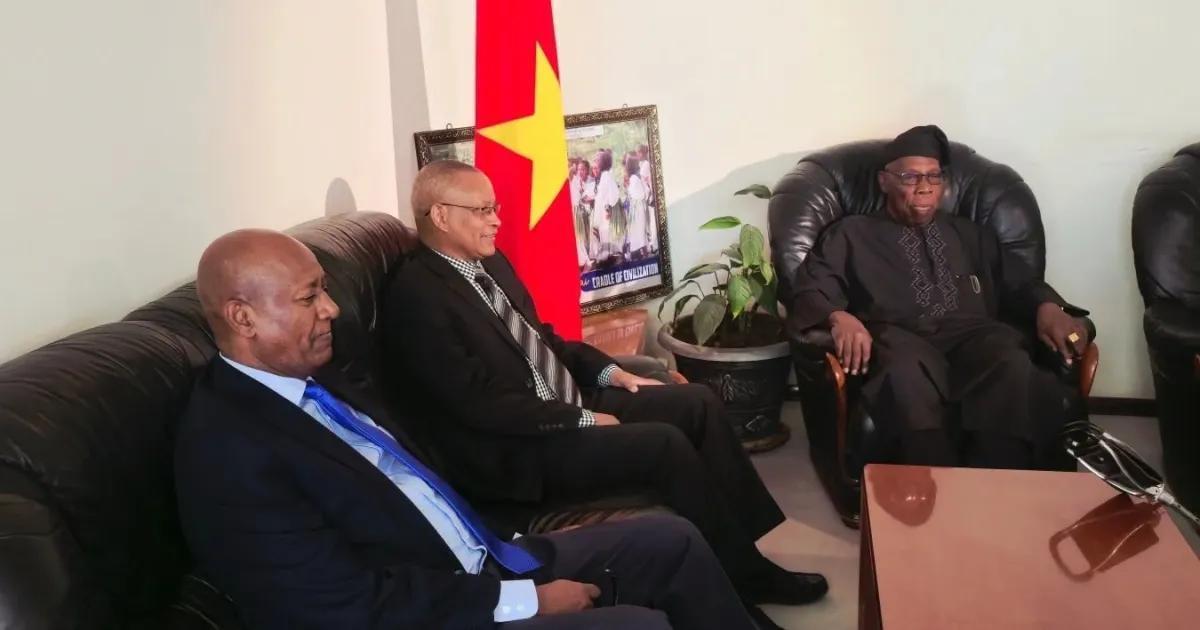
Obasanjo arrived in Mekelle, the capital of Tigray, at the head of an international delegation that included envoys from Australia and the United Kingdom. The visit appeared to be an urgent attempt to contain rising tensions quietly escalating between the Ethiopian federal government and the Tigray People’s Liberation Front, more than two years after the peace agreement was signed that officially ended the war in November 2022.
Obasanjo met with Tigray People’s Liberation Front leader Debretsion Gebremichael, focusing discussions on two main issues: preventing a return to armed conflict and assessing the parties’ commitment to implementing the Pretoria Agreement, which was described at the time as a historic turning point in ending one of the fiercest wars in Africa over the last decade.
However, the relative calm that the region has experienced over the past few months is beginning to face difficult tests, with increasing mutual accusations between Addis Ababa and Tigray leadership regarding the disruption of the agreement’s implementation, in addition to field indicators that observers believe signal a return to military escalation.
Drone Strike Raises Concerns
Obasanjo’s visit coincided with rising security tensions, following local reports of a drone strike near the town of Shiraro in northwestern Tigray last week, targeting an area known as “Tekemati.” Regional authorities accused the federal government of being responsible for the attack, confirming that it resulted in casualties and injuries among Tigray forces and material damage, considering it a direct violation of the Pretoria Agreement and a political and military message carrying serious indicators.
Although there has been no official confirmation from the Ethiopian government regarding the attack, the incident has revived memories of the use of drones during the previous war, when airstrikes played a crucial role in shifting the balance of power in favor of the federal army, supported by external military assistance.
Residents of the region fear that these developments may be a precursor to a new round of war, especially since large parts of Tigray still suffer from the aftermath of the previous conflict, whether in terms of infrastructure, basic services, or the situation of displaced persons.
Mutual Accusations and Military Preparations
Days before Obasanjo’s visit, the Tigray People’s Liberation Front sent a message to the African Union and international diplomatic missions, calling for urgent intervention to address its disputes with the federal government, accusing Addis Ababa of failing to adhere to essential provisions of the peace agreement.
The spokesperson for the front, Mikail Asgedom, confirmed that the restrictions imposed on fuel, trade, and essential supplies have exacerbated the economic and humanitarian crisis in the region, considering that the government is using economic pressures as a means of political leverage.
In contrast, the Ethiopian government has intensified its rhetoric towards the front. The Director of the Ethiopian National Intelligence and Security Service, Ridwan Hussein, and the Prime Minister’s advisor for East African Affairs, Getachew Reda, published a joint article in a local source in English, accusing the Tigray Front of preparing for a new attack against federal forces.
The article pointed to regional meetings and movements in Asmara, Mekelle, and Sudan aimed at coordinating political and military efforts, including recruitment, training, and arming, with direct accusations against Eritrea of providing logistical support for these movements.
These accusations reflect the ongoing mistrust between the two parties, despite the agreement signed two years ago, and indicate that the Tigray issue remains entangled with broader regional calculations, including Ethiopian-Eritrean rivalry, border tensions, and the interests of international powers in the Horn of Africa.
Pretoria Agreement: An Incomplete Peace
Although the Pretoria Agreement succeeded in halting large-scale military operations, it has not been able to fully address the root causes of the crisis. The agreement stipulated the gradual disarmament of Tigray forces, the return of federal institutions, the restoration of essential services, and the preparation of conditions for the return of displaced persons, along with the establishment of a transitional administration in the region.
However, the implementation of these provisions has faced multiple obstacles, the most prominent of which is the ongoing border disputes, especially in areas of western Tigray controlled by forces from the Amhara region, in addition to the slow pace of reconstruction and ongoing disagreements regarding power-sharing and local governance.
Moreover, the issue of transitional justice and accountability for widespread violations during the war has remained a sensitive point of contention, amid mutual accusations of committing war crimes and violations against civilians.
Governance Crisis and Delayed Elections
Obasanjo’s visit also comes amid a rising internal political crisis related to the legitimacy of governance in Tigray. The region was absent from the Ethiopian elections held in early June, reflecting the depth of the political crisis between Mekelle and Addis Ababa.
Debretsion Gebremichael had announced in May that the security and political conditions do not allow for elections to be held within the region, indicating that large parts of Tigray remain outside the control of local administration due to ongoing border disputes.
The crisis has been further complicated after Debretsion was sworn in as president of the region following the reactivation of the Tigray Council, a move not recognized by the federal government, which still considers the interim administration stipulated in the Pretoria Agreement as the only legitimate framework for governing the area.
Observers believe that this overlap between political and administrative legitimacy could become an additional factor in fueling the crisis, especially if accompanied by military escalation or regional interventions.
The Horn of Africa Faces a New Test
Following his meetings with regional leaders, Obasanjo described the discussions as “constructive,” affirming the African Union’s commitment to maintaining peace and stability in northern Ethiopia. He emphasized that sustainable peace is a fundamental condition for the country’s stability and economic growth, noting that the delegation will continue its consultations with federal officials in Addis Ababa.
However, the success of these efforts remains contingent on the ability of the African Union and international partners to move beyond symbolic mediation to exert real pressure on both parties to fulfill their agreed commitments, particularly regarding the protection of civilians, the return of displaced persons, and the cessation of inflammatory rhetoric.
In light of the fragility of the internal Ethiopian situation and the multiple security flashpoints in the country, many fear that any collapse of the Pretoria Agreement could ignite a new wave of violence that would not only affect Tigray but could extend to the entire Horn of Africa, which is already grappling with regional rivalries and intertwined crises.