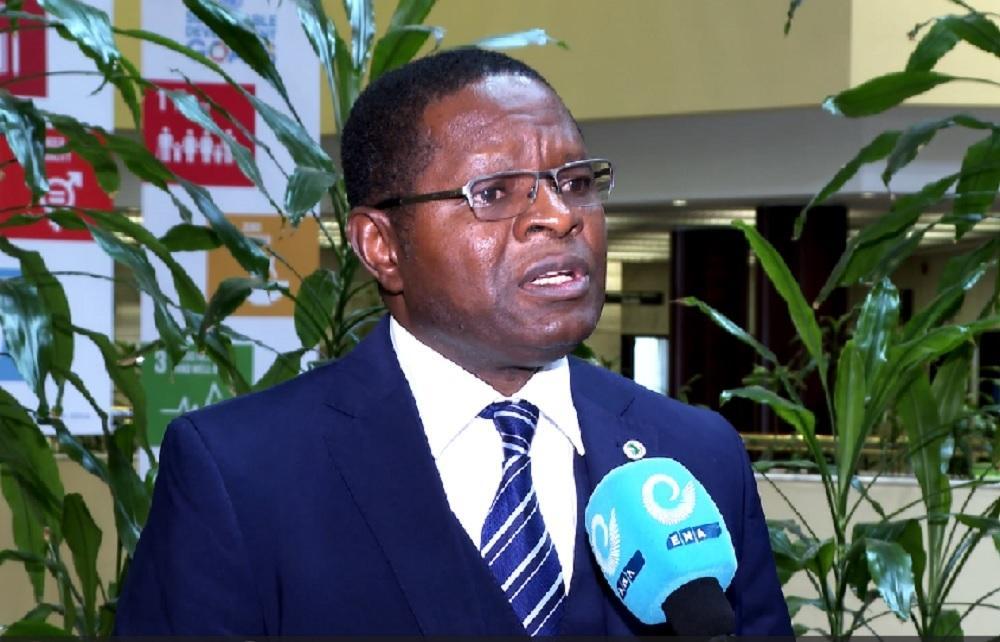
Africa-Press – Ethiopia. African Development Bank’s Chief Economist and Vice President, Professor Kevin Urama said it is imperative for Africa to think carefully about industrial policies to boost and build sustainable and resilient domestic production.
In an exclusive interview, Professor Urama said that African countries that think differently and implement transformative policies accelerate domestic manufacturing capacity and encourage consumption of locally made products.
“It is imperative for Africa and every other country to think carefully about strategic industrial policies to boost domestic production and current domestic demand not just for their own products, but also build sustainability and resilience in domestic regional value chains,” the professor underlined.
Currently, about 20 percent of Africa’s traded products are manufacturing and value added products, and that’s still very low, he said.
“We need to increase that by investing in industrial systemic industrial and strategic policies that allow African countries to build industrial capacity more and more, but then the other side is also addressing the consumption aspect of it,”the chief economist said.
Professor Uramat also stressed that Africans need to think African, produce African, and consume African to encourage indigenous industrial development in Africa.
“Africans need to be able to consume African products, because even if we increase industrial production, and Africans prefer in terms of their economic preferences and demand, and prefer other products, then those products will not find markets,”he elaborated.
Moreover, he stressed that import substitution and value addition is pivotal for accelerating industry in Africa.
Import substitution comes from several ways and one you have to be able to improve the manufacturing and value addition in your own country is, because if you don’t produce what you need, you will import them in order to consume them.
“The more industrial capacity will build and improve our manufacturing value added. We will then be able to have products that we can trade on that are more manufacturing of much value products,” the chief economist elaborated.
Speaking on Ethiopia’s commitment in wheat production, Professor Urama said that this is an area where a tool Ethiopia is actually leading its peers in terms of having moved its production significantly in the past few years.
“The AfDB’s Technologies for African Agricultural Transformation (TAAT) programme has been central in supporting, working together with the government and the people of Ethiopia to create this phenomenal success, where over a few years Ethiopia has become self-sufficient in wheat and it is now looking forward to exporting,” Professor Uramat recalled.
This is actually an example that we are using as a case study for several other countries, the chief economist said, adding “we can roll out the same experience of what Ethiopia has been able to achieve.”
Professor Urama commended the government of Ethiopia for its vision and leadership and consistency in focusing on making agro allied industrialization effort in Ethiopia.
For More News And Analysis About Ethiopia Follow Africa-Press