Africa-Press – Ethiopia. The African Union Commissioner for Agriculture, Rural Development, Blue Economy and Sustainable Environment has called for urgent scaled financing to transform Africa’s agriculture sector.
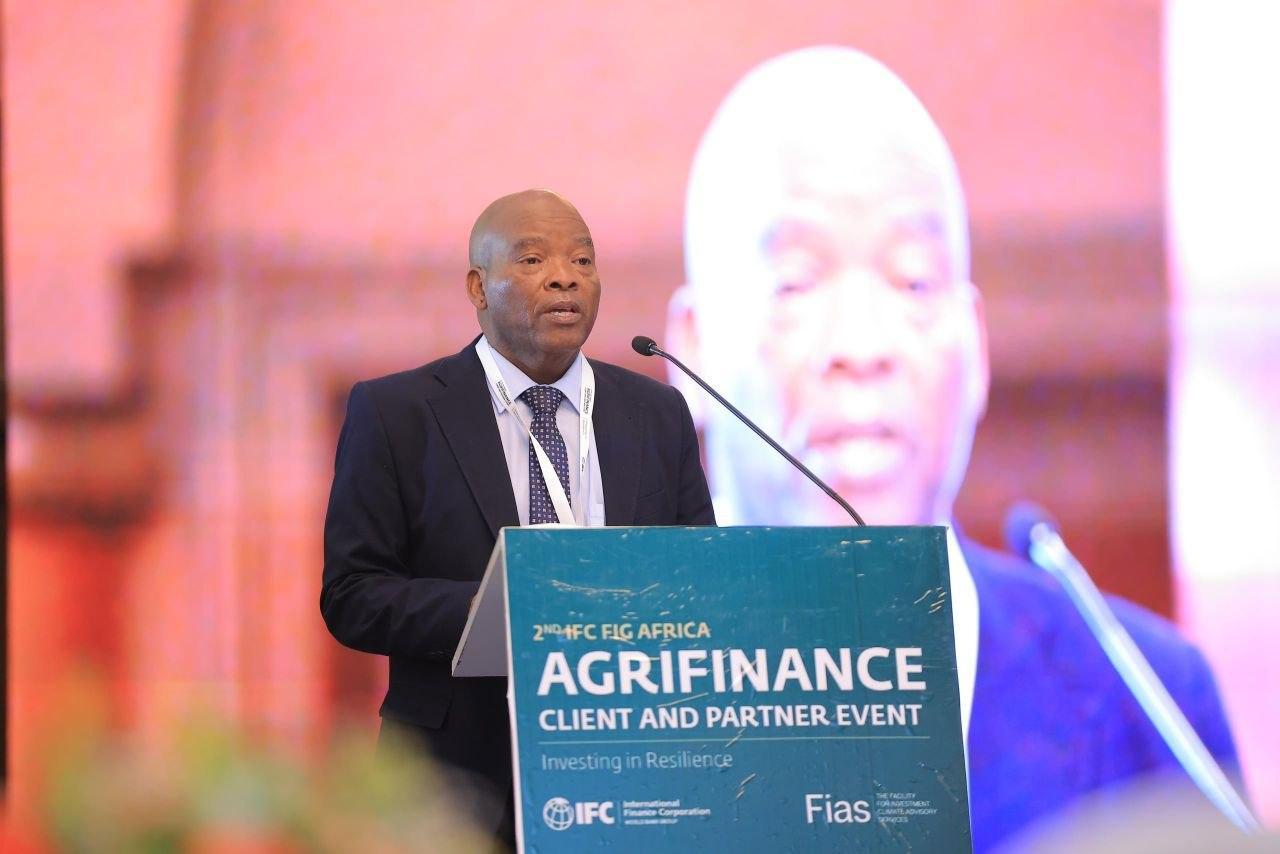
Speaking at the second IFC FIG Africa Agri-Finance Client and Partner conference in Addis Ababa, Commissioner Moses Vilakati said agriculture remains the backbone of African economies, livelihoods and food security.
However, he warned that the sector is increasingly fragile due to climate shocks such as droughts, floods and erratic rainfall, alongside global supply chain disruptions, rising input costs, limited financial services and weak infrastructure.
Vilakati stressed that resilience in agriculture must be “financed, engineered and scaled,” noting that traditional lending models are no longer sufficient to address the sector’s evolving risks.
He called for expanded use of climate-smart credit instruments, index-based insurance, digital and mobile-enabled financing, as well as risk-sharing and blended finance mechanisms.
He also highlighted the importance of warehouse and value-chain financing to improve access to capital and strengthen agricultural systems.
The Commissioner linked these efforts to the AU’s Comprehensive African Agricultural Development Programme (CAADP) Strategy for 2026–2035, which targets a 45 percent increase in agri-food output by 2030, a 50 percent reduction in post-harvest losses and a tripling of intra-African agri-food trade.
He further urged countries to implement targeted pilot projects across regions and enhance collaboration among development finance institutions, governments, regulators, banks, microfinance institutions, agribusinesses, fintech companies and producer organizations.
Highlighting the high cost of food imports, Vilakati noted that some countries spend hundreds of millions of dollars annually on single commodities.
For instance, he pointed to spending on commodities such as rice, suggesting that redirecting even 15–20 percent of such import expenditure into domestic production could significantly accelerate progress.
Vilakati described a vision of an Africa where farmers have access to affordable climate finance, agribusinesses scale effectively and digital solutions provide real-time data for both lenders and producers.
He emphasized that this vision is achievable with the right level of commitment and investment.
Officials from the National Bank of Ethiopia also underscored the importance of strengthening agricultural finance.
Financial Inclusion and Development Director Abraham Fekadu said the conference comes at a critical time as Ethiopia works to sustain its development gains.
He noted that while the financial sector is increasingly contributing to GDP, employment and exports, agriculture has long been underserved by formal financial institutions due to both demand- and supply-side constraints.
These challenges, he said, have slowed modernization and affected food security and economic growth.
Abraham highlighted ongoing reforms by the central bank, including improved regulatory frameworks, land and livestock registries, financing mechanisms and risk management tools.
He also pointed to the launch of a comprehensive agri-finance roadmap aimed at scaling up lending, introducing risk-sharing incentives, integrating data systems and expanding digital financial services.
Despite these efforts, he acknowledged that structural challenges and limited coordination continue to constrain the sector’s growth, reaffirming the government’s commitment to advancing financial innovation and inclusion in agriculture.
Meanwhile, the International Finance Corporation (IFC) emphasized that closing the financing gap requires more than willingness from lenders.
Regional Industry Director Aliou Maiga noted that sectors must also be prepared to absorb financing, stressing the need to remove systemic barriers that hinder investment.
Maiga praised Ethiopian banks for taking early leadership in agri-finance and driving stronger collaboration with development partners.
He also highlighted growing interest in agricultural lending, supported by clearer market solutions and improved coordination among stakeholders.
Reflecting on Ethiopia’s economic trajectory, he described the country as a near-unique success story in Africa, achieving sustained annual growth of 7 to 10 percent over two decades without reliance on extractive industries.
He attributed this progress to long-term investments in infrastructure, including energy, roads and telecommunications, alongside reforms that have encouraged private sector participation.
Maiga concluded that Ethiopia’s combination of growth, reform and opportunity makes it a strong platform for piloting innovative agricultural financing models that could be replicated across the continent.
For More News And Analysis About Ethiopia Follow Africa-Press