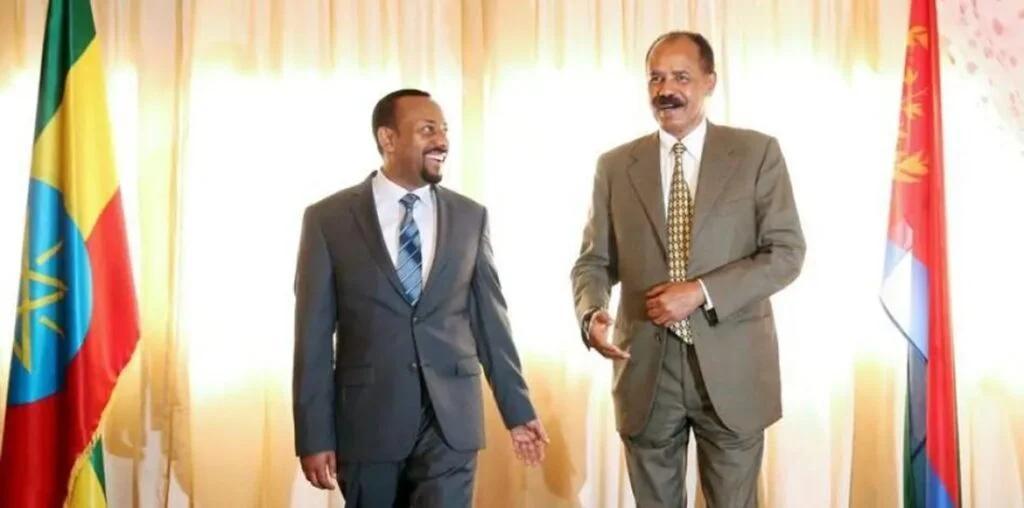
Africa-Press – Ethiopia. December 13, 2025 3 minutes read Addis Abeba — EU and a group of partner countries have renewed calls for respect for sovereignty and territorial integrity in Ethiopia–Eritrea relations, as renewed tensions overshadow the 25th anniversary of the Algiers Agreement, the accord that formally ended the 1998–2000 war between the two neighbors.
In a statement marking the anniversary, the European Union said Ethiopia and Eritrea, with the support of the international community, concluded the Algiers Agreement to end their conflict and establish a demarcated common border.
The EU reaffirmed its full support for the agreement and for the border as determined by the Eritrea–Ethiopia Boundary Commission, urging both countries to respect each other’s sovereignty, independence, and territorial integrity.
It further called on the two sides to resolve any tensions or disputes through peaceful and diplomatic means, stressing that adherence to these principles remains essential for the stability of the wider region.
In a joint statement marking the anniversary, the governments of Canada, Japan, Norway, Türkiye, and the United Kingdom reaffirmed their “longstanding support” for the Algiers Agreement and the principles it upholds, including the borders established by the Eritrea–Ethiopia Boundary Commission (EEBC). The five governments called for respect for the “sovereignty, independence, and territorial integrity of both Ethiopia and Eritrea,” urging that any disputes be resolved peacefully and diplomatically, in the spirit of the 2018 rapprochement between Addis Abeba and Asmara.
The message closely echoed a parallel appeal from the United Nations. On Friday, UN Secretary-General António Guterres called on Ethiopia and Eritrea to reaffirm their commitment to the Algiers Agreement, describing it as a “crucial framework” that has underpinned peaceful relations for a quarter of a century. His remarks, delivered by spokesperson Stéphane Dujarric, came amid growing concern over the trajectory of relations between the two states.
Signed on 12 December 2000, the Algiers Agreement formally ended a two-year war that claimed tens of thousands of lives. It established binding mechanisms for border demarcation and affirmed the sovereignty and territorial integrity of both Ethiopia and Eritrea, stipulating that decisions of the EEBC would be “final and binding.”
Guterres also recalled that seven years ago the leaders of both countries renewed their commitment to peace through a joint declaration, calling it a testament to the enduring value of dialogue and cooperation.
In June 2018, Prime Minister Abiy Ahmed declared that Ethiopia would “fully accept” the Algiers Agreement, reiterating Addis Abeba’s commitment to the EEBC’s “final and binding” rulings.
This year’s anniversary comes against a growing fragile backdrop. The 2018 rapprochement between Addis Abeba and Asmara soured after the signing of the Pretoria peace agreement, which ended the two-year brutal war in the Tigray region during which Ethiopian and Eritrean forces fought alongside each other against Tigrayan forces. Both forces, alongside allied forces from the neighboring Amhara region, are accused of committing crimes against humanity and war crimes against civilians in the Tigray region.
In October this year, Prime Minister Abiy has linked the deterioration of relations with Asmara to developments following the Pretoria Agreement. “We thought that after Pretoria, things would change,” Abiy said, arguing that Eritrea adopted a position that “as long as the TPLF and Tigray were not fully destroyed, lasting peace could not be achieved.” He added: “These are, after all, our own people. We refused to accept the idea of destroying them; we stood firm.”
Abiy has further accused the Eritrean government of “acting as a courier of bullets” and urged it to “be a state, not a smuggler of weapons.” While striking a confrontational tone, he also insisted that the door to cooperation remains open. “Eritreans are our brothers. We have no desire for war,” he said, calling for illegal trade, human trafficking, and arms smuggling to be curbed. “Our request is simple: let the issue be resolved through law and dialogue.”
The international calls to uphold the Algiers Agreement also intersect with renewed debate inside Ethiopia over borders and sovereignty.
More recently, however, Ethiopian officials have escalated the rhetoric around Eritrea’s sovereignty and Ethiopia’s loss of access to the Red Sea, rhetoric that has heightened regional unease.
The latest statements from the U.N. and key international partners underline that the principles of the Algiers Agreement remain under strain 25 years after the accord was meant to lay the foundation for lasting peace between Ethiopia and Eritrea.
For More News And Analysis About Ethiopia Follow Africa-Press