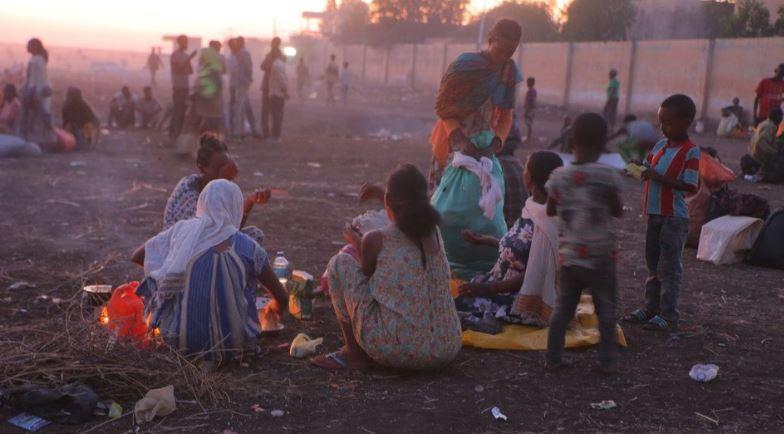
Africa-Press – Ethiopia. Ethiopia’s refugee response is at risk of collapse, with essential services for more than 1.1 million refugees expected to halt within weeks unless urgent funding is secured, the government and United Nations agencies warned.
In a joint statement sent to Addis Standard on 19 December 2025, the Refugees and Returnees Service (RRS), the United Nations High Commissioner for Refugees (UNHCR), and the World Food Programme (WFP) said funding shortfalls have pushed the refugee response “to the breaking point.”
The agencies said Ethiopia, Africa’s second-largest refugee-hosting country, has seen increased arrivals driven by conflict in Sudan and South Sudan and drought in Somalia, while funding levels have sharply declined. They said emergency relief supplies have been reduced by 70 percent in 2025 as a result of the shortfall.
RRS Director General Teyiba Hassen said Ethiopia has continued to meet its protection obligations despite mounting pressure. “This heavy responsibility cannot be borne by the government alone,” she said, adding that resources are overstretched and the strain on host communities is increasing.
According to the statement, WFP cut food rations for 780,000 refugees in October to 40 percent of the standard allocation, providing less than 1,000 calories per person per day. The agencies said only 70,000 newly arrived refugees are currently receiving full rations.
Zlatan Milišić, WFP Representative and Country Director in Ethiopia, said the agency requires US$90 million to sustain operations for the next six months. He warned that without immediate funding, food assistance could be fully suspended, which he said would worsen hunger and malnutrition.
The agencies said malnutrition rates in refugee camps have exceeded 15 percent, while mortality among newborns and children under one year reached 4.7 percent in 2025. They added that admissions for malnutrition have more than doubled compared with the previous year.
WFP analysis cited in the statement projects that reducing rations from 60 percent to 40 percent would increase the number of households consuming poor diets from one in ten to four in ten. The agencies said the likelihood of refugees adopting negative coping mechanisms, including skipping meals, reducing children’s food intake, selling assets, and child labor or early marriage, has increased.
Beyond food assistance, the agencies said water and education services are also affected. Refugees are receiving an average of 12 to 14 liters of water per day, with levels falling to five liters in some locations, below the emergency standard of 15 liters. Funding for 57 primary schools serving 110,000 children has been exhausted, with closures scheduled for 31 December 2025.
The agencies warned that school closures would remove a key protective environment for children, increasing risks of exploitation and abuse.
RRS, UNHCR, and WFP called on international partners to increase funding, urging them to match Ethiopia’s refugee-hosting commitments with sustained financial support to prevent further deterioration of humanitarian conditions.
The Refugees and Returnees Service and humanitarian agencies have repeatedly raised concerns in 2025 over declining international funding for refugee operations as Ethiopia continues to host over 1.1 million refugees.
At the 76th session of the United Nations High Commissioner for Refugees (UNHCR) Executive Committee in Geneva in October 2025, RRS Director General Teyiba Hassen said Ethiopia was hosting new arrivals from South Sudan “without adequate support from the international community.” She told the committee that the growing influx was placing additional pressure on limited resources, public services, and local infrastructure.
The director general said the refugee population had increased from about 700,000 to more than 1.1 million over the past decade, with refugees residing across eight regional states and Addis Abeba. She warned that declining international financing in 2025 had “prevented progress toward durable solutions” and was “threatening the sustainability of refugee protection and assistance” in Ethiopia.
Teyiba described 2025 as “the most difficult year” for refugee financing, warning that declining humanitarian funding amid rising needs was reversing previous gains and straining public services, infrastructure, and host communities.
In August, Addis Standard reported that refugee camps in Gambella were facing reductions in essential services due to funding cuts. Médecins Sans Frontières (MSF) said the suspension of nutrition programs in four of the seven camps put an estimated 80,000 children under five at risk of acute malnutrition.
MSF reported that admissions to therapeutic feeding programs had risen by 55 percent compared to 2024 and that food rations in some camps had fallen below minimum recommended levels.
MSF also reported a surge in malaria cases and said that some non-governmental organizations had withdrawn health services from the region because of funding shortfalls. Regional health officials cited by DW reported cholera outbreaks in early 2025, while the European Union in Ethiopia recorded continued arrivals of refugees from South Sudan during the same period.
For More News And Analysis About Ethiopia Follow Africa-Press