Africa-Press – Ethiopia. The second week of April 2026 stands as a defining snapshot of a world in transition, where global developments unfolded across multiple fronts with striking intensity. From high level diplomacy in Islamabad to widening economic divides and renewed momentum in space exploration led by NASA, international media coverage captured a planet navigating uncertainty with cautious resolve.
It emerged as a pivotal moment in global affairs, revealing a fragile international order shaped by the uneasy coexistence of conflict and cooperation, scarcity and innovation, fear and ambition. Across major outlets such as Associated Press, Reuters and BBC World News, the week was portrayed as a turning point where diplomacy, economic divergence and technological ambition converged.
From mounting tensions in South Asia and the Gulf, particularly around the Strait of Hormuz, to economic strain across developing regions and renewed optimism in global scientific cooperation, narratives reflected a system under pressure yet still capable of moments of shared progress.
The Islamabad Horizon
Islamabad has emerged as an unlikely epicenter of high-stakes diplomacy, hosting indirect negotiations between the United States and Iran at a moment of acute global anxiety. International coverage quickly framed the talks as among the most consequential in recent years, an urgent attempt to navigate the intertwined challenges of nuclear escalation, sanctions relief, and regional stability.
“This is not a breakthrough, but it is a pause from the brink,” a Western diplomat told Associated Press, capturing the cautious realism that shaped early reactions.
Beyond the negotiating rooms, tensions in the Strait of Hormuz amplified the stakes. Reports of mine-clearing operations, intensified naval patrols, and expanded surveillance by multiple powers underscored the fragility of a corridor responsible for nearly a fifth of the world’s oil supply. The message was clear: diplomacy was unfolding under the shadow of potential disruption.
Yet by midweek, a subtle but meaningful shift began to take hold. Analysts on BBC World News observed that “the mere act of sustained dialogue has recalibrated expectations,” signaling that process itself had become progress. Market signals echoed this sentiment. Data cited by the Financial Times pointed to easing volatility in energy markets, with one commodities analyst noting, “The market is pricing in diplomacy, not disruption,” as oil prices retreated from earlier spikes.
After more than 20 hours of negotiations, however, the talks concluded without a formal agreement. Leading the American delegation, JD Vance struck a firm tone: “They have chosen not to accept our terms.” He added, “The bad news is that we have not reached an agreementand I think that is bad news for Iran much more than it is for the United States of America.”
Despite the absence of a deal, the outcome was not without significance. The negotiations succeeded in averting immediate escalation and, crucially, kept diplomatic channels open at a time when miscalculation could carry profound consequences.
Tehran, for its part, tempered expectations and shifted blame toward Washington. Iranian Foreign Ministry spokesman Esmaeil Baghaei argued that progress hinges on “seriousness and good faith,” calling on the United States to avoid what he described as excessive and unlawful demands while recognizing Iran’s “legitimate rights and interests.”
Baghaei noted that discussions spanned a wide range of contentious issues, including the Strait of Hormuz, the nuclear program, war reparations, sanctions relief, and what he termed “the complete end of the war against Iran.” He stressed that the lack of an agreement should not be misconstrued as failure: “No one had such an expectation.”
In the end, the talks delivered neither resolution nor rupture. But something more subtle and, perhaps, just as critical: time.
Energy Markets
Beyond diplomacy, energy markets remained highly sensitive throughout the week. Temporary shipping disruptions in the Gulf and rising insurance premiums for tankers signaled how quickly geopolitical tensions can translate into economic pressure. Analysts noted that global supply chains are increasingly exposed to localized risks. The return of what one expert described as “security priced logistics” has reshaped trade flows, forcing companies to reconsider routes, storage capacity and risk management strategies.
At the same time, major producers signaled readiness to stabilize supply if disruptions worsen, reflecting a delicate balance between market forces and political calculations.
The Economic Schism
While diplomacy dominated headlines, global media simultaneously highlighted a widening economic divide. Coverage from Bloomberg and CNBC pointed to strong earnings in semiconductor and artificial intelligence sectors. “This is not just growth, it is structural transformation,” an industry expert told CNBC, citing rapid integration of AI into manufacturing, logistics, finance and urban systems.
Cities such as New York and Seoul were portrayed as innovation hubs, where investment in data infrastructure and automation continues largely insulated from geopolitical shocks. In contrast, reporting from East Africa and South Asia highlighted rising costs of fuel, transport and food. Coverage by Deutsche Welle and The East African pointed to shipping disruptions and currency pressures as key drivers. “The price of distance has returned,” one regional analyst observed, emphasizing how geography is once again shaping economic outcomes.
The Horn of Africa
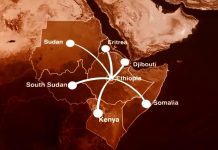
In the Horn of Africa, recent developments are increasingly being interpreted through a long-term strategic lens. Expanding trade relations between Ethiopia and Brazil have drawn particular attention, especially in the areas of agriculture and fertilizer cooperation, where both sides see potential for sustained, mutually beneficial growth.
Infrastructure remains central to the region’s economic vision. Ongoing investments in railway expansion, dry ports, and cross-border transport corridors are being reframed not as isolated projects, but as the backbone of long-term integration and industrial development. Analysts describe this evolving approach as one of “strategic patience,”a deliberate emphasis on stability, diversification, and gradual regional integration amid a volatile global economy.
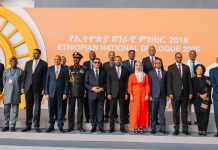
Against this backdrop, Ethiopia has continued to deepen its diplomatic engagement across the continent. This week, Addis Ababa hosted a landmark visit by Burundian President Évariste Ndayishimiye, who also serves as Chairperson of the African Union, underscoring the country’s growing role as a regional diplomatic hub.
During high-level discussions at the National Palace, Prime Minister Abiy Ahmed and President Ndayishimiye oversaw the signing of a series of comprehensive Memoranda of Understanding spanning defense, health, education, water and energy, agriculture, trade, digital identity, and tourism. The agreements reflect a broadening partnership agenda, aimed at strengthening institutional ties while advancing shared development priorities across multiple sectors.
Together, these developments reinforce Ethiopia’s positioning as an anchor state in the Horn of Africa, one that is increasingly leveraging diplomacy, infrastructure, and regional cooperation as pillars of its long-term strategy for growth and stability.
A Unifying Moment
Amid geopolitical and economic uncertainty, space exploration offered a rare moment of shared global focus. NASA continued preparations for Artemis II, the first crewed mission in the Artemis program aimed at returning humans to the Moon. International coverage framed the mission as both a technological milestone and a symbol of cooperation, with contributions from multiple countries and agencies.
“This is about more than exploration,” a mission official said. “It is about demonstrating what humanity can achieve together.” The renewed attention to space exploration has also fueled investment in satellite technology, climate monitoring and deep space research, linking scientific ambition to practical global challenges.
A World of Parallel Realities
As the week concluded, a consistent theme emerged. The global system is increasingly defined by fragmentation, complexity and continuous negotiation rather than decisive outcomes. The Islamabad talks ended without resolution yet avoided escalation. Energy markets fluctuated between risk and reassurance. Economic disparities widened even as technological innovation accelerated. Meanwhile, space exploration highlighted the enduring potential for collective achievement. “We are no longer moving toward a single global order. We are navigating multiple realities at once,” one international affairs commentator observed.
In conclusion, the second week of April 2026 will be remembered not for a single defining event, but for the convergence of many. The stalled diplomacy in Islamabad, the deepening economic contrasts and the unifying ambition of Artemis II together reveal a world in transition. The global trajectory is no longer singular. It is shaped by competing forces of division and cooperation, risk and resilience, disruption and innovation. In this evolving landscape, progress and uncertainty advance side by side, leaving the future open, contested and continuously in motion.
For More News And Analysis About Ethiopia Follow Africa-Press