Africa-Press – Ethiopia. The government of Ethiopia has taken steps to create favorable legal and policy environment and provide comprehensive durable solutions for Somali refugees as part of the comprehensive plan of action, Refugees and Returnees Service (RRS) Deputy Director General Mulualem Desta said.
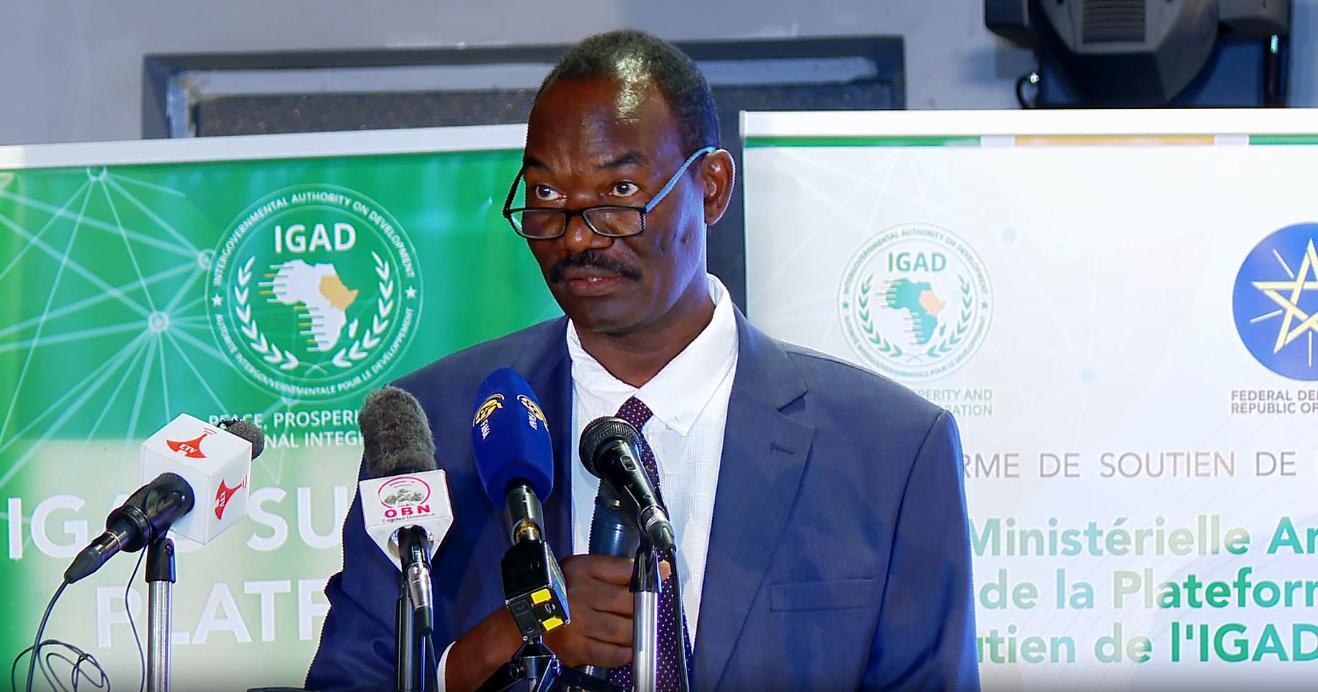
Annual ministerial stock-take meeting of the IGAD support platform and the implementation of the Plan of Action for the Nairobi Declaration underway in Addis Ababa.
The meeting comprises of the technical experts that started today and followed by the Ministerial Meeting on 23rd November 2023.
It is to be recalled that Nairobi declaration on durable solutions for Somali refugees and reintegration of returnees in Somali endorsed on March, 2017.
In his welcoming remark on behalf of IGAD Executive Secretary, Social Development Unit at IGAD, Mohamed Elduma said since 2017, the IGAD member states have pursued a regional approach in finding durable solutions for displaced population and their host communities.
This approach stemmed out of the March 2017 IGAD Special Summit on durable solutions for Somali refugees and reintegration of returnees in Somalia, he added.
The Summit recognized the regional nature of impacts and solutions for both displacement and mixed migration and underscored the need for a strengthened regional framework for integration and cooperation.
Today’s meeting aims to take stock of the progress of the implementation of the Nairobi Declaration and its accompanying thematic declarations, endorse the regional strategy for the Solutions Initiative for the displacement situation in and from Sudan and South Sudan.
The meeting will also review and validate the draft consolidated result framework of the IGAD support platform, validate and endorse the joint regional mega pledges on durable solutions and climate change, and endorse the IGAD’s policy framework on refugee protection.
“As we gear up to the December 2023 Global Refugee Forum, member states are encouraged to present smart pledges that can be translated into actionable initiatives for the benefit of refugees, IDPs, returnees and the host communities in our region,” he added.
Refugees and Returnees Service (RRS) Deputy Director General Mulualem Desta on his part said as part of the comprehensive plan of action, the government of Ethiopia has taken steps to create favourable legal and policy environment and provide comprehensive durable solutions for Somali refugees.
As part of the roll out of Comprehensive Refugee Response Framework (CRRF), the government of Ethiopia has endorsed a proclamation that grants refugees the right to work, freedom of movement, access to secondary, tertiary, technical and vocational, adult and non-formal education and other important rights.
Following the endorsement of the proclamation, the government issued three directives to guide practical implementation and engaged with stakeholders to expand the protection and asylum space for the refugees.
“Since the adoption of the Nairobi declaration, Ethiopia has developed a comprehensive roadmap that outlines key activities and time frames. This roadmap emphasizes the need for legal and policy reforms, technical capacity building, and development Interventions to support refugee self-reliance and livelihood opportunities,” he said.
The government of Ethiopia has also included refugee into the sixth series of Education Sector Development Plan (ESDP VI) and the Education Management information System (EMIS).
Nonetheless, the full realization of my government’s commitment to the Nairobi declaration would require collective efforts and support from the international community, in the spirit of burden and responsibility sharing.
In his remarks, UNHCR Ethiopia Representative, Andrew Mbogori on his part said the scale and complexity of displacement challenges in Africa require urgent action.
Forced displacement presents a major development challenge on the continent, which accounts for some of the world’s most protracted displacement cases with limited prospects for return or self-reliance.
Whereas many countries in Africa have shown exemplary solidarity, they, too, face significant development challenges and resource constraints.
Despite these challenges, member States of the AU enthusiastically supported and participated in the development of the Refugee Compact.
“Our response to refugees is a moral imperative, to alleviate the suffering of other human beings. By working together to address forced displacement, we are committing to build a safer, more peaceful and prosperous world for all of us,” he said.
Several African countries, including Chad, Djibouti. Ethiopia, Kenya, Rwanda Somalia, Uganda, and Zambia, piloted the Comprehensive Refugee Response Framework (CRRF), leading to important policy reforms and innovative programmes.
For More News And Analysis About Ethiopia Follow Africa-Press