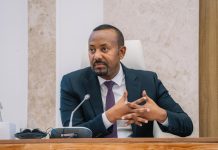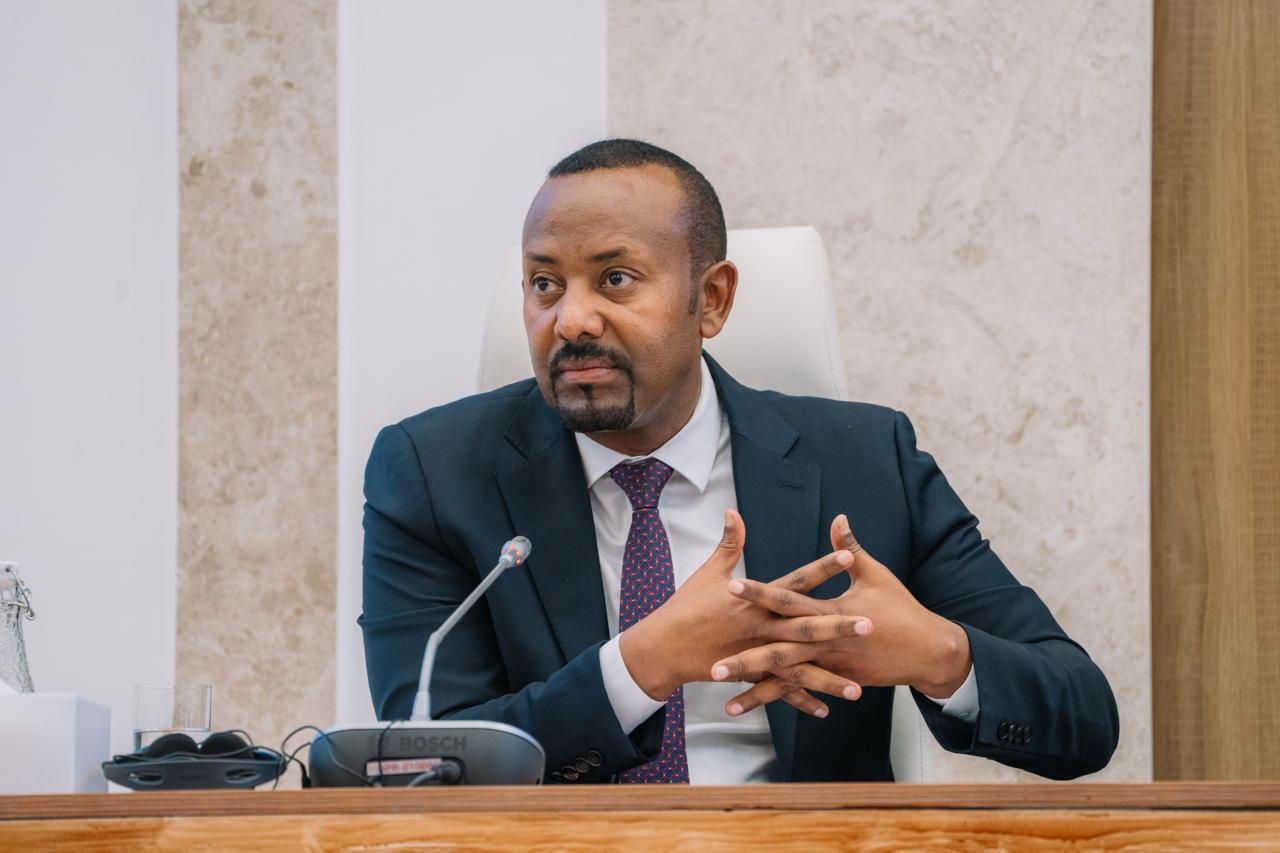
Africa-Press – Ethiopia. Prime Minister Abiy Ahmed said Ethiopia’s inflation rate has declined to 9.7 percent, marking what he described as a “major achievement” following years of sustained macroeconomic and structural interventions.
Responding to questions from members of the House of People’s Representatives today, the Prime Minister outlined the comprehensive measures undertaken to curb inflation and stabilize the cost of living.
Through targeted subsidies and income adjustments, alongside reforms in the supply chain and improvements in essential utilities such as electricity and water services, the government has managed to bring inflation down to single digits for the first time in many years.
“Through subsidies, income increments, and improvements in the supply chain —including work done in electricity and water—Ethiopia has, for the first time, cut inflation to 9.7 percent. This is a significant achievement. It is a major victory,” PM Abiy stated.
However, he acknowledged that further reductions are necessary to ease pressure on citizens.
The Prime Minister identified key sectors where sustained, long-term interventions are underway to address the root causes of inflation and alleviate burdens on citizens.
The first priority, he said, is ensuring adequate food production and efficient distribution.
In this regard, the government has established hundreds of food booths in connection with corridor development projects to improve market access and stabilize prices, he elaborated.
The second critical issue is housing. Stabilizing rental prices, even at a moderate level, would significantly relieve workers and urban residents facing escalating living costs, PM Abiy noted.
“We are actively working on a national initiative to construct 1.5 million housing units over the coming years. While this target is ambitious, it remains modest in relation to the country’s vast housing demand.”
Transport is the third major area of focus, he pointed out, adding that the government is transitioning public transportation systems to operate on natural gas fuel.
“We are removing existing engines from buses we manufacture and installing natural gas-powered engines in the buses we are producing. We are manufacturing buses that run on natural gas,” the Prime Minister elaborated.
He acknowledged that the process has been technically demanding due to shortages of skilled and adequately trained professionals. Converting conventional engines to gas-powered systems initially required considerable time and expertise.
“Although the process has been challenging, in the next six months we will complete the majority of the conversions. Beginning next year, at least in Addis Ababa — and progressively in other cities and regions— we will expand natural gas-powered vehicles that reduce transportation costs,” he said.
Education and school feeding programs also form part of the government’s inflation mitigation strategy, he said.
Expanding feeding programs is essential to protect vulnerable communities and ensure that poverty does not prevent children from attending school, he noted.
Beyond price stabilization, the Prime Minister underscored the importance of raising incomes as a durable solution to inflationary pressures.
“Income grows when the economy grows,” he said, linking macroeconomic expansion with improved household purchasing power.
He added that the combined impact of current reforms and structural measures will gradually ease inflationary challenges.
“The results we have achieved are impressive. But the work that remains is substantial,” the Prime Minister concluded.
The government’s approach signals a shift from short-term stabilization measures toward long-term structural solutions aimed at enhancing supply capacity, reducing systemic bottlenecks, and strengthening citizens’ purchasing power.
For More News And Analysis About Ethiopia Follow Africa-Press