Africa-Press – Ethiopia. Khartoum and Addis Ababa – After months of a silent crisis between Sudan and Ethiopia, tensions have escalated between the two neighbors following mutual accusations of supporting rebel factions on both sides of the border.
The tension has taken a sharp turn after mysterious drones targeted Khartoum Airport and vital sites in the capital and other states. Observers fear that the crisis could evolve into a regional conflict that plunges the Horn of Africa into a cycle of violence.
In August, Sudanese official sources revealed that Sudan is preparing to open a new military front in the east, after neighboring Ethiopia allowed a camp to train Rapid Support Forces and foreign mercenaries to attack the Blue Nile region bordering its territory, according to the Sudanese source.
Sudanese authorities also accused Ethiopia in March of supporting a coalition that includes the Rapid Support Forces and the Sudan People’s Liberation Movement-North with the aim of capturing the border city of Kurmuk in the Blue Nile region.
The Cabinet held an extraordinary session in Khartoum, chaired by Kamel Idris, on Tuesday, where it condemned the “failed aggression carried out by the countries of Ethiopia and the UAE.”
Idris and several officials inspected the situation and arrangements for resuming air traffic, according to a local news agency.
Earlier, the Minister of Foreign Affairs and International Cooperation, Mohiuddin Salem, announced the summoning of Sudan’s ambassador to Ethiopia, Al-Zein Ibrahim, for consultations regarding what he described as the Emirati-Ethiopian aggression with drones on Khartoum International Airport last Monday.
He emphasized during a press conference that “Sudan is capable of responding in kind, and has the legal right to respond in the manner and way it determines. If the situation requires an open confrontation that they seek, we, our army, and our people are ready for that, as the dignity of the Sudanese people is more precious than anything.”
Hostile Flights
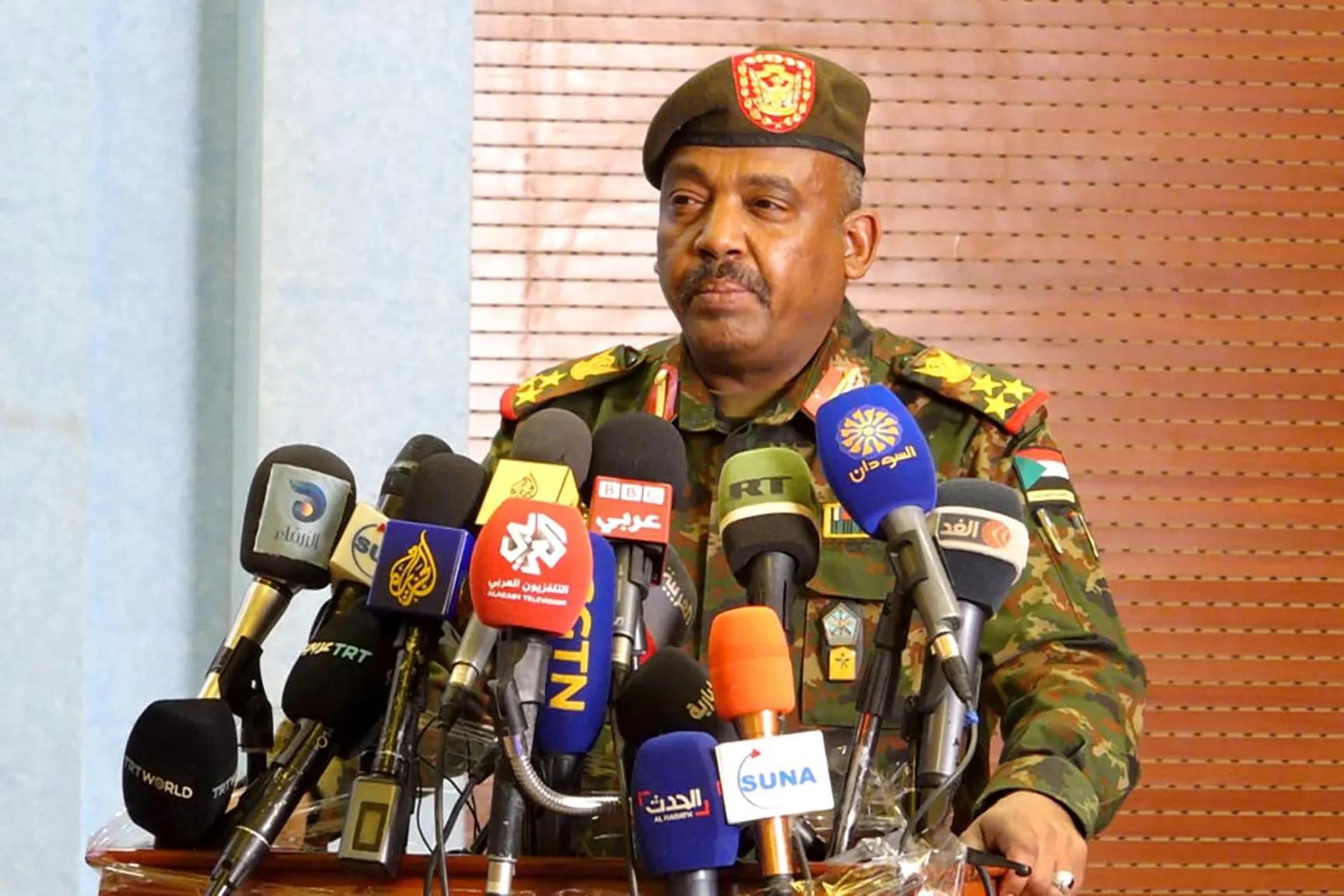
The spokesperson for the Sudanese army, Brigadier General Asim Abdel Wahab, also presented a video recording to journalists, showing repeated attempts of “hostile flights conducted by drones purchased by the UAE, launched from Ethiopian territory since early March.”
He stated that “one of three strategic drones that flew over North Kordofan was shot down, and when contacted with the manufacturer and informed of the serial number, they confirmed that they sold that drone to the UAE.”
These statements come after simultaneous strikes that included targeting the Kenana Sugar Factory, one of the largest industrial complexes in Sudan, in addition to an attack on the village of Al-Kahli in Al-Jazeera state that resulted in the death of Azam Kikel, the brother of the leader of the Sudan Shield Forces fighting alongside the army, along with several family members, as well as other attacks that targeted the capital Khartoum, including the vicinity of Khartoum Airport.
Observers believe that this new escalation puts Sudanese-Ethiopian relations to the test and could lead to an open confrontation that threatens regional security.
Ethiopia Denies Accusations
Ethiopia quickly rejected Sudan’s accusations of targeting Khartoum Airport, considering them “baseless.”
An Ethiopian official source confirmed that the country will not be drawn into any military confrontation with Khartoum, and that military action is not part of its strategy, and it will continue to call for dialogue and peaceful solutions.
Addis Ababa accused the Sudanese armed forces of arming and financing mercenaries from the Tigray Front, who fought a bloody war in northern Ethiopia between 2020 and 2022, facilitating their incursion along Ethiopia’s western border.
An Ethiopian official source revealed that the Sudanese accusations coincided with Ethiopia’s preparations to receive the Sudanese Foreign Minister at the invitation of his Ethiopian counterpart.
He stated that no country can invite an official for a visit and then carry out hostile actions against that country.
The source confirmed that if Ethiopia wanted to intervene in Sudanese affairs, it would have done so in early 2024, when the Sudanese army was at its weakest, noting that Prime Minister Abiy Ahmed announced before parliament that his government refrained from exploiting Sudan’s circumstances to reclaim the Fashaga area.
He added that Ethiopia continued to export electricity to Sudan despite unpaid dues, considering this evidence of Ethiopia’s commitment to good neighborliness.
Multiple Tools of Influence
Writer and editor-in-chief of “Al-Shaab,” Osama Abdel Majid, believes that Sudan has exercised a degree of restraint towards Ethiopia and several neighboring countries to avoid escalation and maintain regional stability.
The writer explains that Sudan possesses multiple diplomatic, security, and intelligence tools of influence, along with a high capacity to destabilize Ethiopia’s security and stability, but prefers to use political means and dialogue. He also notes that the relationship with Ethiopia is complex and intertwined, involving considerations of national security, economic interests, border issues, and water resources.
The most suitable option for managing relations with Ethiopia, according to writer Abdel Majid, is to escalate through media, diplomatic, and legal channels, without being drawn into expanding the conflict militarily, which could open new regional fronts that do not serve national interests, as such provocations aim to distract internal efforts and chart a new path for war that benefits other parties.