Africa-Press – Gambia. An estimated 30 to 50 per cent of cancer cases in The Gambia can be prevented through awareness, lifestyle changes and early detection, the Programme Manager of the National Cancer Control Programme (NCCP), Dr. Kebba S. Bojang, said on Monday.
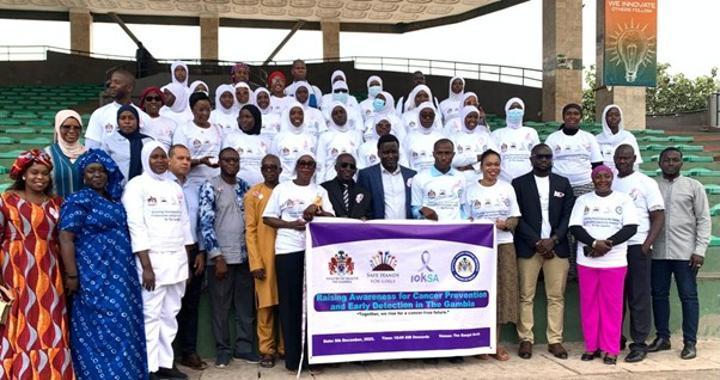
Dr. Bojang made the remarks at the launch of a cancer awareness campaign jointly organised by the NCCP and Save Hands for Girls at Arch 22 in Banjul.
He said the NCCP’s priority is to improve public knowledge about cancer through sensitisation, regular check-ups and screening, and encouraging healthier lifestyles.
“The key components of this initiative – raising awareness for cancer prevention, early detection through regular check-ups and screening, and adopting healthier lifestyles – form part of our core intervention strategies,” he noted.
According to him, preventing cancer remains the most effective approach. “The easiest way to fight cancer is to stop it before it starts,” he said, stressing the need for nationwide awareness.
Dr. Bojang said prevention efforts must be complemented by early detection linked to effective treatment. He cited avoiding tobacco use, reducing alcohol consumption and maintaining a healthy diet as key preventive measures.
He added that early screening can help identify pre-cancerous conditions and cancers at early stages, when treatment outcomes are more successful.
The NCCP manager warned that cancer is now a global health challenge, underscoring the need for sustained public sensitisation.
A representative of civil society, Dr. Lamin Jaiteh, told the gathering that cervical and breast cancers are increasing among Gambian women and remain the most common forms in the country.
He noted that unlike many parts of the world where breast cancer typically affects women over 50, many cases in The Gambia are diagnosed in younger women “in their prime years,” when they are raising families and contributing actively to the economy.
“For many Gambian families, cancer is still wrapped in silence, fear and stigma,” he said, adding that women often delay seeking medical help due to embarrassment, fear of abandonment, or lack of knowledge about warning signs such as painless lumps, unexplained bleeding, weight loss and persistent fatigue.
Dr. Jaiteh said community-based organisations, youth groups, faith leaders, survivors’ networks and women’s associations play a critical role in building trust and encouraging early reporting.
Closing the ceremony, the Chief Medical Director of Edward Francis Small Teaching Hospital, Dr. Mustapha Bittaye, thanked participants and called for collective action in the fight against cancer.
For More News And Analysis About Gambia Follow Africa-Press