Africa-Press – Gambia. Just days before the kickoff of AFCON 2025, which will be hosted by Morocco (December 22, 2025 – January 18, 2026), the Atlas Lions have already given the Moroccan people a moment of immense pride.
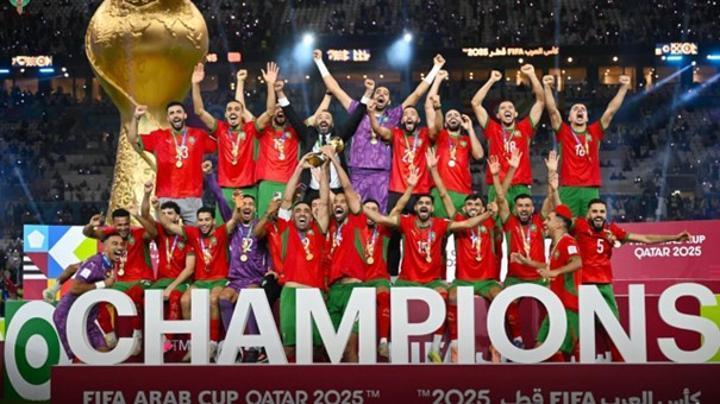
Yesterday, Thursday, the national team overcame Jordan (3–2 after extra time) in a thrilling final held in Qatar, securing their second Arab Cup title.
An emotionally charged victory, symbolizing a combative, talented team ready to write a new chapter in Moroccan football history. Midfielder Oussama Tannane, who plays for Umm-Salal SC in the Qatari first division, scored an extraordinary goal with an exceptional strike from his own half in the 4th minute. The Jordanian goalkeeper, caught too far forward to prevent this opening goal, could only watch the ball sail in.
In three days, the Atlas Lions will begin the Africa Cup of Nations on home soil—this time facing national teams fielding their best players from the top leagues.
Moroccan football has achieved unprecedented success on the global stage in recent years, crowned by a historic victory at the U20 World Cup in Chile last October, where the young Atlas Lions triumphed 2–0 against Argentina in the final. This remarkable accomplishment adds to a series of impressive performances, including the senior team’s memorable semi-final run in the 2022 FIFA World Cup and consistent excellence in continental competitions.
This sustained success is the direct result of a profound and long-term transformation of Moroccan football, driven by the visionary leadership of His Majesty King Mohammed VI. For years, a comprehensive national strategy has been implemented, focusing on talent development, infrastructure modernization, and structural reform.
The cornerstone of this strategy is the renowned Mohammed VI Football Academy, a world-class institution dedicated to nurturing elite players. This has been supported by substantial investments in cutting-edge training facilities, stadiums, and youth programs across the country, alongside the professionalization of coaching, sports science, and club management.
Therefore, Morocco’s current standing in world football—from youth to senior levels—is not a coincidence but the fruit of a deliberate, long-term vision. It represents a successful model where royal commitment, strategic planning, and sustained investment have converged to build a formidable football nation.
For More News And Analysis About Gambia Follow Africa-Press