
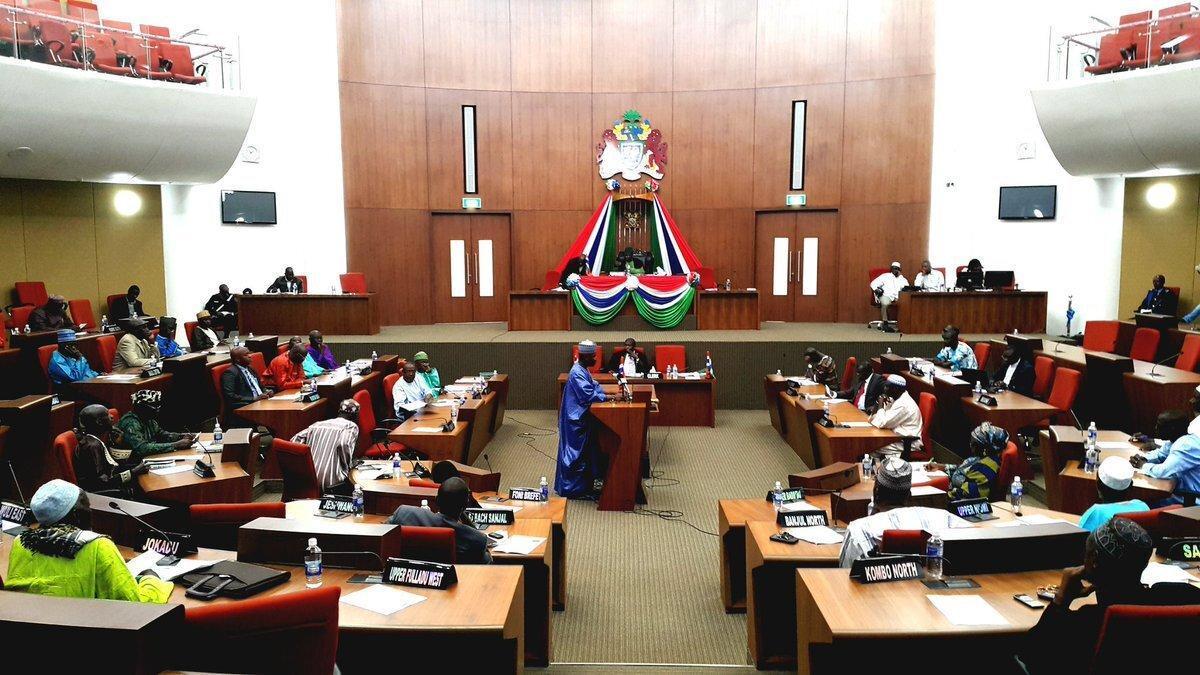
Africa-Press – Gambia. In a democracy, the right to contest elections should never depend on the weight of one’s wallet. It should depend on one’s ideas, integrity, and ability to represent the people. Yet in The Gambia today, the path to leadership is becoming increasingly inaccessible, not because people lack ambition or public trust, but because they lack money.
Let us start at the beginning.
In 2015, under the regime of former President Yahya Jammeh, the Elections (Amendment) Act was passed, introducing steep increases in nomination deposits. The amounts were raised; for Presidential Aspirants, from D10,000 to D500,000; for Parliamentary Aspirants, from D5000 to D50,000; for Mayors and Chairperson, from D2500 to D50,000; and for Councillors, from D1250 to D10,000 respectively. When the Coalition, in 2016, took the reigns of power, the first thing they did was to revise this and return the figures to its original status before 2015. The rationale was simple: the amount was symbolic enough to discourage unserious candidates but not so high as to deny genuine aspirants a fair chance. It was a reasonable threshold, one that reflected the economic realities of most Gambians.
But ten years on, something has gone dangerously wrong.
Today, the proposed deposit fee for National Assembly elections stands at D150,000; a jaw-dropping 3,000% increase. Presidential Aspirants are expected to pay D1 million, while those running for Mayor or Chairperson must fork out D250,000, and Councillors D50,000.
To put this in perspective: D150,000 is three years’ salary for many low-income Gambians. For the youth, women, teachers, and other cohorts of our commuinty; the very people who live the struggles of ordinary citizens, these figures are simply unattainable. The result? Democracy is being sold to the highest bidder.
Electoral deposits are meant to deter unserious candidates from flooding the ballot. This is not unique to The Gambia, many democracies use deposit systems. However, the amount must be proportionate, and the system must not be so expensive that it excludes citizens on the basis of class or geography.
By dramatically raising the deposits, The Gambia risks replacing political competition with economic gatekeeping. The electoral field, instead of being a marketplace of ideas, is becoming a playground for the rich and politically connected.
This undermines the very spirit of Section 26 of the 1997 Constitution of The Gambia, which guarantees every citizen the right to participate in the conduct of public affairs, including the right to be elected to public office.
When deposit fees are higher than most Gambians’ life savings, that right is denied.
Let us ask ourselves some difficult questions:
1. How many current National Assembly Members could have afforded D150,000 when they first contested?
2. Can a young activist from URR or a community organizer from Kiang raise this kind of money without being co-opted by elite interests?
3. How many women and people with disabilities, already underrepresented in our politics, will be able to contest under this new regime?
The answer is grim.
These inflated fees do not just block individuals, they undermine representation. They make Parliament less reflective of the people it serves. They drain our politics of fresh ideas, youthful energy, gender diversity, and grassroots voices. They feed a system where only the wealthy, or those backed by the wealthy, can lead.
This is not democracy. This is oligarchy in disguise.
Let us also consider political parties. The Gambia has over a dozen registered political parties. Most of them operate on shoestring budgets.
To sponsor a candidate in all 53 constituencies, a party would now need over D7.9 million in deposits alone, excluding campaign logistics. This means only parties with deep donor connections, often foreign or elite-based; will be able to field full slates. Smaller parties, youth-led movements, and issue-based candidates are automatically sidelined.
This is not only undemocratic, it erodes the foundation of a vibrant, multi-party democracy.
It is deeply concerning that the increment for deposit fees was advanced by the National Assembly, reportedly dominated by political partisan wills. This raises serious ethical questions: Are the same people who benefited from accessible elections now working to shut the door behind them?
This reeks of political entrenchment, an attempt to turn public office into a private club. It is the weaponisation of economic privilege to retain power, and it must be challenged.
The Gambia belongs to all of us and Democracy is not just about voting. It is about participation, representation, and accountability. If you block poor people from contesting elections, you are not building democracy, you are destroying it.
Let us be clear: The Gambia does not lack capable leaders. It lacks affordable access to leadership. And if we don’t fix that, we risk creating a system where the only people who govern are those who can afford to buy power, not those who deserve to wield it.
If we truly believe that sovereignty belongs to the people, then we must make it possible for the people; all people, rich or poor, to have a fair chance to lead.
Democracy should be a bridge, not a barrier.
You can see how this popup was set up in our step-by-step guide: https://wppopupmaker.com/guides/auto-opening-announcement-popups/
Your personal data will be processed and information from your device (cookies, unique identifiers, and other device data) may be stored by, accessed by and shared with 142 TCF vendor(s) and 68 ad partner(s), or used specifically by this site or app.
Some vendors may process your personal data on the basis of legitimate interest, which you can object to by managing your options below. Look for a link at the bottom of this page or in the site menu to manage or withdraw consent in privacy and cookie settings.
Consent
Manage options
Data preferences
You can choose how your personal data is used. Vendors want your permission to do the following:
TCF vendors
Cookies, device or similar online identifiers (e.g. login-based identifiers, randomly assigned identifiers, network based identifiers) together with other information (e.g. browser type and information, language, screen size, supported technologies etc.) can be stored or read on your device to recognise it each time it connects to an app or to a website, for one or several of the purposes presented here.
Advertising presented to you on this service can be based on limited data, such as the website or app you are using, your non-precise location, your device type or which content you are (or have been) interacting with (for example, to limit the number of times an ad is presented to you).
Information about your activity on this service (such as forms you submit, content you look at) can be stored and combined with other information about you (for example, information from your previous activity on this service and other websites or apps) or similar users. This is then used to build or improve a profile about you (that might include possible interests and personal aspects). Your profile can be used (also later) to present advertising that appears more relevant based on your possible interests by this and other entities.
Advertising presented to you on this service can be based on your advertising profiles, which can reflect your activity on this service or other websites or apps (like the forms you submit, content you look at), possible interests and personal aspects.
Information about your activity on this service (for instance, forms you submit, non-advertising content you look at) can be stored and combined with other information about you (such as your previous activity on this service or other websites or apps) or similar users. This is then used to build or improve a profile about you (which might for example include possible interests and personal aspects). Your profile can be used (also later) to present content that appears more relevant based on your possible interests, such as by adapting the order in which content is shown to you, so that it is even easier for you to find content that matches your interests.
Content presented to you on this service can be based on your content personalisation profiles, which can reflect your activity on this or other services (for instance, the forms you submit, content you look at), possible interests and personal aspects. This can for example be used to adapt the order in which content is shown to you, so that it is even easier for you to find (non-advertising) content that matches your interests.
Information regarding which advertising is presented to you and how you interact with it can be used to determine how well an advert has worked for you or other users and whether the goals of the advertising were reached. For instance, whether you saw an ad, whether you clicked on it, whether it led you to buy a product or visit a website, etc. This is very helpful to understand the relevance of advertising campaigns.
Information regarding which content is presented to you and how you interact with it can be used to determine whether the (non-advertising) content e.g. reached its intended audience and matched your interests. For instance, whether you read an article, watch a video, listen to a podcast or look at a product description, how long you spent on this service and the web pages you visit etc. This is very helpful to understand the relevance of (non-advertising) content that is shown to you.
Reports can be generated based on the combination of data sets (like user profiles, statistics, market research, analytics data) regarding your interactions and those of other users with advertising or (non-advertising) content to identify common characteristics (for instance, to determine which target audiences are more receptive to an ad campaign or to certain contents).
Information about your activity on this service, such as your interaction with ads or content, can be very helpful to improve products and services and to build new products and services based on user interactions, the type of audience, etc. This specific purpose does not include the development or improvement of user profiles and identifiers.
Content presented to you on this service can be based on limited data, such as the website or app you are using, your non-precise location, your device type, or which content you are (or have been) interacting with (for example, to limit the number of times a video or an article is presented to you).
Your data can be used to monitor for and prevent unusual and possibly fraudulent activity (for example, regarding advertising, ad clicks by bots), and ensure systems and processes work properly and securely. It can also be used to correct any problems you, the publisher or the advertiser may encounter in the delivery of content and ads and in your interaction with them.
Certain information (like an IP address or device capabilities) is used to ensure the technical compatibility of the content or advertising, and to facilitate the transmission of the content or ad to your device.
The choices you make regarding the purposes and entities listed in this notice are saved and made available to those entities in the form of digital signals (such as a string of characters). This is necessary in order to enable both this service and those entities to respect such choices.
Information about your activity on this service may be matched and combined with other information relating to you and originating from various sources (for instance your activity on a separate online service, your use of a loyalty card in-store, or your answers to a survey), in support of the purposes explained in this notice.
In support of the purposes explained in this notice, your device might be considered as likely linked to other devices that belong to you or your household (for instance because you are logged in to the same service on both your phone and your computer, or because you may use the same Internet connection on both devices).
For More News And Analysis About Gambia Follow Africa-Press