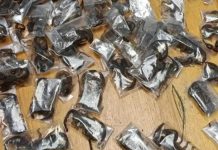

Africa-Press – Gambia. Every few months, Gambians regularly experience cement shortages. As I write this piece at the end of November, the country is undergoing yet another episode of cement shortage. This means that large numbers of construction projects are being delayed. In addition, employment opportunities for workers are obstructed, and businesses that rely on cement retailing are losing revenue.
This sort of cement crisis has been happening so frequently that it has ceased to be a news item. This is quite unfortunate. There are few things more important for housing and infrastructure than cement. Therefore, the accessibility and affordability of such an item should be a major government priority.
But instead, the Adama Barrow regime has decided to prioritize the interest of one business (Jah Oil) at the expense of the national interest. Specifically, this is a businessman that is personally and politically connected to President Barrow.
It is important to remind Gambians why we continue to suffer through multiple cement shortages. The reason is simple: the government of Adama Barrow prevented small-scale cement importers from bringing cement from Senegal so that the market is monopolized by Jah Oil and other large-scale cement importers. They did by imposing such a punitively high custom duty on these small-scale importers that it effectively killed their businesses. Do recall these affected businesses are Gambian entrepreneurs.
The government provided several false stories to try to hide the reasons behind their decision. The major justification they claimed was that we have a local cement manufacturing industry, and that the custom duty being imposed on small-scale importers was designed to protect this nascent industry. This is not true. There is no cement manufacturing in the country. All cement sold in the country is manufactured abroad. The only activity done locally is bagging of the cement. Neither Jah Oil nor any other company does cement manufacturing in The Gambia.
The government also claimed that the large-scale cement importers such as Jah Oil have the capacity to meet the demand from the local market. This is demonstrably false. As everyone can tell, we have been frequently experiencing cement shortages. If Jah Oil and the other large-scale importers can meet local demand, these shortages would not occur so regularly.
The main beneficiary of this unfair action is Jah Oil, and the company itself provided many false reasons to attempt to justify the government’s action. The company claimed that they were paying greater tax than small-scale importers and also that their cement quality was better. Both claims are false. The small-scale importers were also paying tax. Furthermore, there are no quality issues with Senegalese cement. Indeed, Jah Oil is now importing Senegalese cement after the government pushed out the small-scale importers.
The truth is that the government had no reason to push out small-scale importers but to largely benefit a connected businessman. As a result of this action by the government, the country frequently undergoes cement shortages. In addition, cement prices have gone up significantly. A bag of cement used to cost less than D300, but the price of a bag of cement is frequently exceeding D500.
The reality is quite simple. President Adama Barrow prioritized his own personal and political benefits at the expense of Gambians.
For More News And Analysis About Gambia Follow Africa-Press