
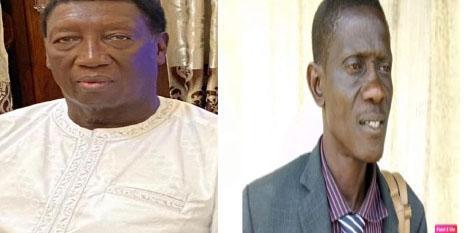
Africa-Press – Gambia. Gambian trade unionists have called on the government to improve workers’ working conditions by tackling minimum wages and the rise in prices of basic products in the country.
“The prices of goods have increased considerably throughout the national territory. Workers are struggling to survive while the government stands idly by. As we speak, the minimum wage has remained at the same level for the last ten years,” said Mr Kebba Masanneh Ceesay, president of the Gambia Trade Union Office (GAMTUB), while Ebrima Garba Cham, general secretary of the The Gambia National Trade Union Congress (NTUC), has called on the government to intervene and manage prices set by “price monopoly retailers” in the economy.
The duo was speaking on the occasion of the celebration of International Workers’ Day 2024, known as “May Day”.
This day is both a day of celebration and a day of reflection, as it highlights the struggles to secure workers’ rights and the challenges workers face around the world.
This day also serves as a forum to soberly reflect on the achievements and challenges of the past year and make projections for the future.
The Gambia Trade Union Bureau (GAMTUB) is the representative of 14 affiliated unions in The Gambia, from various sectors of work.
The Gambia Trade Union Office (GAMTUB) advocates for fair labor practices, safety, social protection, social dialogue, social justice, economic equality and participation in all decisions that affect the lives of workers and of their families in the context of decent work.
Mr Ceesay said the current rise in the cost of goods and services poses a significant challenge to workers’ livelihoods, adding that the exacerbation of income inequality and economic hardship could no longer be ignored.
President Ceesay called on the government of The Gambia to immediately establish a National Wage Review Commission with a view to establishing a living wage for every worker as well as deserving retirees.
He also urged the government to review salaries in order to adapt them to current market prices.
According to him, it is the responsibility of the government to take adequate measures to control inflation. First of all, the government should not allow tax increases under any circumstances.
“The government must implement measures to curb inflation and stabilize market prices to preserve the purchasing power of workers. Without such intervention, workers’ means of survival are threatened. Such a situation exacerbates economic disparities, social injustice and insecurity,” he added.
He urged the Labor Commissioner to set up the various Industrial Councils (JICs) without delay.
He added that the reactivation of the Joint Industrial Council (JIC) is essential to promote collective consultation between government employers and workers, with a view to improving working conditions and social benefits.
He stressed that workers have always been partners of government in all aspects of socio-economic development for the promotion of peace and security.
He also urged the government to include workers in the national commissions that are being established to promote transparency and accountability.
He also called for the inclusion of worker representatives in the National Security Council to ensure that workers’ perspectives are taken into account in consultations relating to security and social stability.
Regarding the road transport sub-sector, he lamented a complete lack of job security for commercial drivers, noting that over 95% of commercial drivers in The Gambia have no formal contract, no safety benefits social, and no social protection at all. This makes them very vulnerable to unfair practices by vehicle owners (employers).
He also described the lack of business parks in The Gambia as one of the challenges facing the road transport sub-sector across the country.
He therefore called on the government to ensure that local administrations identify and provide suitable spaces for garages.
He also called on the government to ratify the conventions
Mr Ceesay also urged the government to recall the draft law on trade unions in order to allow stakeholders to make the final amendments and carry out the final reading and validation of the draft before transmitting it to the National Assembly for promulgation.
In the same vein, Mr Garba Cham declared: “The standard of living is high. So is inflation, 60% of which is caused by corporate greed.”
“Since 2019, commodity prices have increased by 18.5%. This situation, in the long term, risks creating a crisis due to lack of purchasing power. The Confederation of Trade Unions is very concerned about our economy. Inflation, unemployment, increasing poverty, inequality and other key socio-economic variables are worsening. As a result, a large section of the population cannot meet the basic needs of life and our young people are dying in the depths of the ocean (Mediterranean) and in the desert in search of greener pastures,” said Mr. Cham.
“Currently, the trade deficit is 44 billion dalasis. The trade deficit is thus higher than the estimated expenditure for 2024, which is 39 billion dalasi, as revealed by the Ministry of Finance and Economy. Gambia’s debt has increased to 110 billion to 116 billion dalasis.
Therefore, we should use our capabilities to build a self-sustaining economy and produce what we consume, rather than exporting the majority of our basic products from abroad. Without a strong economy, there is no strong currency. With a strong economy, the impact will be reduced in terms of inflation and deficit and we will be a supply chain center in the sub-region,” Mr Cham emphasized.
“The dalasi is in decline and its value is depreciating day by day. This is the source of economic instability, high inflation, low foreign currency reserves and a large foreign currency deficit with a significant annual depreciation of 9.6% against the dollar, or 7%. »
Power and weakness of the agricultural sector
“Agriculture is the backbone of The Gambia, whether it is land or sea, including black sand. Increased revenue will only increase the government’s purchasing power and reduce trade deficits. If we invest in agriculture, we will be able to create jobs, have free and quality education and health services on our doorstep, we will industrialize and eradicate unemployment, and the energy sector will be transformed to provide and create adequate electricity supply through solar and wind energy, and combat climate change for economic independence.”
The union notably urged the government to put in place a vigorous strategy to prevent the depreciation of the dalasi, to tackle the high cost of living and the lack of purchasing power, with salaries not corresponding to the consumer price index, and to implement the policy relating to small and medium-sized enterprises.
POINT OF GAMBIA
For More News And Analysis About Gambia Follow Africa-Press