
Africa-Press – Ghana. Ghana’s latest Quarterly Multi-Dimensional Poverty Index (MPI) Bulletin shows a steady decline in national poverty levels, but sharp inequalities remain across regions and between rural and urban communities.
Within a single quarter, more than 360,000 people exited multidimensional poverty between the second and third quarters of 2025.
Overall, the Ghana Statistical Service (GSS) data from the fourth quarter 2024 and the third quarter of 2025 saw 950,000 people moving out of multidimensional poverty, a decline from 24.9 per cent in 2024 to 21.9 per cent in 2025.
On the other hand, the number of people who were multidimensionally poor declined from 8.1 million in quarter three of 2024 to 7.2 million people by the end of quarter three of 2025.
The MPI measures poverty beyond income, assessing deprivations in living conditions, health, education, and employment across 13 indicators with a household considered to be poor when deprived in at least one-third of the indicators.
Health and living conditions were the biggest drivers of the country’s multidimensional poverty, contributing 47.7 per cent and 29.2 per cent respectively, while education accounted for 13.4 per cent with employment contributing 12.3 per cent.
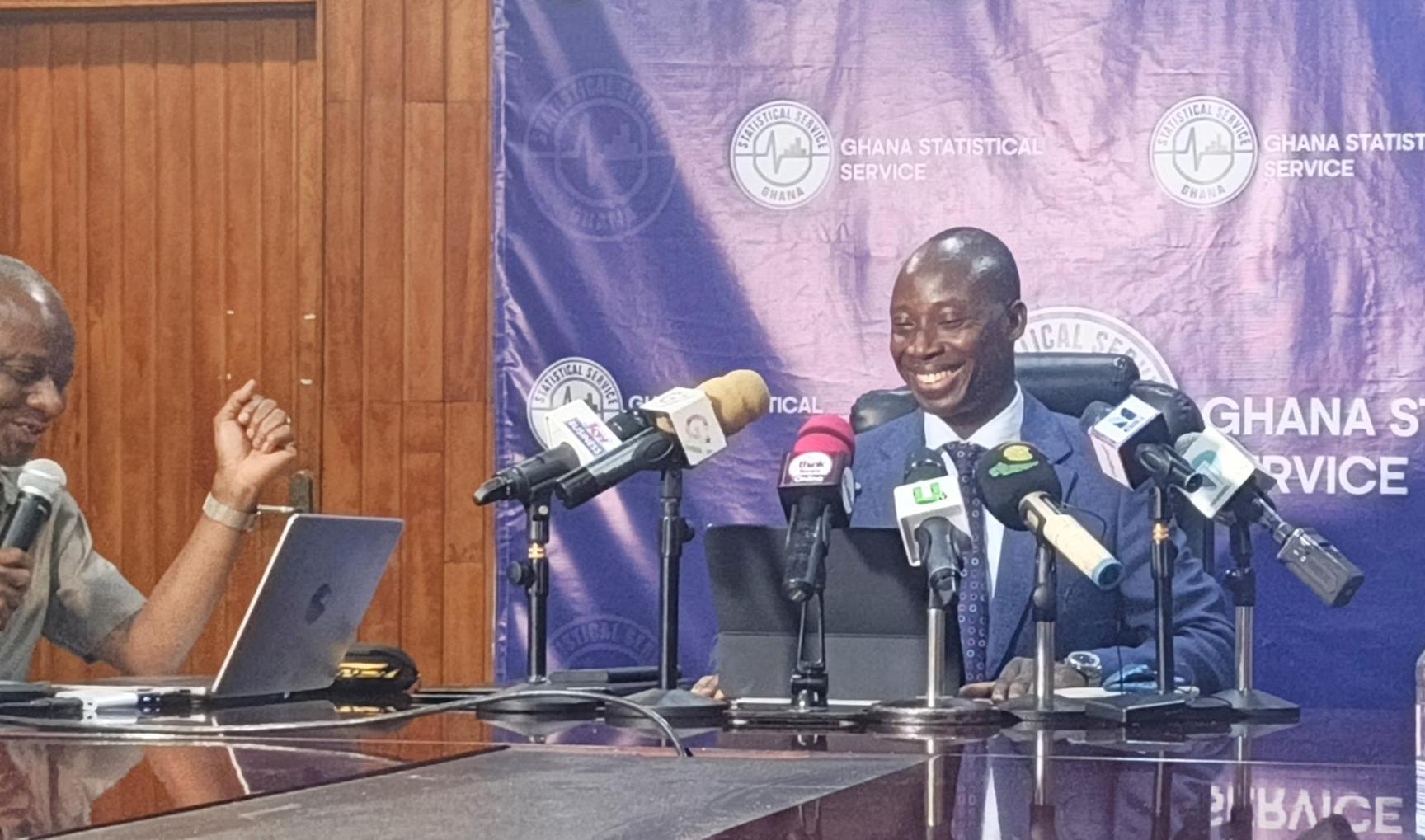
Dr Alhassan Iddrisu, Government Statistician, speaking at the release of the MPI in Accra on Wednesday, noted that overall, living conditions across the country was improving, but that did not call for ‘celebration’ as there were stark regional disparities.
He stated that 14 regions recorded a decline in the multidimensionally poor population between quarter four of 2024 and quarter three of 2025, while two regions recorded an increase.
On regional basis, the North East and Savannah regions recorded poverty incidences above 50 per cent, more than double the national average of 21.9 per cent in contrast with the Greater Accra and Western regions, which recorded incidences below 20 percent.
Meanwhile, populous regions including the Ashanti and Northern each recorded over one million multidimensionally poor persons, although their poverty rates were closer to the national average.
In terms of rural-urban divide, rural poverty stood at 31.9 per cent, compared to 14.2 per cent in urban areas, a situation Dr Iddrisu said required prioritising rural development, particularly, improving access to healthcare and strengthening basic living conditions.
“These statistics are not just numbers. They are signals for action for government, businesses, labour, civil society, development partners, and households. They show us where to focus resources, what to fix first, and how to protect vulnerable people, including those facing the triple burden of poverty, unemployment, and food insecurity,” he said.
“Progress is real, but uneven. To ensure no one is left behind, our policies must be region-specific, rural-focused, and targeted at the key drivers of poverty – health and living conditions,” the Government Statistician noted.
Dr Iddrisu recommended that government expanded the coverage and renewal of the National Health Insurance Scheme (NHIS) to vulnerable groups, rural households, and informal workers, while improving toilet facilities to reduce health-related poverty drivers.
He called for acceleration of investments in basic living conditions, including sanitation, safe water, housing quality, electricity, and overcrowding reduction, particularly in rural and high-poverty regions.
He urged the government to strengthen the school feeding and education support programmes, increase social protection support like the Livelihood Empowerment Against Poverty (LEAP), and scale up skills development and job creation.
The Government Statistician called on businesses to support education access through scholarships, internships, and training, and create more decent jobs and support Micro Small and Medium-Scale Enterprises (MSMEs) to grow.
Dr Iddirsu said households must also take steps to keep children in school consistently, improve nutrition, especially for children, engage in skills and livelihood programmes, including apprenticeships, and improve living conditions.
For More News And Analysis About Ghana Follow Africa-Press