
Africa-Press – Ghana. The Chamber of Aquaculture Ghana has announced the launch of Africa’s first Blue Food Innovation Hub to help address structural challenges in Ghana’s fisheries and aquaculture sector and scale up sustainable production.
The Hub, an initiative introduced by the World Economic Forum and co-created with stakeholders in Ghana over the past six months, will be officially launched on Wednesday, February 25, 2026.
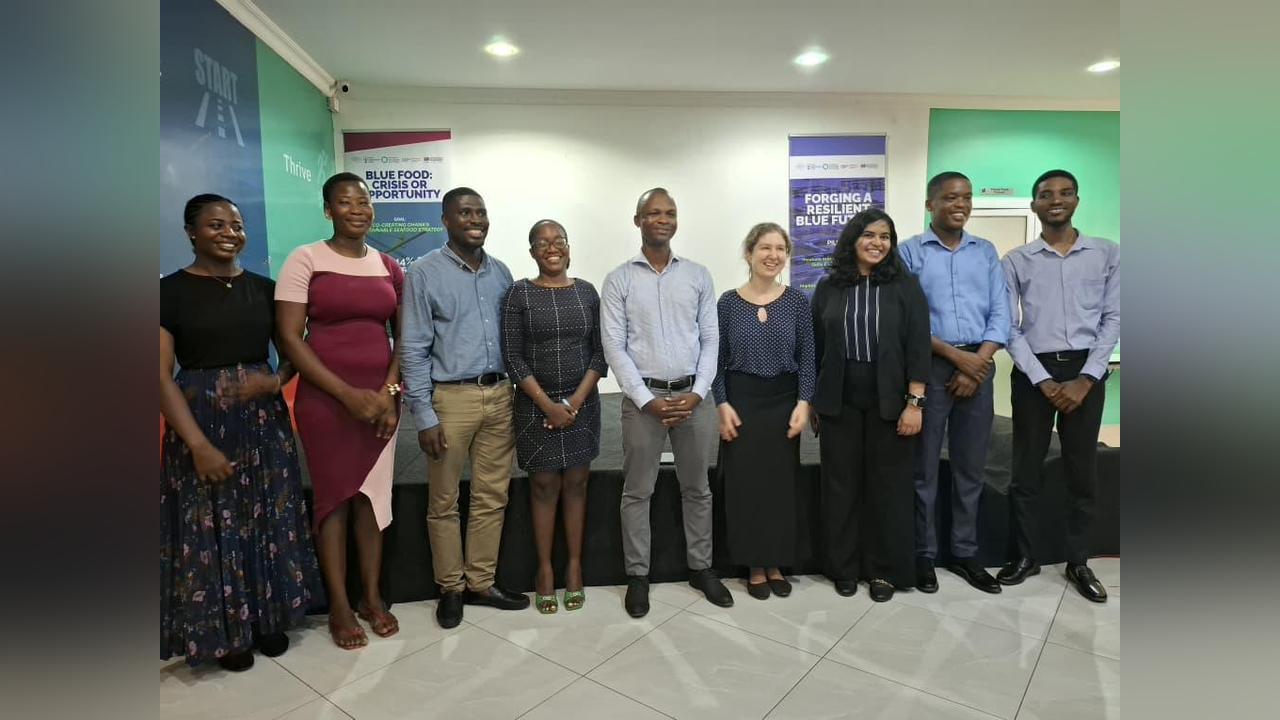
Mr Jacob Doe Adzikah, Chief Executive Officer of the Chamber, said at a news conference in Accra that the Hub would serve as a neutral platform to convene public and private sector actors, development partners and innovators to unlock growth in the blue food space.
“Over the past six months, stakeholders across Ghana’s Blue Food sector have engaged in extensive consultations and collaboration to establish the first Blue Food Innovation Hub in Africa, and it will be hosted in Ghana,” he said.
Blue foods refer to aquatic animals and plants harvested from marine and freshwater systems. In Ghana, the sector comprises marine fisheries, inland fisheries and aquaculture. While the marine sub-sector remains the largest producer, it faces overfishing and pollution.
Inland fisheries are also grappling with water pollution.
Mr Adzikah said aquaculture currently offered the most promising growth prospects.
“Blue foods are important to Ghana’s economy. Sixty percent of our protein source is coming from the Blue Food sector,” he said, adding that the sector contributes an estimated 600 million dollars to Ghana’s Gross Domestic Product.
He said the sector employed more than 500,000 Ghanaians directly and indirectly, with significant participation by women and young people. Its contribution to GDP stands at about five per cent, close to livestock production at six per cent.
Mr Adzikah identified high cost of quality inputs, disease outbreaks, post-harvest losses and overfishing as the major challenges confronting the sector.
He said fish feed remained a major cost driver in aquaculture due to limited local raw materials, forcing companies to import inputs at high cost.
On the marine front, he said overcapacity remained a concern, with about 13,000 artisanal fishermen operating against an estimated sustainable capacity of 8,000.
Against this backdrop, Mr Adzikah said the Hub would identify innovative solutions within the blue food system and support them to scale.
“The Hub will unlock knowledge, innovation, markets and finance,” he said. “We are going to prepare SMEs and start-ups to be investment-ready and connect them to financial institutions.”
He said the platform would focus particularly on inland aquaculture and ensure gender, equity, disability and social inclusion considerations, targeting women, youth and persons with disabilities.
The eatsblishment of the Hub comes as government pursues reforms in the fisheries sector and outlines plans under its 24-hour economy agenda to expand aquaculture infrastructure, including proposed investments to strengthen production hubs.
Mr Adzikah said the Chamber and its partners were ready to operationalise the Hub and work with stakeholders to build a resilient and competitive blue food sector.