
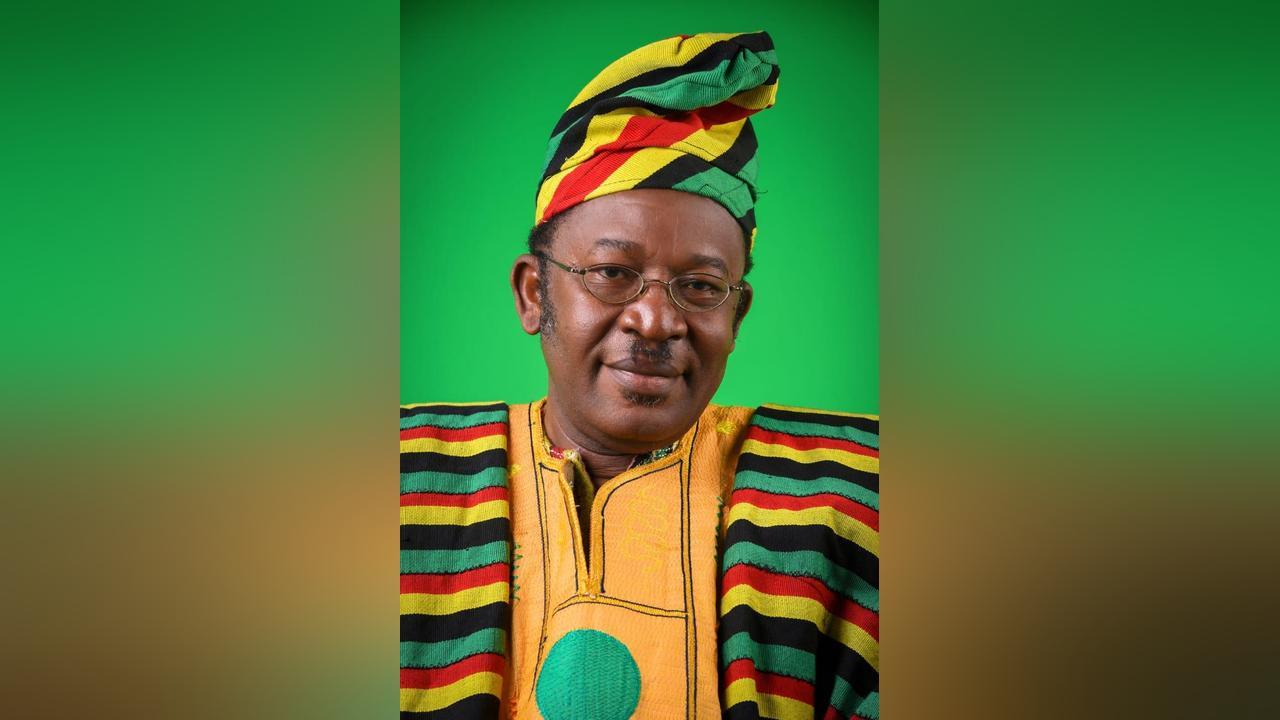
Africa-Press – Ghana. Dr Benjamin Anyagre Aziginaateeg, the Executive Director of the AfriKan Continental Union Consult (ACUC), Ghana Chapter, has called on African leaders to treat the continent’s estimated 1.55 billion population as a strategic asset for sovereignty, production, and continental unity.
In a policy statement titled “1.55 Billion Strong: A Call for African Sovereignty, Production, and Unity,” Dr Aziginaateeg, described Africa’s growing population not as a burden but as a historic economic opportunity capable of transforming the continent into one of the largest integrated markets in the world.
“Africa’s 1.55 billion people are not statistic; they are a mandate — a mandate for industrialisation, sovereign control of resources, dignity in global governance, and unity,” he stated.
He argued that if African countries processed their abundant raw materials into finished goods within the continent, the population would become a powerful engine of production, consumption, and shared prosperity.
Dr Aziginaateeg, who is also a governance policy advocate, cited commodities such as Ghana and Côte d’Ivoire’s cocoa, Mozambique’s cashew, Uganda’s coffee, and Burkina Faso’s beef, as foundations for agro-industrial transformation, stressing that these products should first serve the African market before being positioned strategically within emerging global blocs.
He attributed the collapse of several once-promising African industries to externally influenced regime changes and neocolonial economic restructuring, noting that sustainable development required a deliberate shift from extraction-based economies to production-driven systems.
On public asset management, he cautioned against indiscriminate privatisation of strategic national utilities, particularly electricity and water, describing them as sovereign assets belonging to citizens.
“The logic of the private sector is profit maximisation; the logic of the state must be people-centered development,” he said, adding that underperforming state enterprises required disciplined reform, competent management, and strict accountability rather than automatic divestiture.
Dr Aziginaateeg further urged African governments to reassess their financial engagements with international institutions such as the International Monetary Fund and the World Bank, arguing that certain conditionalities under the Bretton Woods framework had not produced self-reliant economies on the continent.
He said Africa must negotiate global partnerships from a position of dignity and equality, including continued advocacy for permanent African representation on the United Nations Security Council and equitable participation in major global decision-making platforms.
Dr Aziginaateeg also renewed calls for reparative justice, the return of looted African wealth and artefacts, and an end to external interference that perpetuates economic dependency.
On continental self-reliance, he advocated full financing of the African Union by member states, dismantling of currency arrangements that undermine monetary sovereignty, and review of foreign military agreements that compromise national autonomy.
He proposed stronger regional integration measures, including expansion of cross-border roaming agreements, development of a unified continental air transport system, and consideration of a continental standing force to safeguard Africa’s resources and territorial integrity.
Referencing what he termed the “Accra Reset” vision aligned with the African Union’s Agenda 2063, Dr Aziginaateeg stressed that continental unity must move beyond elite discourse to include farmers, workers, market women, and youth.
“True unity cannot be technocratic; it must be participatory and people-centered. Political will — not rhetoric — is the missing ingredient,” he said.
He said he envisaged a future “Pan African City of Freedom,” where all Africans would have access to decent accommodation, adequate nutrition, and peaceful livelihoods, urging leaders to convert demographic strength into tangible economic transformation.
Source: Ghana News Agency