

Africa-Press – Ghana. As the month of Ramadan draws to a close, Muslim communities across the country await the formal announcement of the Eid date by the National Chief Imam.
In many homes, preparations have intensified as families get ready for one of the most anticipated religious celebrations on the Islamic calendar.
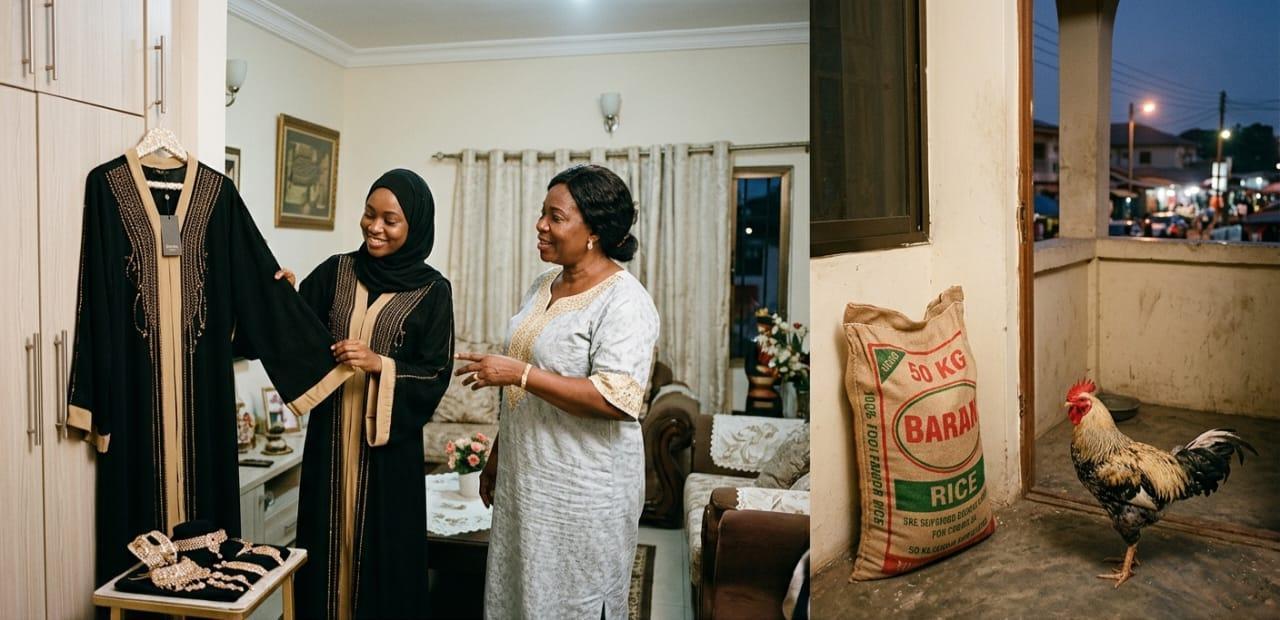
In Ayisha’s room, a neatly ironed Abaya imported from Dubai and purchased at GHS 7,000 hangs in readiness for the occasion.
Like many other women preparing for the day, she has matched the outfit with accessories sourced directly from China to ensure that she steps out elegantly.
Men are also following this growing fashion trend. Mr Aziz Rahman has settled on a black Jalbab, complemented by a pair of Italian shoes he bought from a boutique in Ghana, signalling his intention to make a memorable impression during the festivities.
Beyond clothing, the preparation of food remains an important cultural highlight of Eid in many Ghanaian households.
Dishes such as rice, stew and chicken continue to dominate the celebratory menu. At the home of Hajia Hassana, a 50‐kilogram bag of rice sits in a corner of her room, awaiting use, while a cock purchased from the Nima Market perches on her porch ready for slaughter on Eid morning.
These scenes reflect the joyous spirit of the season, as families look forward to celebrating after weeks of fasting.
However, the choices of many celebrants underscore a broader concern, the growing dependence on imported fashion items and agricultural products during major festivities.
From Ayisha’s Dubai Abaya to Aziz’s Jalbab and Italian shoes, foreign goods continue to shape consumer decisions, overshadowing the potential of locally made products.
These purchasing patterns, if sustained, could deprive Ghana’s textile factories, poultry farms, rice producers and fashion designers of valuable opportunities to grow and compete.
In an exclusive interview with the Ghana News Agency, some celebrants explained the reasons behind their preference for imported items.
Fareeda Usman recounted several disappointing experiences with local tailors in previous years.
According to her, delays, poor finishing and unmet expectations have pushed her to invest in ready‐made imported Abayas, which she considers more convenient.
She explained that buying an Abaya requires far less effort compared to purchasing local fabric and depending on a tailor whose delivery cannot be guaranteed.
Sadiya Rahman also shared her perspective, describing the wearing of certain Abaya styles as a symbol of prestige.
She said that, for many young women, an Abaya with particular fashion features served as a form of social expression, conveying elegance, luxury and status.
To address the growing preference for imported products, policy interventions have been proposed.
Stakeholders, including the Metropolitan, Municipal and District Assemblies, are encouraged to consider the establishment of seasonal Eid markets dedicated to the promotion and sale of locally produced goods.
Such markets would not only support local industries but also expose celebrants to quality Ghana‐made fashion and food items.
Eid celebrants are also encouraged to explore traditional Ghanaian outfits such as Fugu and modest fashion options including the popular Kaba and Slit, which remain culturally relevant and suitable for festive occasions.
Local fashion designers and tailors are urged to enhance their service delivery in order to regain the confidence of consumers.
Improved customer service, better craftsmanship and timely delivery are essential to meeting the expectations of celebrants and reducing the inclination toward imported garments.