
Africa-Press – Ghana. Before the hum of engines powering cargo vessels at Ghana’s busiest harbour, the Tema Port, there existed a quiet ancestral settlement of the indigenous people of Tema.
In the area known as Meridian, where the remains of the defunct Meridian Hotel now stand as fading echoes of a different era, rose a mighty tree.
Not just any tree, but a baobab, known in the Ga language as the Shajo Tso
Rooted in the old Meridian settlement, its massive trunk stood like a shrine carved by time itself.
To the Tema people, it was not merely a tree; it was a deity — planted by their ancestors and revered as a sacred site for customary rituals.
Surrounded by a dense forest in those days, the Wulomoi (traditional priests) would retreat into this sacred enclave during the Kplejoo Festival.
For days, they remained in seclusion, cut off from ordinary life, communing with the spiritual realm.
They returned bearing revelations: warnings of impending danger, signs of a famine and guidance on remedies to safeguard the community. That was Tema before the port.
A city was built, a people moved
The construction of the Tema Harbour in the 1950s marked a defining moment not only in Ghana’s economic history but also in the lived experience of the Tema people.
Their ancestral home at Meridian had to give way to a national asset.
What followed was not simply relocation but a careful negotiation between resistance and adaptation.
History, however, reveals an unlikely group at the centre of that transition: children.
As schools were established in the newly planned Tema Manhean (Newtown), children were transported daily in tipper trucks from the old settlement to attend classes.
To them, it was an adventure. To their families, it became persuasion.
Each evening, the children returned with vivid accounts of structured classrooms, modern buildings and a new way of life. Gradually, the unfamiliar became appealing; reluctance softened into curiosity, and curiosity into acceptance.
Families began to relocate, one household at a time, until an entire community had moved – not by force alone, but through the subtle influence carried in the voices of children.
Behind them, the Meridian settlement was demolished to make way for the port.
Yet, the spirit of the Tema people endured.
The belief in natural and divine protection
Long before modern planning systems, the Tema people had already defined their geography, guided not only by logic but by belief.
They settled deliberately between the Sakumo and Chemu Lagoons: waters that sustained them, and more importantly, protected them.
These lagoons were seen as living spiritual entities.
In times of conflict, they were believed to offer protection, forming invisible barriers against enemies.
“If danger came from one side, the lagoon would defend us,” Nii Amarh Soumponu II, the Tema Stool Secretary and Shipi (head of the traditional warriors), told the Ghana News Agency (GNA).
Today, however, these lagoons face increasing threats from encroachment, pollution and environmental degradation.
Yet, they remain central to ritual life, anchoring festivals and traditions that continue to define the people.
Kplejoo: The season of silence, soil and soul
If Tema has a heartbeat, it is Kplejoo.
Observed as the planting season ahead of Homowo, the harvest festival, Kplejoo represents the convergence of agriculture, spirituality and social order.
It is rooted in historical memory, a time of famine when crops failed despite human effort, reinforcing the belief that survival depends on both labour and divine favour.
During this period, silence becomes sacred.
A ban on drumming and noisemaking creates the calm atmosphere required for the Wulomoi to perform their rituals.
Within that stillness, prayers are offered for rain, fertility of the land, and protection of the people.
On a practical level, it is also a time of collective effort. Farming is undertaken in cooperatives, reinforcing unity and shared responsibility.
The Kple groups, reflecting these cooperative structures, compose songs that celebrate good conduct and criticise wrongdoing, serving as moral voices within the community.
The climax comes with the beating of the Tanon drum at the Sakumo shrine. It is more than sound; it is reconciliation.
At its call, grievances are set aside, conflicts are resolved, and unity is restored.
Even nature is granted renewal. Fishing in the Sakumo Lagoon is temporarily banned, allowing fish stocks to replenish – an indigenous conservation practice long before modern environmental systems.
Manhean: between memory and modern pressure
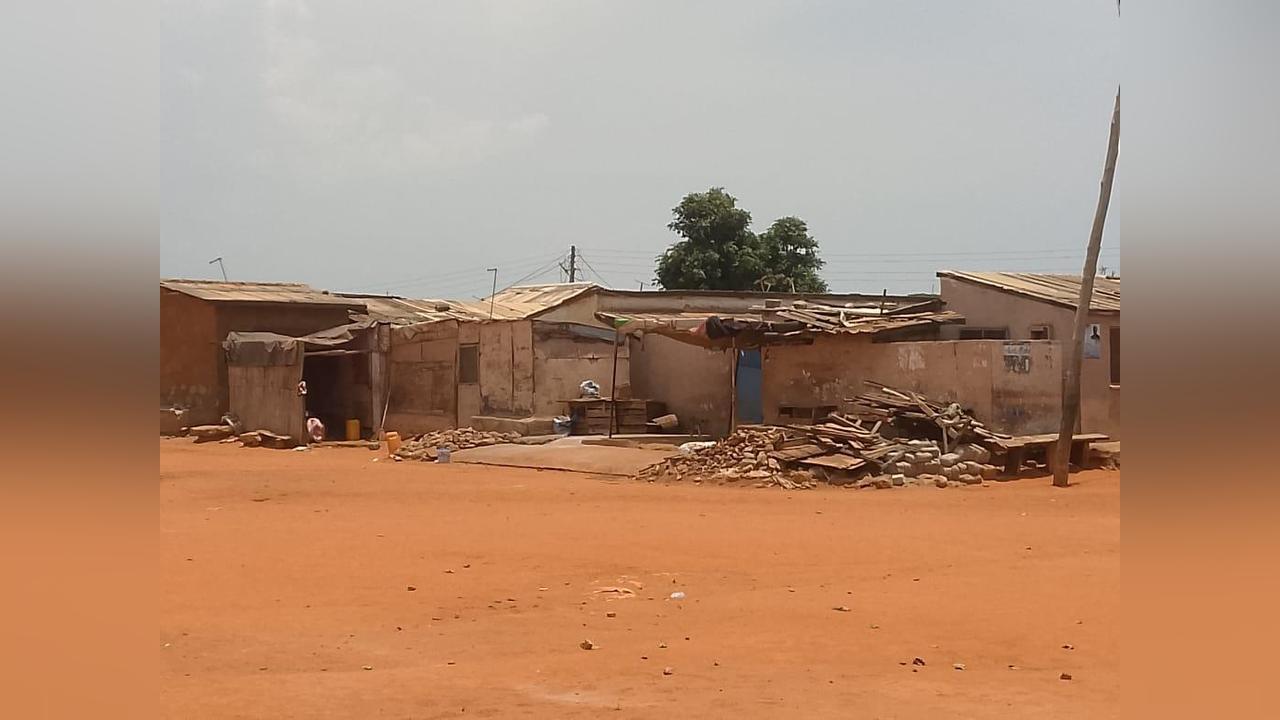
Today, Tema Manhean stands as both a cultural stronghold and a community under pressure.
Once orderly and well-planned, it now grapples with overcrowding, sanitation challenges and unregulated development driven by rapid urbanisation.
Nii Soumponu noted that the current state of the town contrasts sharply with its early years following relocation.
“Every clan house had a 20-seater water closet. Comparing now and then, I will say Manhean was better in those days,” he said.
Migration has reshaped the community into a diverse, densely populated enclave. Yet, beneath the visible strain lies enduring continuity.
This is where festivals are still observed with reverence.
Where the Wulomoi (traditional priests) continue to serve as spiritual intermediaries; part priest, part prophet, guiding the people through ritual and revelation.
This is where tradition persists.
From Tɔman to Tema: A living continuum
The name Tema, derived from “Tɔman”, meaning “town of gourds”, reflects a past marked by abundance, when gourd plants thrived across the land.
Today, that same land hosts industries, highways and one of West Africa’s busiest ports.
Yet, this transformation is not a story of erasure but of continuity. The sacred coexists with the modern. The spiritual continues to shape the social.
From the Shajo Tree at Meridian to the vibrant, crowded streets of Manhean, the people of Tema have carried their past into the present.
They have learnt to live in two worlds: one defined by concrete and commerce, the other by memory and meaning.
And in doing so, they offer a profound lesson: that development need not erase identity, progress can coexist with heritage, and a people, deeply rooted in their history, can move forward without ever losing where they come from.
Source: Ghana News Agency