
Africa-Press – Ghana. The government’s attainment of 30 per cent female appointments—meeting the minimum threshold set by the Affirmative Action (Gender Equity) Act, 2024—has been widely commended.
However, the Voices of Women and Children with Disabilities in Ghana (VOWACGhana), the advocacy and service delivery organisation, says this milestone conceals a deeper concern: the continued systemic exclusion of women with disabilities from the nation’s highest decision-making spaces.
VOWACGhana is raising serious concerns over a glaring disparity.
For the 8.8 per cent of Ghana’s female population living with disabilities (GSS 2021), the announcement is a hollow victory that masks a pattern of exclusion from the nation’s corridors of power, an indication of persistent structural barriers.
VOWACGhana notes that while women without disabilities are increasingly breaking leadership ceilings, their counterparts with disabilities remain largely absent from positions of trust and national influence.
NCPD Regression: A Step Backward for Inclusion
According to the organisation, nowhere is this exclusion more evident than within institutions mandated to advance disability rights. VOWACGhana has expressed strong disappointment over the removal of a woman with a disability as Executive Secretary of the National Council on Persons with Disabilities (NCPD), who was replaced by a non-disabled male—a move the group describes as a setback for meaningful representation.
“Even in our own spaces, people without disabilities are given the opportunity over us,” the organisation said, insisting that the leadership of a disability-focused agency by a non-disabled person undermines inclusive decision-making.
The Gertrude Fefoame Standard: Evidence of Global Competence
VOWACGhana argues that the state’s reluctance to appoint women with disabilities to high-level roles contradicts their proven capabilities on the global stage.
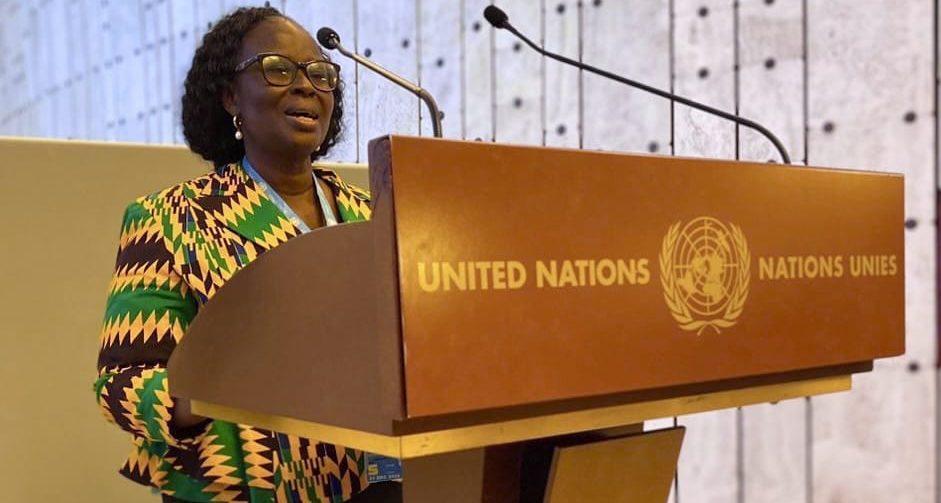
The organisation cites Mrs Gertrude Oforiwa Fefoame—an acclaimed international disability rights advocate recently honoured at the Ghana Women of Excellence Awards—as a shining example.
Mrs Fefoame is the first African woman to chair the United Nations Committee on the Rights of Persons with Disabilities (UNCRPD). With two Master’s degrees and leadership experience within the International Council for Education of People with Visual Impairment (ICEVI), she exemplifies the professional and academic calibre that exists among Ghanaian women with disabilities.
VOWACGhana says that if Ghanaian women with disabilities can lead global bodies and drive international advocacy, there is no justification for their exclusion from top national roles such as Cabinet Minister, Ambassador, State-Owned Enterprise CEO or board chair.
From Employment to Authority
The organisation is calling for a shift from offering women with disabilities employment in non-strategic roles to appointing them into leadership with real influence. It argues that many women with disabilities are highly qualified—lawyers, academicians, administrators, and holders of advanced degrees—but remain unrepresented at strategic levels of public sector leadership.
While many excel as Executive Directors of NGOs, Country Representatives, or private‐sector leaders, VOWACGhana says these gains have yet to be reflected in national appointments.
A Call for an Inclusive Legislative Instrument (LI)
The organisation further critiques the current Affirmative Action Law as being too generic, calling for a Legislative Instrument that explicitly ensures that women with disabilities are included in leadership pathways across political and public sectors.
To accelerate inclusion, VOWACGhana outlines an action plan:
1.Strategic appointments of women with disabilities as CEOs, Directors and High Commissioners.
2.Ensuring the 300 new public transport buses being imported are disability-friendly to address accessibility barriers.
3.Strong political will, including direct engagement with organisations led by women with disabilities to identify qualified candidates.
4.Adoption of affirmative measures by political parties to attract women with disabilities into leadership.
5.Encouraging private-sector, development partners, UN agencies and diplomatic missions to extend leadership opportunities to women with disabilities.
Conclusion
VOWACGhana maintains that Ghana’s 30 per cent gender milestone will remain incomplete until it reflects the leadership aspirations and qualifications of the 8.8 per cent of women with disabilities.
For the International Women’s Day theme, “Give to Gain,” to be meaningful, the state must move beyond offering assistance to offering authority.
(Beatrice Akua Mahmood is a visually impaired person and the Executive Director of Voices of Women and Children with Disabilities in Ghana (VOWACGhana).)
Source: Ghana News Agency