

Africa-Press – Ghana. Ghana has signalled its readiness to harness artificial intelligence (AI) as a transformative tool to deliver quality public service, as the country prepares to launch its IA Strategy in April 2026.
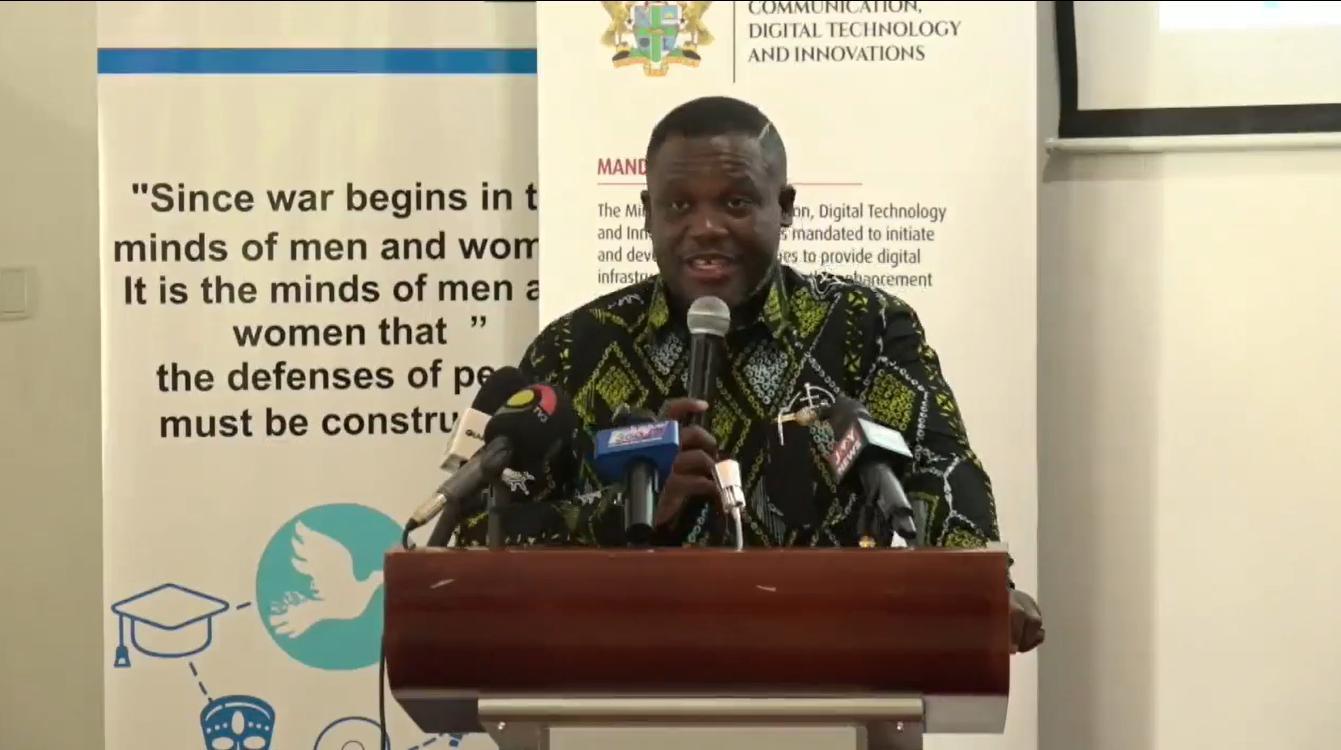
Mr Samuel Nartey George, the Minister of Communication, Digital Technology and Innovations, made this announcement at the national AI Readiness Assessment Methodology (RAM) validation session in Accra on Tuesday.
The workshop, held together with the United Nations Educational, Scientific and Cultural Organisation (UNESCO), brought together policymakers, academics, and technology experts to validate Ghana’s readiness to integrate AI into governance and service delivery.
Participants at the workshop called for stronger collaboration between government, academia, and the private sector to ensure that AI solutions were tailored to Ghana’s unique socio-economic context.
Mr George said the country could not afford to be left behind in the global digital revolution, hence the design of a responsive, transparent, and efficient mechanism to be the cornerstone of its digital transformation agenda and quality public service delivery.
The AI strategy had been designed to modernise public service delivery, enabling government institutions to leverage digital and technological tools to solve real problems facing citizens, he said.
“The national AI strategy will drive AI adoption across all sectors of the economy. AI will advance public service delivery by helping farmers to boost their productivity,” the Minister said.
“It will assist medical professionals and diagnosis, and it will also increase financial inclusion and deliver innovative solutions to societal challenges.”
Mr George said the UNESCO readiness assessment had provided Ghana a roadmap to guide responsible adoption, noting its critical role in tackling inefficiencies in public administration, reducing corruption, and improving access to essential services.
He encouraged institutions to embrace AI and make it people-centred, ensuring that technology empowered citizens and not to marginalise them.
“Our vision is to make AI a tool for social inclusion and national progress.”
He said the Government was committed to building the necessary infrastructure and regulatory frameworks to ensure AI adoption was inclusive, ethical, and aligned with the country’s development priorities, serve public good and respect human rights.
Dr Ama Serwaa, the Secretary-General of the Ghana Commission for UNESCO, explained that the Readiness Assessment Methodology was designed to help countries evaluate their institutional, technical, and ethical preparedness for AI adoption.
She commended Ghana for taking proactive steps to assess its AI readiness, noting that the country’s leadership in digital innovation could serve as a model for other African nations.
She urged Ghanaian authorities to deploy AI responsibly, with safeguards for privacy and human rights protection, while promoting cultural diversity, noting that, “technology must serve humanity, not the other way around.”
Dr Ama Serwaa also called public awareness campaigns to demystify AI and build trust among citizens, while building frameworks to accelerate efforts to close gaps in infrastructure, skills, and governance frameworks.
Dr Arnold Kavaarpuo, the Executive Director, Data Protection Commission, noted that while AI provided enormous opportunities for efficiency and innovation in public service, it also raised critical questions about data protection, ethical use, and accountability.
“We must ensure that the deployment of AI does not compromise the fundamental rights of our people,” he said, calling for capacity building across institutions to strengthen compliance with data protection laws.
“AI must be a tool for empowerment, not exploitation. Our role is to guarantee that as Ghana embraces this technology, it does so in a way that protects privacy and promotes fairness,” Dr Kavaarpuo said.
The Commission, he noted, was working closely with stakeholders to establish strong governance frameworks to guide AI adoption in Ghana, ensuring that personal data was collected, processed, and stored responsibly, with clear safeguards against misuse.