
Africa-Press – Ghana. Dr Frederick Sarpong, a Research Scientist at the Council for Scientific and Industrial Research (CSIR), has called for coordinated financing, policy reforms and private sector investment to transform Ghana’s palm oil industry for sustainable growth.
He said Ghana’s artisanal oil palm sector was dominated by women, who constituted more than 80 per cent of the workforce and contributed about 44 per cent of national supply, despite facing major constraints.
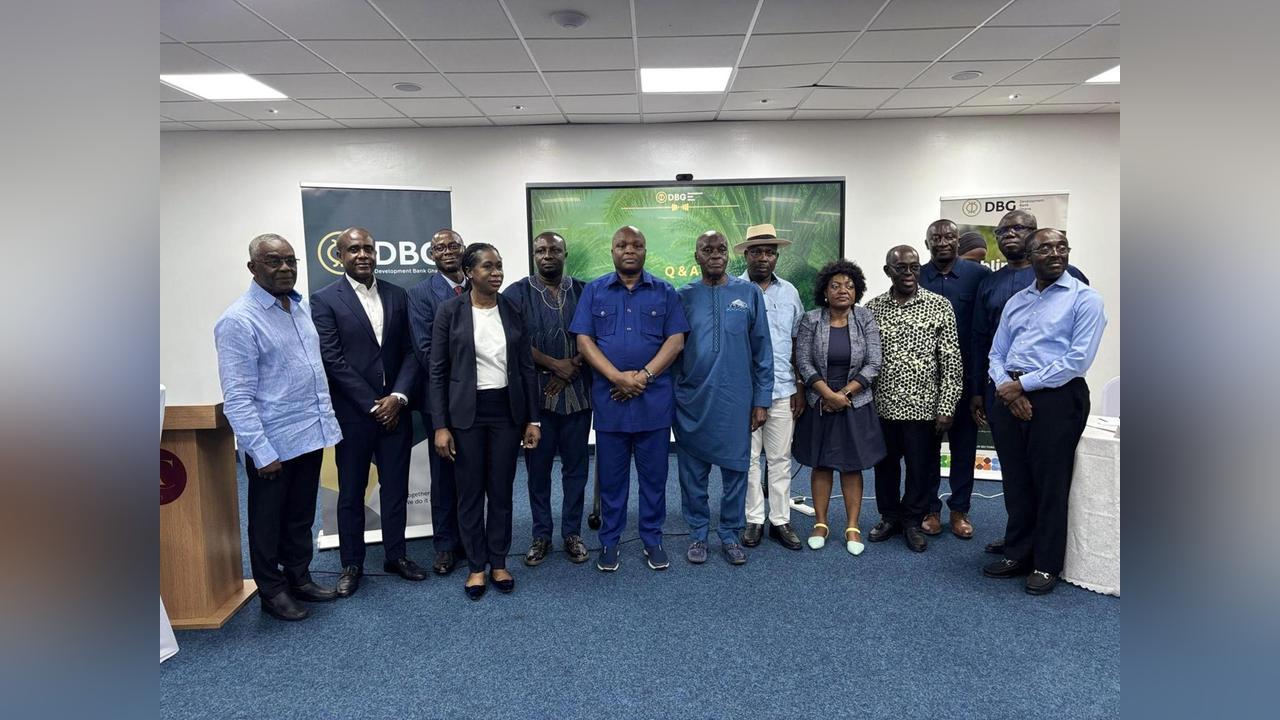
Dr Sarpong made the call at a Development Bank Ghana (DBG) Oil Palm Financing Roundtable held in Accra on Wednesday.
The event, on the theme: “Transforming Ghana’s Palm Oil Landscape: Financing for Sustainable Growth across the Value Chain,” brought together policymakers, industry players and development partners to chart a path for the sector.
He identified low productivity due to outdated technology, seasonal production challenges, limited access to finance, and poor health and environmental conditions as key issues affecting the sector.
Dr Sarpong noted that oil extraction rates among artisanal processors ranged between six and nine per cent, far below the industrial benchmark of 18 to 25 per cent, resulting in low-quality output and reduced incomes.
He highlighted weak market systems, lack of data, and absence of traceability mechanisms as barriers to accessing finance and export markets.
“These challenges create a vicious cycle of low investment, low productivity, and low income, which perpetuates poverty in rural communities,” he said.
Dr Sarpong, however, pointed to opportunities within the sector, including high domestic demand, job creation potential, and its capacity to reduce rural poverty.
He proposed the adoption of modern processing technologies, improved quality standards, and the introduction of financing models such as lease-to-own and special purpose vehicles to boost productivity.
Dr Sarpong called for stronger government support, including anti-smuggling measures and investments in smallholder farmers and supply chains.
Prof. Randolph Nsor-Ambala, Chief Executive Officer of DBG, said the roundtable followed the government’s announcement of a 500-million-dollar fund to revitalise the oil palm value chain.
He explained that the initiative was aimed at transforming the sector into a coordinated and efficient ecosystem to reduce reliance on imports and ensure supply chain sustainability.
Prof. Nsor-Ambala said the government’s commitment was intended to catalyse private sector investment, adding that more than one billion dollars would be required to fully develop the industry.
He said there was the need for openness and collaboration to develop a clear blueprint for cross-sector partnerships to drive Ghana’s economic transformation.
“There is no one-size-fits-all solution, and this engagement provides an opportunity for stakeholders to propose practical and sustainable interventions,” he said.
Mr. Paul Amaning, President of the Oil Palm Development Association of Ghana, described the sector as a strategic economic driver supporting more than one million livelihoods.
He expressed concern about the widening gap between local production and consumption, noting that Ghana loses more than 400 million dollars annually to imports.
Mr. Amaning outlined key challenges, including low productivity, ageing plantations, limited access to long-term financing, weak coordination, land tenure issues, and smuggling.
He said while the proposed 500-million-dollar fund presented a major opportunity, its success depended on clear implementation strategies, including defined allocation structures, responsible institutions, and timelines.
Mr Amaning called for support to organised farmer groups, improved processing capacity, and value addition at the community level, especially for women and youth.
He proposed implementation structures within six months, expansion in 12 to 18 months, and measurable results in three to five years, noting that strong coordination could generate over 250,000 jobs, strengthen rural economies, and reduce reliance on imports.
The roundtable formed part of efforts to mobilise financing and partnerships to unlock the full potential of Ghana’s oil palm sector.