
Africa-Press – Ghana. In Ghana’s public life, the quiet yet profound contributions of First Ladies continue to reflect a deep sense of service, compassion and national responsibility, shaping lives and communities in ways that endure beyond political tenure.
These efforts, rooted in goodwill and a commitment to social progress, have become an integral part of the nation’s development story.
Yet, when examined through a Public Financial Management (PFM) lens, they also reveal a critical gap that demands structural attention – the role of First Ladies and the foundations they champion.
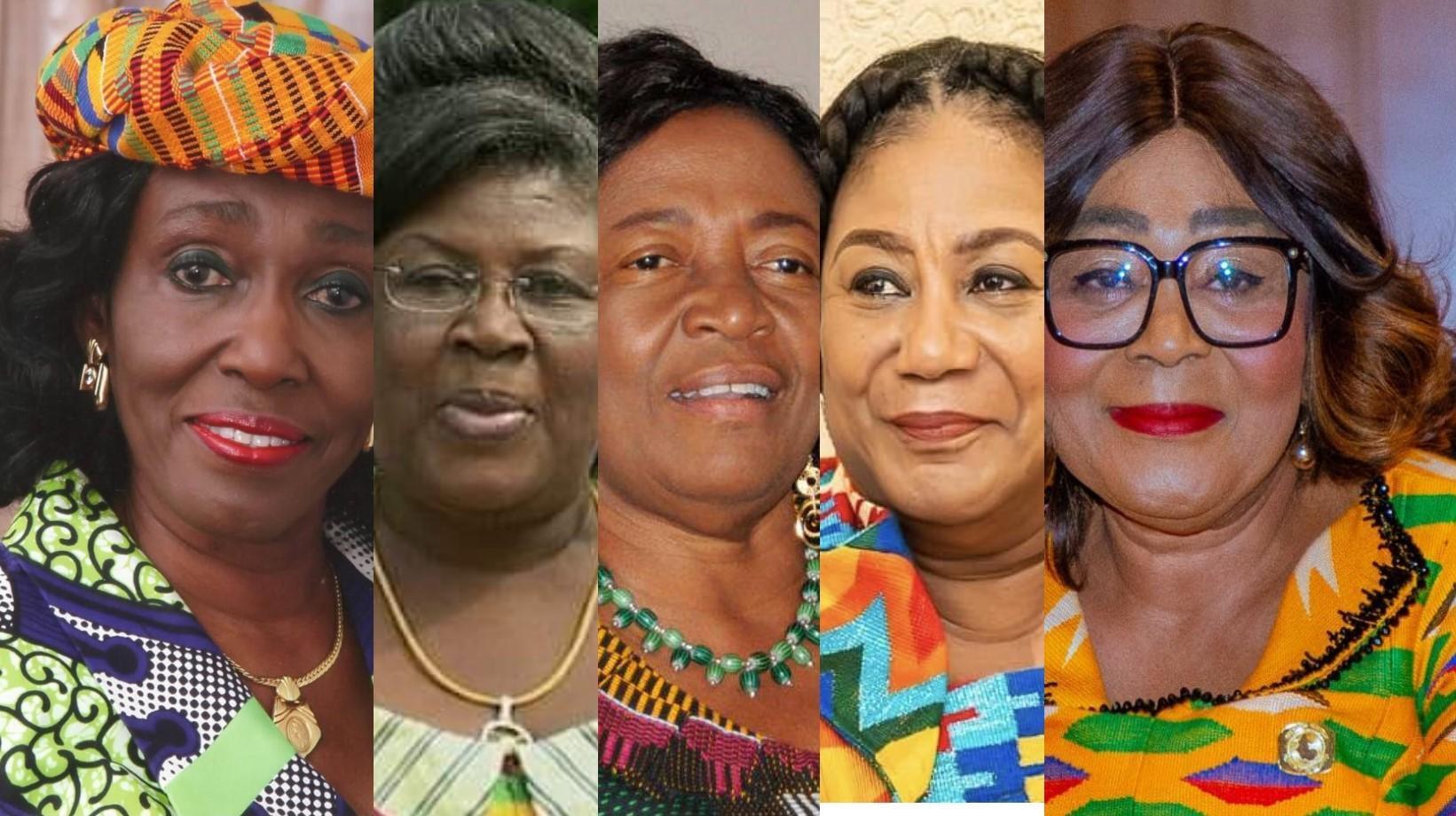
Over the years, successive First Ladies have contributed significantly to national development, particularly in health, education and social protection. Their interventions reach vulnerable communities, bridge service delivery gaps and mobilise national and international goodwill.
Across different administrations, these initiatives reflect commitment to social impact.
The Lordina Foundation focuses on maternal and child health, nutrition and support for disadvantaged groups. The Rebecca Foundation expands access to healthcare infrastructure, education and women’s empowerment.
The Theresa Kufuor Foundation advances HIV/AIDS awareness, prevention and maternal health, while the 31st December Women’s Movement stands as one of the most structured interventions, promoting women’s empowerment, rural development and social mobilisation.
Ernestina Naadu Mills introduces a distinct dimension, placing emphasis on faith-based youth development, encouraging moral upbringing and values formation among young people.
Despite their impact, these interventions largely remain personality-driven rather than system-driven. Thus, changes in political leadership often result in declining momentum, stalled projects and weakened funding streams, leaving beneficiaries uncertain about continuity.
From a PFM perspective, this situation presents continuity risks, accountability gaps and duplication of efforts, limiting the long-term value of otherwise impactful initiatives.
These foundations operate within a public trust space. They benefit from national visibility, attract donor and corporate funding and align with public policy objectives.
However, they lack a unified governance framework, standardised reporting systems and a continuity structure that extends beyond political tenure.
The need for reform points to a shift from legacy-driven philanthropy to institutionalised social investment. Establishing a National First Ladies Foundation offers a pathway to consolidate these efforts within a structured framework.
Such a model envisages the sitting First Lady providing leadership, with former First Ladies serving in advisory roles to ensure continuity and institutional memory.
It also promotes a centralised system where projects are registered, digitally tracked and completed irrespective of political transitions.
A transparent funding mechanism, anchored on a central donor pool and ring-fenced project accounts, enhances accountability through clear disclosure of funds received, utilisation and measurable outcomes.
The integration of thematic areas – including maternal and child health, women’s empowerment, girl-child education and youth development – ensures alignment with national priorities while sustaining long-term impact.
Institutionalising these initiatives safeguards donor confidence, guarantees uninterrupted service delivery and builds cumulative national development over time.
Recommendations outlined:Project Continuity Framework
All initiatives are:
Registered centrally
Digitally tracked
Mandated for completion irrespective of political transitions
Funding TransparencyCentral donor pool with ring-fenced project accounts
Clear disclosure of:
Funds received
Utilisation
Measurable impact
Integrated Thematic Areas
Maternal and child health
Women’s empowerment
Girl-child education
Youth development (including faith-based moral formation)
Why This Reform Is CriticalThis is not about personalities – it is about public value preservation. Institutionalising these efforts will:
Protect donor confidence
Ensure uninterrupted service delivery
Build cumulative national impact over decades.
The contributions of successive First Ladies demonstrate that public good can be achieved through focused social interventions.
However, without a structured framework, these gains risk fragmentation and eventual decline.
Ghana’s development agenda requires systems that endure beyond individuals and political cycles. Embedding these initiatives within a national architecture of continuity and accountability ensures that their impact remains sustained and far-reaching.
Public good, by its nature, must be consistent and enduring. It must be built on systems that outlive tenures and preserve value for generations.
Source: Ghana News Agency