
Africa-Press – Ghana. Many a time, the tension between the academia and journalists is the clarity of scientific news.
Scientists spend years gathering evidence, testing hypotheses, and scrutinising each word in peer-reviewed articles with precise, often cautious language, riddled with statistical qualifiers that guard against overstatements.
For journalists, they have a sacred duty of writing and speaking to a general audience in simple, plain, clear and concise language, quite often on tight deadlines.
However, providing clarity requires simplification, and simplification sometimes resulting in distortions which affect the impact of scientific research.
Indeed, the gap between journalism and academia is not just about language; it is about values, incentives, and speed, and bridging it requires not just translators, but relatability, trust, humility, and a shared commitment to the public good and interest.
Scientists and researchers, after their research, expect some attention from the media to gain larger audience with the aim of shaping society and contributing to development with the findings.
But due to language barrier which manifest in the limited or lack of understanding of scientific terms, journalists, more often than not, conveniently avoid such subjects and sharpen their focus on stories which require less time and effort to produce.
And sometimes, the few journalists ready to help the scientific cause do more harm than good.
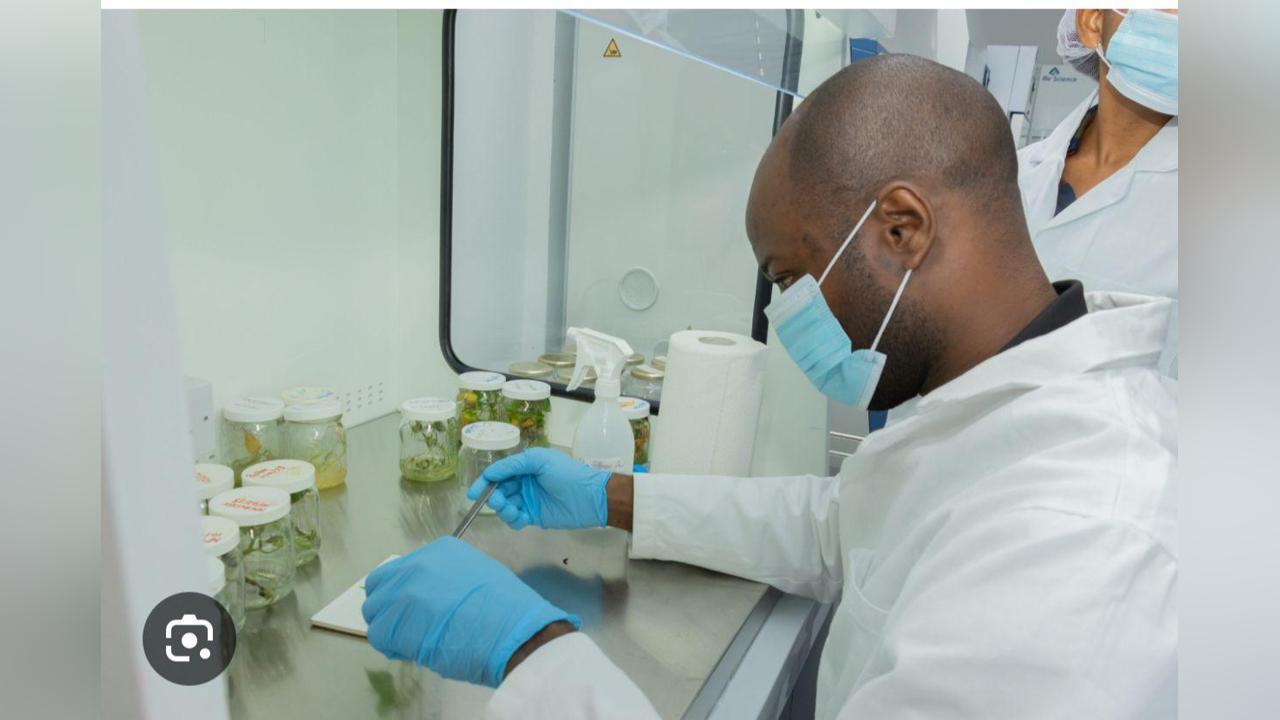
Scientific data by academia and researchers help shape public discourse, influence behavioural change among others as evidenced by the dark era of COVID -19.
Journalism, on the hand, gives science the voice to the public whereas the academia gives journalism the substance and credibility, therefore one without the other is incomplete.
But the gulf between the two critical fields tends to distort scientific understanding, erode public trust, and undermine the purpose of science communication.
Reporting on science is often described as one of the most rewarding yet challenging beats in journalism.
For many journalists, it is a journey filled with curiosity, constant learning, and the responsibility of breaking down complex ideas for the ordinary reader.
Across newsrooms and field assignments, science reporters continue to share unique experiences that reveal both the excitement and hurdles of covering the world of discovery.
For Ama Mensah, a young reporter with a local radio station in Tamale, her first experience covering a scientific story was intimidating.
Sent to report on a vaccine trial, she found herself surrounded by researchers speaking in technical terms that felt like a foreign language. “I kept writing acronyms I didn’t understand,” she recalls with a laugh. “But it pushed me to study more before covering such stories. I learnt that in science reporting, preparation is everything.”
Others share similar challenges, Peter Yeboah, a multimedia journalist, remembers traveling to a rural community to cover a story on water pollution.
What began as a routine assignment quickly turned emotional when he met families battling waterborne diseases.
“It stopped being just about chemicals and contaminants,” he said. “but about the people.
“That experience taught me that behind every scientific issue is a human story waiting to be told.”
Many journalists speak of the thrill that comes with being the first to break the news about a breakthrough research finding.
But they also admit the pressure to get the facts right is if significant importance.
A single misinterpretation of data can mislead the public. “Science has no room for guesswork,” says journalist another journalist.
“You must double check everything sometimes triple-check.
“Editors rely on you, but more importantly, the public trusts you.”
Access to experts, however, is not always smooth.
Some journalists describe difficulty reaching scientists who are either too busy or hesitant to speak for fear of being misquoted.
Others note that institutions sometimes hide behind bureaucracy, delaying crucial information.
Yet when scientists are open, conversations can be deeply enriching. “Some of my best stories came from researchers who took time to explain things using simple analogies,” noted one reporter.
“It made my work easier and the story stronger.”
Professor Abena Yeboah-Banin, an Associate Professor of Communication at the University of Ghana in an interview with the Ghana News Agency (GNA), called on journalists to take a more proactive role in explaining academic research findings to the general public, particularly on issues affecting urban health.
She said though there are challenges, the gap between the academia and researchers undermines the real impact of critical scientific data on the world.
“The power of scientific research lies not only in discovery but in dissemination. If findings remain within the confines of academia and are not shared in a way the public can understand, then their potential to transform lives, especially in areas like urban health, is lost.”
Prof Yeboah-Banin urged journalists to equip themselves with the tools and skills needed for effective science communication.
“Science is only as impactful as its communication,” she said, and thus, “journalists must be the translators who make this knowledge usable to the everyday person.”
She, however, cautioned against oversimplifying or sensationalising scientific findings for the sake of news, stressing that journalists must uphold the highest ethical standards, ensuring accuracy, proper context, and reliance on verified data.
“Science reporting must be grounded in truth and responsibility. Misinterpretation or misrepresentation can cause more harm than good,” she emphasised.
For her part, Dr. Charity Binka, Executive Director of WOMEC, described science and health communication as a civic duty, stating, “the media must demystify it, debunk misinformation, and help the public make informed decisions.”
She encouraged researchers to carry along journalists on their research journey to enable them have clearer understanding of the finding rather than just briefing them of their findings.
Adding that the journalists working closely with researchers and public health experts can ensure the public receives reliable, evidence-based information.
For More News And Analysis About Ghana Follow Africa-Press