
Africa-Press – Ghana. As the impacts of the war in the Middle East cascade down into African economies, the continent is looking at how to not just manage the impact, but to use it as an opportunity for structural change and growth.
As the impacts of the war in the Middle East cascade into African economies, the continent is considering how not only to manage the fallout, but also to use the crisis as an opportunity for structural change and long-term growth.
The African Development Bank (AfDB), the African Union Commission (AUC), the United Nations Development Programme (UNDP) and the UN Economic Commission for Africa (UNECA) have jointly released a report examining the effects of disrupted supply chains and surging oil and fertiliser prices on African economies.
The Middle East accounts for 15.8% of Africa’s imports and 10.9% of its exports. The Strait of Hormuz alone handles around 20% of global oil exports and nearly 90% of Persian Gulf oil exports, underlining the continent’s exposure to developments in the region.
Speakers stressed that Africa must defragment even as the rest of the world fragments, focusing on continental self-sufficiency, accelerated regional integration and the swift implementation of existing frameworks rather than commissioning further studies.
The report, released on the margins of the 58th Session of the Economic Commission for Africa in Morocco this week, sets out practical recommendations for crisis response and resilience-building across African countries.
“Continued escalation of the conflict worsens global instability, with serious implications for energy markets, food security and economic resilience, particularly in Africa where economic pressures remain acute,” said Mahamoud Ali Youssouf, Chairperson of the African Union Commission, at a press conference in Tangier on Thursday.
The report highlights that current shocks are being transmitted more rapidly and through more concentrated channels than in previous global disruptions, leaving African economies with limited time to adjust.
The effects are already being felt by economies and households alike, requiring swift and effective policy responses. Some countries have limited fuel reserves, with more than 15 nations sourcing over half of their oil from the Middle East.
Southern and East Africa are the most affected regions, according to Claver Gatete, Executive Secretary of the ECA.
Global oil prices have surged by more than 50% as of late March, while 29 African currencies have weakened, increasing the cost of servicing external debt and importing food, fuel and fertiliser.
Disruptions linked to Gulf energy supplies are also threatening access to ammonia and urea during the critical March to May planting season, putting agricultural production at risk and heightening the likelihood of severe food insecurity.
The outcome of the conflict remains uncertain, Ali Youssouf noted. “It is not predictable, but preparedness is very important. Solidarity and coherence are as important as preparedness. We on the continent must find the best ways to mitigate the consequences of this crisis.”
Crisis as a catalyst for growth
The situation has prompted the four pan-African institutions to come together, not only to assess the immediate challenges but also to explore how the crisis can be used to strengthen resilience against future external shocks.
“Africa is being hit by another external shock. This time the impacts are being felt much faster, the vulnerabilities are starker, but the opportunities are also much clearer,” said Uhunna Eziakonwa Onochie, Assistant Secretary-General and Director of the UNDP Regional Bureau for Africa.
“These global shocks are not going away. They are becoming more frequent and more structural. The choice is simple: Africa can continue to absorb these shocks and spend years recovering, or it can take decisive steps to reduce dependence on external supply chains.”
While the conflict poses broad economic risks, the report notes that some countries may experience short-term gains through higher commodity prices, trade diversion and rerouted logistics.
Nigeria could benefit from elevated oil prices and increased exports from the Dangote refinery, while Mozambique may gain from renewed momentum in liquefied natural gas projects and higher traffic through the Port of Maputo.
South Africa’s Durban port, Walvis Bay in Namibia and Mauritius are also seeing increased activity as shipping routes divert around the Cape of Good Hope, boosting port services and bunkering.
In East Africa, Kenya is emerging as a logistics hub via Lamu Port and Nairobi, while Ethiopia is strengthening its role as a key air bridge linking Asia, Africa and Europe through Ethiopian Airlines.However, these gains are likely to be uneven and insufficient to offset the broader pressures of inflation, fiscal strain and food insecurity across the continent.
Structural change
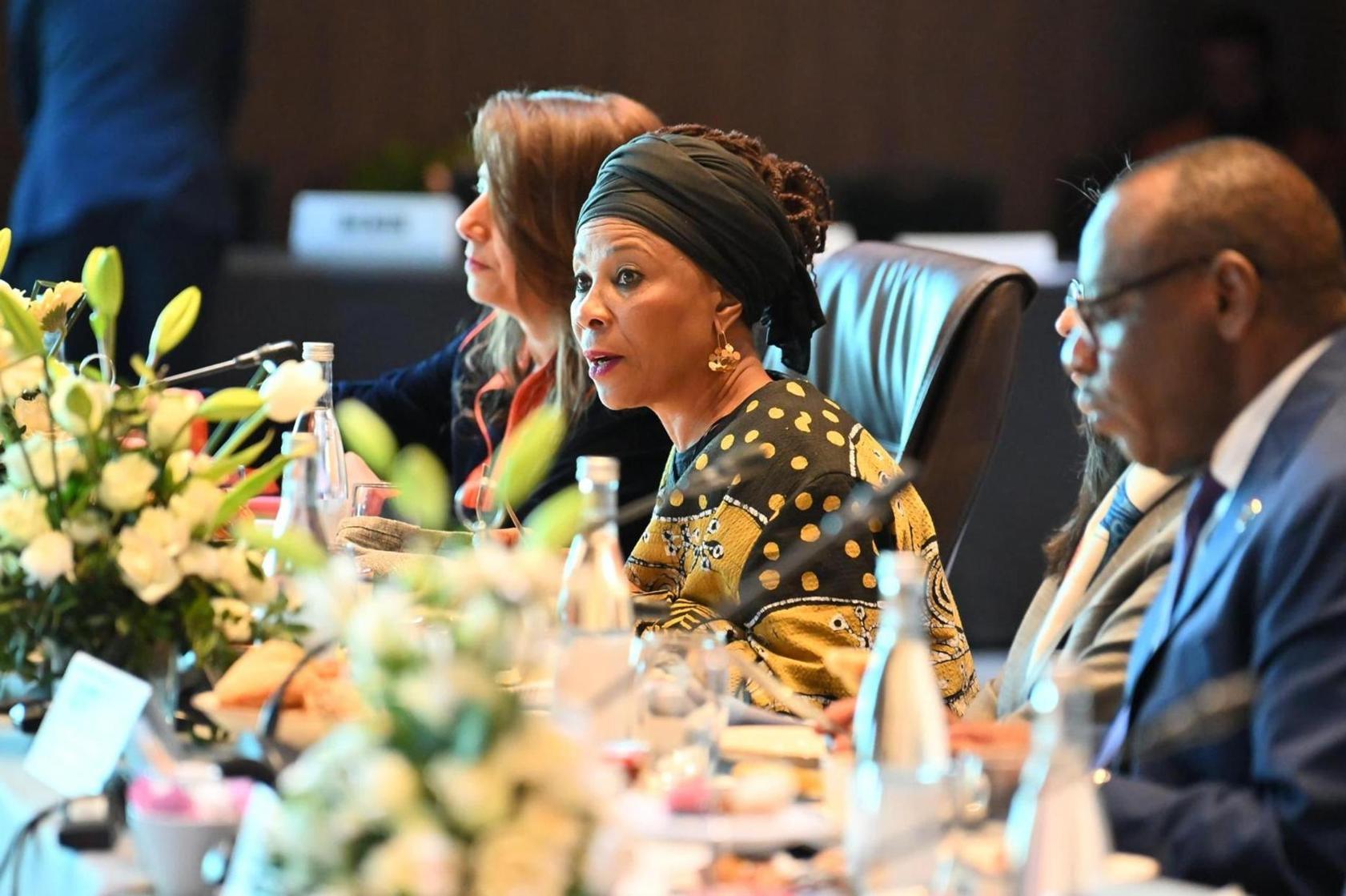
Discussions at a breakfast meeting hosted by the four institutions with African finance ministers focused on overcoming the constraints to greater self-sufficiency and resilience.
Across this meeting and others held during the ECA session in Morocco, several persistent challenges were highlighted. These include the slow progress of the African Continental Free Trade Area (AfCFTA) and low levels of intra-African trade, which stand at around 17% in 2025.
Non-tariff barriers such as insecurity continue to hinder the movement of goods, while logistics remain costly and inefficient. Manufacturing capacity is limited, and visa restrictions persist, with more than half of African countries still requiring visas for fellow Africans.
Policy environments are not always conducive to growth. Key sectors such as healthcare remain underfunded and heavily reliant on external donors, rather than being prioritised within national budgets.
“There is growing recognition that Africa cannot continue to outsource its stability,” said Eziakonwa Onochie.
She added that Africa is better prepared to respond to crises than in the past, pointing to the potential for increased local fertiliser production, with Morocco, Nigeria and Egypt already major producers. “What was once a vulnerability could become a source of strength.”
Energy shocks are also driving investment in renewables, while trade disruptions are reinforcing the urgency of the AfCFTA as a tool for resilience rather than simply a trade agreement.
“The real opportunity lies in African countries acting together to build regional value chains, align policies and invest in shared infrastructure that reduces exposure to external shocks,” she said.
Managing the impact on citizens
Many countries have already introduced measures to cushion the effects of rising inflation.
Morocco has suspended customs duties and VAT on oil imports to stabilise prices, using digital platforms to target support towards public transport and vulnerable households rather than implementing universal subsidies.
Kenya has established a government-to-government fuel procurement framework that is helping to absorb macroeconomic shocks. Its 96% renewable energy mix has also reduced reliance on fossil fuels.
Burundi has aligned monetary and fiscal policy to stabilise inflation and exchange rates, while Botswana has shifted from broad subsidies to more targeted support for vulnerable groups and specific sectors, alongside incentives for renewable energy investment.
South Africa and Namibia have temporarily limited fuel price increases by reducing the general fuel levy.
Participants at the ECA meeting also emphasised the need for stronger regional coordination. They called for more open borders to support intra-African trade under the AfCFTA, improvements to trade corridors to reduce costs and delays, and faster progress on visa liberalisation.
They highlighted the importance of leveraging existing port infrastructure as part of integrated continental corridors, prioritising large-scale regional solar projects, and strengthening collaboration in sectors such as fertiliser production, for example through partnerships between Morocco and Nigeria.
There were also calls to share best practices in domestic resource mobilisation and to ensure greater inclusion of the African private sector in development planning.
african.business