

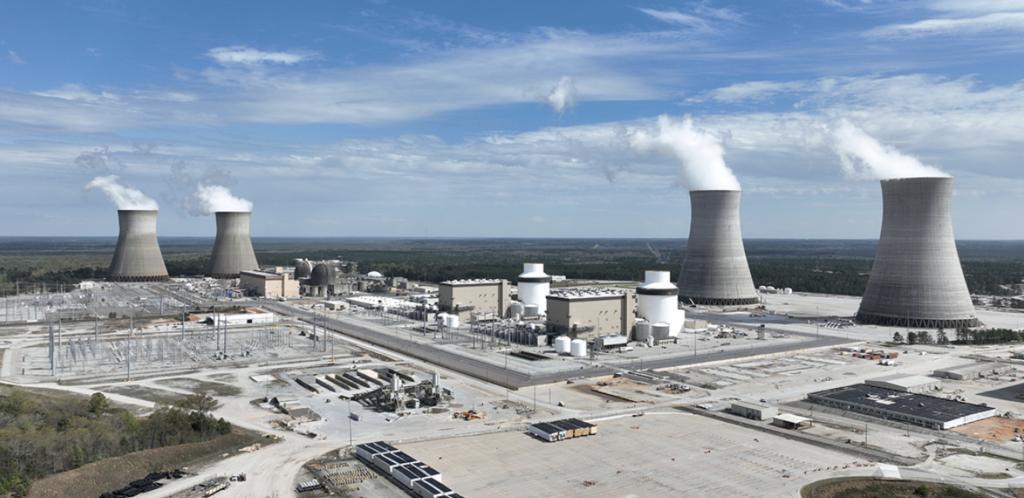
Africa-Press – Ghana. The United States, home to the world’s largest fleet of nuclear power plants, is leading a new wave of nuclear technology that promises safer, cleaner and more flexible energy systems, offering useful lessons for Ghana as it considers nuclear power for development.
The United States runs about 94 nuclear power plants across 28 states, providing roughly 19 to 20 per cent of the country’s electricity and more than half of its clean, carbon-free power.
After years of slow growth following accidents such as the Three Mile Island incident in 1979, the Fukushima disaster in Japan in 2011 and limited or zero investment , Washington has renewed its push for nuclear energy as part of its plans to fight climate change and strengthen energy security.
With support from both major political parties, the U.S. Government is investing billions of dollars through the Department of Energy to keep existing plants running longer and to speed up the building of new, smaller and more modern reactors.
Experts say these new technologies are changing how the country produces clean and reliable electricity, especially by improving safety and reducing public fears over nuclear power.
“The really dramatic change is in the increase in safety.” Professor Kenneth L. Peddicord, a senior nuclear engineering expert at Texas A&M University, said.
He explained that the new, smaller reactors use natural movement of water, hot water rising and cool water sinking, to keep the systems cool, instead of relying on complicated machines that need electricity to work.
This means the reactors can stay safe even during power cuts, a problem that made the Fukushima accident worse when a tsunami knocked out backup power.
Unlike older plants, Prof. Peddicord said many of the new designs were built as single units placed in large pools of water, allowing heat to be carried away naturally, even without human action.
One key measure used by U.S. regulators shows how safe the new reactors are. While older plants face a risk of serious damage about once in every 10,000 years of operation, the newer designs aim to reduce that risk to about once in every 10 million years.
“This shows how new ideas and better design can make a huge difference in safety,” he said.
This change is especially clear in Texas, one of the fastest-growing states in the U.S., with about 30 million people and more than 1,600 new residents arriving every day.
Because of population growth, expanding industries and the rising number of large data centres, Texas is turning more to nuclear energy as a steady source of power that can run day and night.
Beyond producing electricity, nuclear energy is also being considered for use in factories. Dow Chemical plans to use nuclear power instead of natural gas in some of its operations to cut pollution while keeping a steady energy supply.
Big technology companies are also looking to nuclear power to meet the huge energy needs of their data centres.
Microsoft is exploring smaller reactors and has signed a power deal linked to the restart of a plant at Three Mile Island, while also working with a company developing future energy technology.
Amazon is investing in several nuclear projects in the U.S. to support its data centres.
Google has partnered with energy companies to use smaller reactors to power its artificial intelligence centres, aiming to have them running by around 2030.
Meta is looking to build between one and four large power units from nuclear energy in the early 2030s, while Oracle plans a very large data centre powered by three small reactors.
At Texas A&M University, plans are underway to build five small reactors for learning and research, while in northern Texas, proposals for four large nuclear plants point to one of the biggest nuclear expansion efforts in the country.
“These are just the first steps.” Prof. Peddicord said. “Many more projects are being discussed. We are seeing a big change in nuclear energy in Texas and across the U.S.”
The renewed push is also expected to boost the economy through major investments, taxes and new jobs.
The U.S. nuclear industry already supports nearly 500,000 jobs, and experts say hundreds of thousands more workers will be needed in the coming years to build and run new plants as the country plans to greatly increase its nuclear power.
These jobs will include not only engineers, but also technicians, electricians, welders, plumbers, carpenters and many other skilled workers.
The need for reliable power is another reason for the shift. A severe winter storm in Texas a few years ago caused widespread blackouts and deaths, showing the importance of energy sources that can keep working even in extreme weather.
Nuclear energy also has environmental benefits. Unlike coal, oil or gas, nuclear plants do not release smoke or gases that cause dirty air and produce very little carbon pollution, helping the U.S. work towards its goal of cutting climate-changing emissions.
“Nuclear is a very clean source compared to fossil fuels,” says Prof. Peddicord.
“As we replace coal and gas with nuclear, we improve air quality and reduce emissions.”
He said many young Americans are now showing strong interest in nuclear energy because they see it as clean, dependable and important for the future.
For countries like Ghana, which is building skills and partnerships for a future nuclear programme, what is happening in the U.S. offers useful lessons in policy, safety and training workers.
Prof. Peddicord said nuclear power could help Ghana meet growing electricity needs, support industry and reduce dependence on fossil fuels, while creating good jobs for young people.
“As nuclear grows here and possibly in Ghana, it will open doors for young people to get training and become part of this exciting energy future,” he said.
In Ghana, players in the energy sector have welcomed nuclear power as a way to support development and cut pollution as the country moves towards cleaner energy.
Government is moving ahead with plans to set up Nuclear Power Ghana as a full state agency, with a bill expected to go to Cabinet soon.
Talks with vendors from the United States and China are ongoing, while studies on possible sites continue before a final choice is made.
With fresh political support, fast-changing technology and growing public interest, nuclear power is once again taking a central place in the global move towards clean energy.26 Dec. 2025
Edited by Samuel Osei-Frempong
The interview with Professor Peddicord was conducted during the visit by the First cohort of International Visitor Leadership Program, themed “Civil Nuclear Energy 2025”
Source: Ghana News Agency
For More News And Analysis About Ghana Follow Africa-Press