
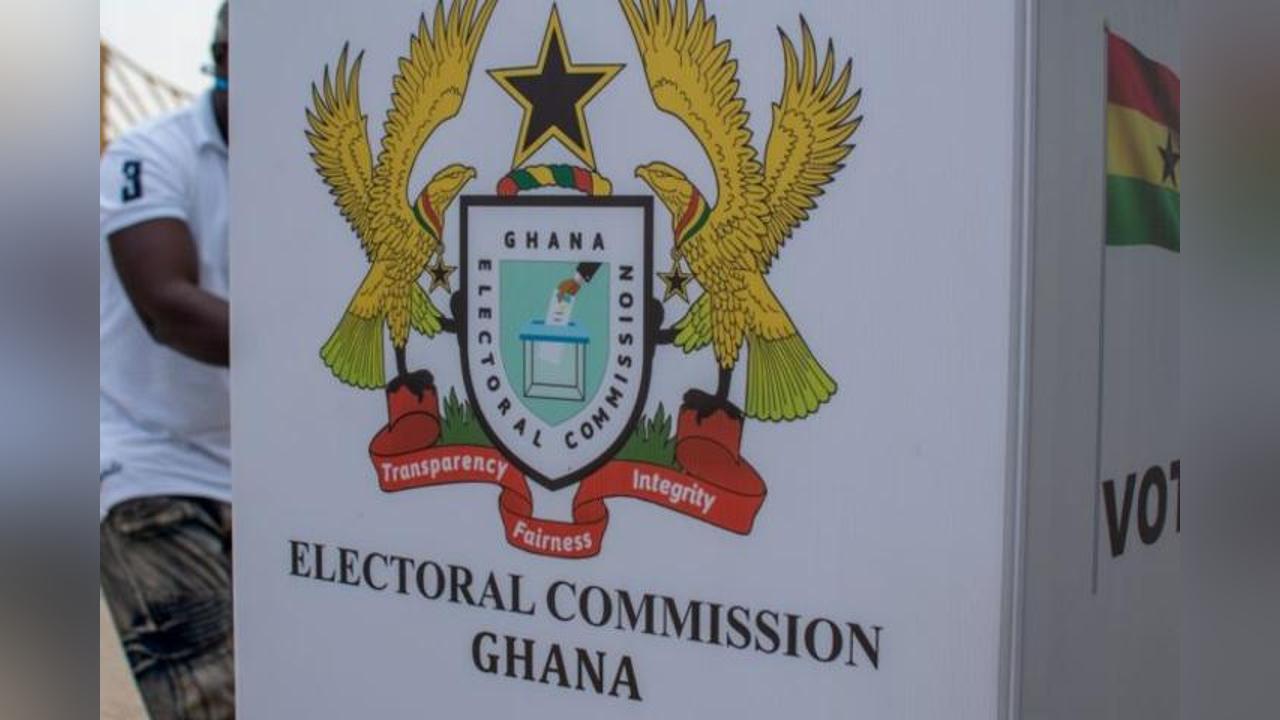
Africa-Press – Ghana. It has been said that to have free, fair and credible elections, it is not just what we do on election day alone but what we do before, during and after elections. Going by this preceding statement, there are activities that are done before an election can take place. We can talk about the recent appointments to the Electoral Commission (EC)by the president and the EC’s laying of a new constitutional instrument (CI) before Parliament to make Ghana Card the sole voter registration document, all in preparation for the 2020 elections.
If there is an argument that the election managers who are appointed to count the votes do not matter in the scheme of the electoral process then what use is an uncounted vote in an election. Those who cast the votes are as essential as those who count the votes. Vote counting is key to the overall outcome of any election.
It is against this background that the role of the election management body should be viewed in light of recent appointments to the EC.
Controversy
Little wonder that recent appointments to the EC have generated some kind of controversy, with the NDC, CDD, CODEO and other civil society groups kicking against the two appointees, Dr Peter Appiahene and Hajia Salima Ahmed Tijani, for having a soft spot for the NPP, as well as calling on the president to revoke the appointments. The governing party, the NPP, on the other hand, has also argued in favour of the appointments, stating that the president has not breached any laws.
While it is true that the president, in exercising the constitutional powers, has not broken the law in appointing persons to the EC, it is also true that such appointments must not only be done, but also be seen to be made in a way devoid of perception of political bias. In I Corinthians 10:31, the Apostle Paul admonishes us that for our behaviour or action to be beneficial, it should be tempered with good for others.
It is not prudent to ignore all the concerns and views of major stakeholders in the electoral process.
Disputed Electoral Outcomes
We must not lose sight of the fact that disputes over election results have brought conflicts and wars to many nations, communities and societies. Disputes arising in an election could be centered around issues of how election managers are appointed. This is why it is important to appoint persons who are beyond reproach. Another thing that could also lead to disputed electoral outcomes is if public confidence in the election management body dwindles. When politicians and voters alike do not have trust in the process, any move or decision of the election managers will be perceived with distrust and suspicion, which may result in disputes.
Disputes are inherent to elections. This is so because the stakes are high as we approach the 2024 elections. While the ruling party is bent on breaking the eight, the main opposition party is also leaving no stone unturned to win power.
Civil society groups
It is good that civil society organisations and others are beginning to raise their voices on issues of national importance, particularly their concerns over the EC appointments deserve commendation. Like the watchman on top of tower blowing the trumpet to warn of the impending danger, the CSOs have sounded the alarm bells over the appointments of party people to the EC and the threat it can pose to our democracy in the event of disputed election outcomes. For instance, in the 2020 elections, the EC was on record as having changed elections results six times, and Dr Peter Appiahene was to be in charge of the EC’s computer room because of his specialization in the computer field. Your guess is as good as mine.
Electoral management body
It is therefore no accident that the EC, in pursuant to its mandate, is clothed with integrity, impartiality, independence, and transparency in the performance of its duties. The EC does a lot of activities before, during and after elections and is often confronted with electoral issues ranging from the establishment of the legal framework for elections, balloting and counting, declaration of results, to the management of electoral disputes arising from the declared results. Any of these issues, if not handled well, could lead to a conflict. The EC has not been able to manage electoral problems well, culminating in a frosty relationship with the largest opposition party (the NDC), which can have adverse effects on the 2024 elections. One will expect the EC to adopt a more reconciliatory approach in addressing concerns and grievances of all stakeholders.
Going forward
Going forward into the 2024 elections, the EC’s conflict management skills need to be sharpened in order to handle electoral issues and election disputes better without parties having to resort to violence. As an institution with human weaknesses, the EC is bound to step on the toes of some people when performing its work, so we should be careful of how we bastardize the independent state institution umpiring for elections in Ghana.
For More News And Analysis About Ghana Follow Africa-Press