

Africa-Press – Ghana. The Second Ministerial Conference of the Russia–Africa Partnership Forum, held in Cairo in late December, confirmed the accelerating economic and political relations between Moscow and African countries. Gathered around shared priorities, African and Russian ministers adopted a roadmap to strengthen trade, investment and strategic cooperation in a world undergoing major transformation.
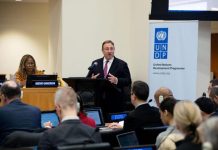
The high‐level conference held in Cairo from December 19 to 20, 2025 convened delegations from more than 50 African states, co‐chaired by the Russian Foreign Minister. The participation of senior officials at this level, alongside Egyptian Foreign Minister Badr Abdelatty and Angolan Foreign Minister Téte António — President of the Executive Council of the African Union — gave the event strong political and economic weight.
In their interventions, participants emphasized a vision grounded not only in economic cooperation but also in respect for national sovereignty, equality of partners, and non‐interference. The final communiqué underscored a shared commitment to bolstering commerce and investment while supporting peace, security and sustainable development across the continent.
At the opening of the conference, Russian Foreign Minister Sergey Lavrov stated that Russian‐African partnership “is steadily developing across all areas” and that Moscow is committed to unlocking “the huge potential” of practical cooperation with Africa. He noted that bilateral trade turnover grew by around 13 % to nearly $28 billion, a significant momentum despite international sanctions affecting the Russian economy.
This modest growth in trade, however, still stands in contrast to Africa’s exchanges with China or the European Union, highlighting the broad untapped potential of this relationship. Nonetheless, the adoption of a joint declaration supports the intention to expand commercial exchanges, diversify sectors and strengthen mutual investments.African participants also voiced their perspectives. For example, Algeria’s Minister of State and Foreign Minister Ahmed Attaf emphasized that Africa‐Russia partnership has matured to become an essential lever for establishing a more just and equitable international order. This aligns with the official communiqué’s broader call for cooperation based on equality, mutual benefit and respect for national development priorities in alignment with the African Union’s Agenda 2063.
Geopolitically, Africa is increasingly seen as a cornerstone of the emerging multipolar order that Moscow promotes, positioned in contrast to Western influence models perceived by some African leaders as conditional or interventionist. The Cairo conference echoed this framing by reinforcing that partnerships should be based on the sovereignty of African states without external interference — a stance consistently articulated by Russian officials in their engagement with Global South partners.Beyond rhetoric, discussions explored concrete cooperation in areas such as trade, energy, agriculture, infrastructure, technology and food security. Russia invited African partners to explore new opportunities in its own markets, including mechanisms to settle transactions in national currencies to reduce exposure to dollar volatility.
Egypt’s centrality in this strategy is no accident. As host country, Cairo plays a pivotal role, bridging not only regional logistics — connected to Eurasian networks via the Suez Canal and transport corridors — but also the economic and political diplomacy underlying the integration of African markets into the Global South.The stated objective of the conference is twofold: to strengthen the current momentum of bilateral relations and to prepare for a Third Russia–Africa Summit in 2026, which must transform these intentions into measurable commitments. The final communiqué confirmed in Cairo reflects this strategic direction, rooted in principles of equality, mutual benefit and sustainable partnership.
In a world marked by intense geopolitical competition and the ascent of the Global South, the Russia–Africa–Middle East relationship is positioning itself not only to reshape trade and investment landscapes but also to influence the norms of international cooperation.
africa-news-agency
For More News And Analysis About Ghana Follow Africa-Press