
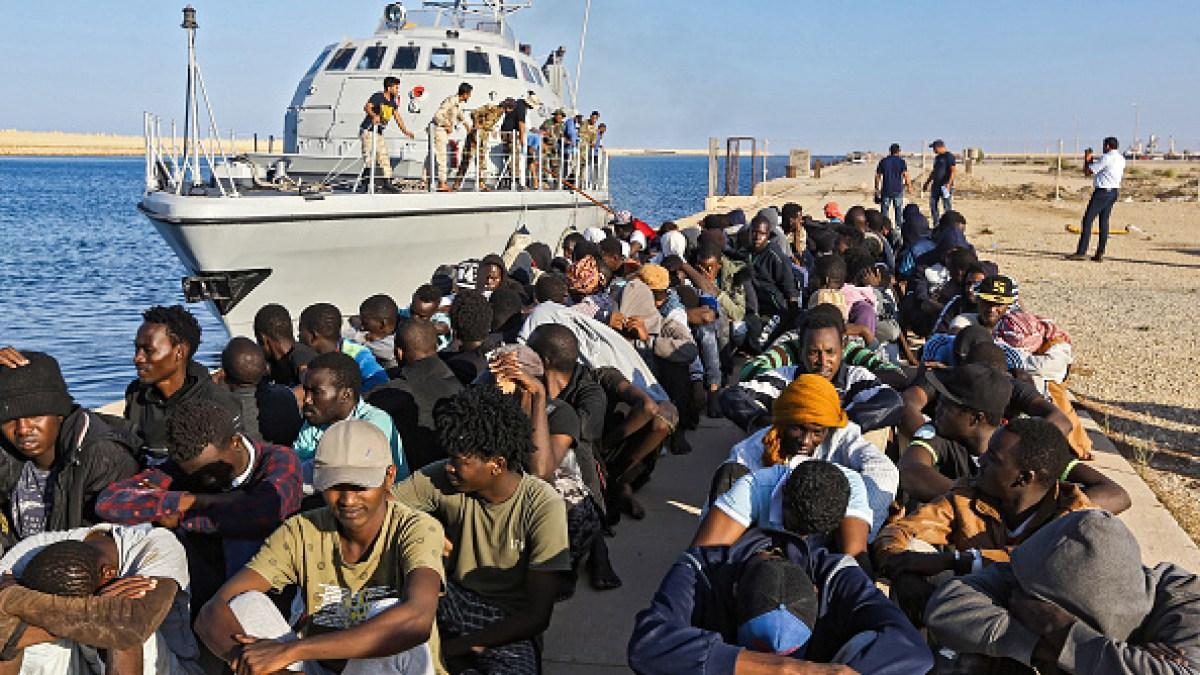
Africa-Press – Ghana. Migration remains a complex and evolving global issue driven by multiple factors including economic hardship, conflict, and climate change. While many seek better opportunities abroad, irregular migration often exposes people to human trafficking, exploitation, and life-threatening experiences.
For many Ghanaian youth, travelling abroad is seen as a gateway to success. The promise of a faster route to financial stability continues to push thousands into dangerous routes through the Sahara Desert and conflict-marked North African states.
One of such individuals is Yaw Peter, a tile layer in his early thirties, who shared his traumatic experience in Libya with the Ghana News Agency in Sunyani. His ordeal mirrors the reality of many migrants who embark on irregular journeys in search of greener pastures.
The Allure of Abroad
Peter had worked diligently for years and saved every pesewa with the hope of relocating abroad. Like many, he envisioned a life of opportunity—steady income and a secure future for his wife and two children.
“I believed success would come easier over there,” he recalled. Motivated by stories of rapid financial gains, he committed his lifetime savings to the journey, determined to reach Libya and eventually Europe.
The Harsh Reality
However, upon arrival in Libya, his dream shattered. He was held by middlemen and forced into exploitative work to repay the costs of the trip. The money he planned to send home never came; instead, poverty deepened for his family back in Ghana.
He abandoned his profession as a tile layer and resorted to odd jobs to survive. “Life there stripped me of my dignity,” he said. “It wasn’t the life we imagined.”
Descent into Desperation
Peter’s most traumatic moment came when he was arrested without cause and forced to work as a domestic slave under harsh and inhumane conditions.
He risked his life in an attempted escape — leaping from a window while guards opened fire. Though he survived, he lost everything he owned, including the small savings he had managed to gather.
The Human Cost
After four years of fear, labour exploitation, and uncertainty, Peter returned to Ghana with just GH¢5,000 — a fraction of what he spent and hoped to earn.
“I lost my profession, I lost time, and I lost myself,” he said soberly. Life back home has not been easy either; reintegrating into society has proven slow and emotionally draining. Former clients have moved on, and rebuilding from scratch has been overwhelming.
A Lesson Learned
Peter’s message to young people is direct:
“Stay in Ghana and work hard. The grass is not always greener outside.”
He regrets leaving a stable life behind, believing now that success in Ghana, while gradual, is attainable with resilience and dedication.
A Call to Action
His experience underscores the urgent need for awareness and policy interventions around migration. While regular migration offers opportunities for skills, remittances, and cultural exchange, irregular migration exposes individuals to preventable harm.
Stakeholders, policymakers, and community leaders must continue to educate the youth, promote safe migration pathways, and support returnees to reintegrate with dignity.
Conclusion
Migration will remain part of human history and development. But as Ghana navigates the complexities of modern migration, prioritizing the safety, dignity, and rights of citizens is essential. Stories like Peter’s serve as a solemn reminder that the pursuit of opportunity must not cost one’s freedom, identity, or life.
For More News And Analysis About Ghana Follow Africa-Press