

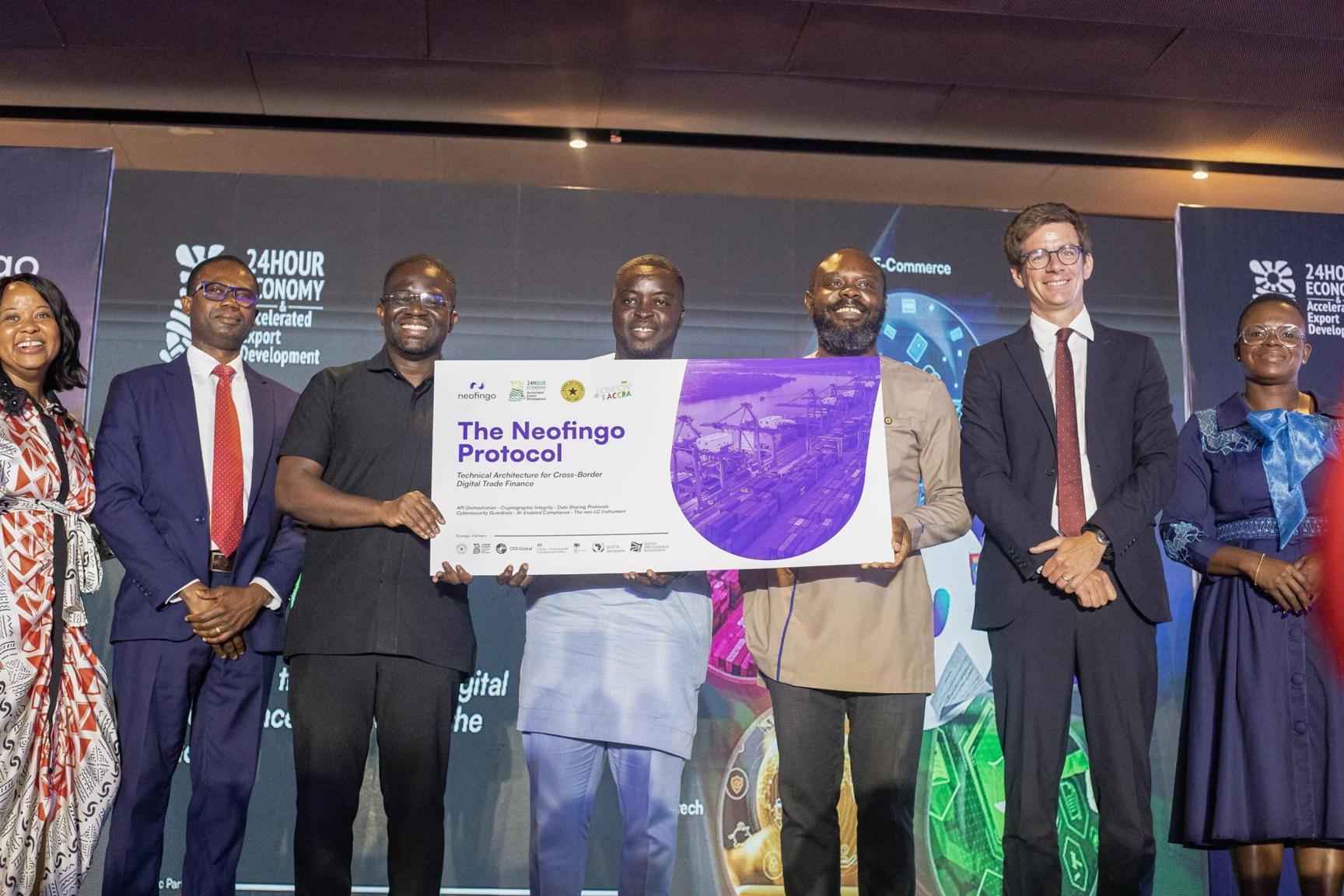
Africa-Press – Ghana. Ghana and the United Kingdom have begun exploratory discussions to establish a new digital trade finance corridor aimed at helping small and medium-sized enterprises (SMEs) access international trade finance and expand exports.
The initiative, known as Neofingo, was unveiled at a high-level forum convened jointly in London and Accra by ODI Global, the Government of Ghana’s 24-Hour Economy Authority and the African Continental Free Trade Area (AfCFTA) Secretariat.
The forum brought together regulators, financiers, policymakers, entrepreneurs, trade experts and technology specialists from both countries to examine how a shared digital trade finance network could help close the financing gap facing exporters in Ghana and across West Africa.
Neofingo is expected to operate as a digital trade finance corridor that connects UK-based neobanks with Ghanaian and African fintech ecosystems to make it easier for exporters to access credit and other financial instruments needed for international trade.
The partners said the initiative would build a shared digital infrastructure to support trade documentation, compliance data and digital letters of credit, particularly for small exporters who often struggle to access formal trade finance.
Ghana is estimated to face an annual trade finance gap of about seven billion dollars, part of a wider shortfall of about 120 billion dollars across sub-Saharan Africa.
Analysts say the challenge is not only limited access to capital but also a decline in trust infrastructure in international trade finance, including the withdrawal of correspondent banking relationships.
The organisers said the new corridor would help connect Ghanaian SME exporters to global trade finance systems, including the Ghanaian diaspora, while leveraging the AfCFTA digital trade framework and other emerging digital trade platforms linking London and Accra.
Presidential Adviser on the 24-Hour Economy, Mr Augustus Goosie Tanoh, said the global trade finance system had historically excluded African SMEs, making it difficult for small exporters to access essential instruments such as letters of credit.
He said the proposed digital corridor would help rebuild trade finance as shared digital infrastructure that enables small exporters in Ghana to access the same financial tools available to larger companies.
Dr Sara Pantuliano, Chief Executive of ODI Global, said research showed that effective implementation of the AfCFTA Digital Trade Protocol could significantly boost Ghana’s economy over the long term while creating hundreds of thousands of jobs.
She said the proposed UK-Ghana digital trade finance corridor would help address existing gaps in trade finance and strengthen trust in the financial system, particularly for small businesses seeking to export.
Mr Ben Ainsley, Deputy Trade Commissioner at the British High Commission in Accra, said the new initiative built on the long-standing relationship between Ghana and the United Kingdom.
He said the proposed corridor would make it easier for businesses in both countries, including members of the Ghanaian diaspora, to trade, invest and grow together.
The organisers said the forum also examined the governance structures, technical standards and institutional arrangements required to make the digital trade finance corridor operational.
They expressed optimism that the initiative would benefit thousands of exporters, trade finance institutions and supply chain partners across Ghana and the wider West African region once implemented.