
Africa-Press – Kenya. Kenya wants her neighbours compelled to manage plastics they produce as push to find lasting solution on plastic pollution continues.
National Environment Management Authority director of compliance Ayub Macharia said Kenya will support a legally binding agreement developed to ensure the countries are obligated to manage their plastics.
Machira spoke during the ongoing conference on plastic pollution in Gigiri, Nairobi.
“We would like to have a global legally binding agreement that will make other countries obligated. We think that they are very slow and have interests in plastic production,” he said.
“Some of the industries that we had in our country migrated to our neighboring countries.”
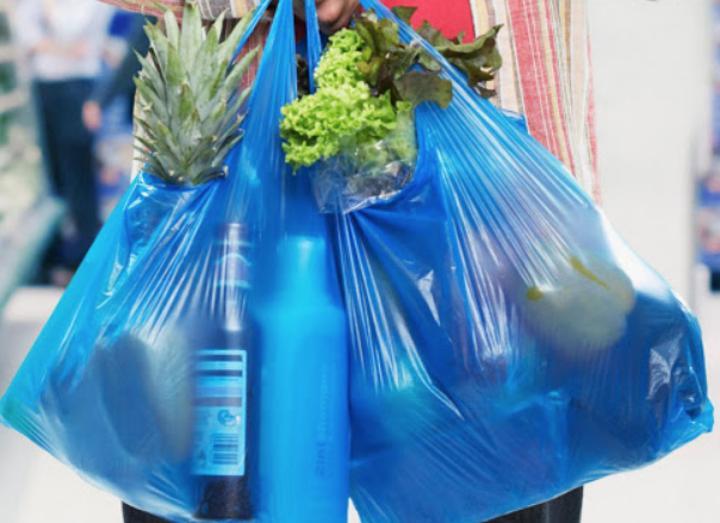
Kenya, through the Environment Ministry, banned thin plastic carrier bags through a gazette notice on February 27, 2017.
The ban came into effect in August the same year.
Possession of such plastics attracts a fine of Sh2 million to Sh4 million and a jail term of one to two years, or both.
Before 2017, about 100 million non-biodegradable plastic bags were used in Kenyan supermarkets every year. These had severe consequences on the environment.
Despite the ban, some plastics are still being found in Kenyan markets.
The country has also enacted the Sustainable Waste Management Policy and Act (2022), which proposes a transition from a linear to a circular economy.
The law was enacted on July 6, 2022. It has provisions that seek to promote sustainable waste management and improve the health of Kenyans.
This is done by ensuring a clean and healthy environment.
Under the circular economy concept, resources are reused and recycled to minimise waste and maximise efficiency.
On June 5, 2019, Kenya banned single-use plastics on beaches, national parks, forests, and conservation areas.
The ban prohibits visitors from carrying single-use plastic water bottles, disposable cups, plates, cutlery, and straws into national parks, forests, beaches, and conservation areas.
Macharia said once the instrument being developed is in place, countries will be compelled to take measures to ensure plastics do not come into the country.
President William Ruto, who opened the negotiations said in order to deal with plastic pollution, humanity must change.
“Change is inevitable. This treaty, this instrument that we are working on, is the first domino in this change. Let us bring it home. Let the change begin,” he said.
A number of countries, among them Iran, Saudi Arabia, Russia, Cuba and Bahrain on Monday rejected the Zero Draft and demanded a new Zero Draft, before they consider the negotiations.
They argued that the Zero Draft failed to reflect all members’ views, arguing that upstream measures like plastic production should not be within the treaty’s scope.
The chairperson had to close the meeting on day one without establishing the Contact Groups, where states were supposed to negotiate the treaty’s elements.
Iran announced the creation of the Global Coalition for Plastics Sustainability, a group that attempts to water down and lower the ambition of the global plastic pollution treaty.
Saudi Arabia and Russia are the other members of the coalition.
It is unclear whether they are pushing for a loose voluntary agreement or no agreement at all.
The group is yet to gain any traction among other States not in the Coalition.
It has however managed to delay and wind back discussions by calling into question the legitimacy of the Zero Draft.
Several States have not yet expressed a clear position on all the measures proposed.
Positive signals from countries like the US, South Africa and Brazil can however be seen, from their increasingly open discussions.
For More News And Analysis About Kenya Follow Africa-Press