
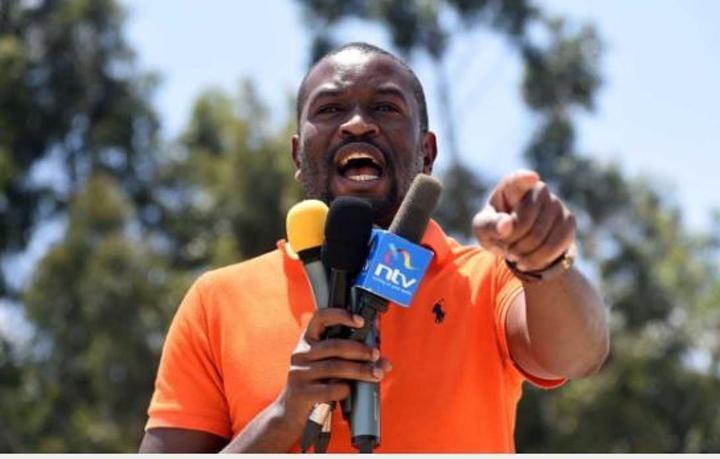
Africa-Press – Kenya. As Kenya braces for another politically charged year, a new generation of ambitious, outspoken, and highly engaged young leaders is rising steadily onto the national stage.
These emerging figures—drawn from Parliament, the Senate, and various grassroots political movements—are increasingly shaping debates on governance, economic policy, national accountability, and the future of the country’s democracy.
Their presence in mainstream politics is no longer peripheral. In 2026, they stand poised to redefine the political rhythm heading into the decisive 2027 general elections.
Political analyst Joseph Mutua argues that the country is witnessing a pivotal shift. He says Kenya’s political architecture—long dominated by veteran power brokers—is being jolted by the assertiveness and visibility of younger leaders who are not afraid to challenge long-standing political norms.
“Kenya has a vibrant pool of young leaders who are not only ambitious but are also increasingly visible on national platforms. Their involvement is redefining political engagement, especially among the youth,” Mutua notes.
This generation of leaders has mastered the dual terrain of modern politics; the high-energy dynamism of social media and the pragmatic work of constituency service.
They are a product of an era where political messaging spreads in seconds, public scrutiny is constant, and issue-based engagement is now a baseline expectation for many citizens—especially the millions under age 35 who form the bulk of the electorate.
What distinguishes these younger politicians is their ability to intertwine activism, policy awareness, and strategic communication in a way that resonates with an increasingly restless and politically aware public.
Among the most emblematic groups symbolising this shift is the fast-rising Kenya Moja movement. Comprising daring, media-savvy legislators and influential figures below the age of 50, Kenya Moja has positioned itself as more than a fleeting youth formation.
Instead, it is emerging as a decisive political force challenging conventions, exposing gaps in governance, and redefining opposition politics. Its membership includes Nairobi Senator Edwin Sifuna, MPs Caleb Amisi (Saboti), Babu Owino (Embakasi East), Anthony Kibagendi (Kitutu Chache South), Ndindi Nyoro (Kiharu), and Mohamed Ali (Nyali).
Their rhetoric is blunt, their posture unmistakably bold, and their message increasingly resonant in a political environment where many citizens feel underrepresented or disillusioned.
“We’re not a third force — we are the force,” declared Babu Owino during one of their high-profile meetings. “This government lacked proper checks and balances, and we’ve stepped in to fill that gap.”
The statement captured both the swagger and the sense of mission that the Kenya Moja group has come to embody.
Among these rising figures, Babu Owino stands out prominently as one of the most influential young politicians to watch in 2026.
Known for his activist roots and confrontational political style, Owino has in recent years broadened his footprint beyond campus politics and Nairobi street mobilisation to become a heavyweight in national debates.
In mid-2025, he added a significant credential to his public profile when he was admitted to the bar as an advocate of the High Court—a milestone he described as a personal and political evolution.
This development has enhanced his credibility among supporters who view him as a blend of activism, intellectual grounding, and legal literacy.
Over the past year, Owino has been unyielding in his criticism of perceived leadership failures, especially within his party, the Orange Democratic Movement (ODM). During the party’s 20th anniversary celebrations in November 2025, his bold questioning of new leadership appointments exposed internal tensions and marked him as a politician unwilling to submit quietly to party orthodoxy.
His persistent advocacy for increased education funding, reduced cost of living, and youth empowerment has kept him at the centre of national conversations—making him a formidable figure as succession politics intensify.
Alongside him is Nairobi Senator Edwin Sifuna, whose star has risen sharply in recent months. Sifuna, a lawyer by profession and a dynamic political communicator, was ranked the top-performing senator in a 2025 study that gave him a 70.1 per cent approval rating based on leadership, responsiveness, and national engagement.
These metrics reflect not just popularity but a growing public trust in his approach to governance.
Sifuna’s dual role as both senator and Secretary-General of ODM places him at one of the most strategic intersections of party politics and national policymaking.
His tenure has been marked by sharp, well-articulated criticism of government decisions, but also by efforts to hold his own party together amid internal strain. Following the death of Raila Odinga in 2025—a moment many described as the end of an era—Sifuna became one of the key figures asserting ODM’s continued viability.
He insists that ODM remains a critical voice in Kenya’s political landscape and has hinted that the party may still field a presidential candidate in 2027.
In a political climate filled with uncertainty, fragmentation, and shifting alliances, Sifuna’s leadership will be closely watched in 2026 as the party charts its post-Raila path.
Meanwhile, within the Kenya Kwanza coalition and the national legislative hierarchy, Majority Whip Silvanus Osoro has cemented his place as one of the most influential young legislators of the current Parliament.
Osoro has used his platform to pursue policy reforms and assert strong views on contemporary issues such as the rising culture of youth betting. Describing betting as a “national threat to development,” he has pushed for legislative measures to curb what he sees as an alarming trend affecting millions of young Kenyans.
Osoro’s political style is pragmatic and strategic. His call for a “coalition of the willing” to unify various political forces ahead of 2027 signals his ambition and growing national stature.
As one of the younger leaders within Kenya Kwanza’s upper ranks, he is expected to play a critical role in the coalition’s strategy going into the next election cycle.
Another key figure capturing national attention is Nyali MP Mohamed Ali. Known for his fearless persona and investigative journalism background, Ali has reinvented himself politically in recent months.
He has openly criticised the leadership of his own party, UDA, accusing its top officials of undemocratic tendencies.
His public declaration that he would not participate in the party’s grassroots elections shocked many within the ruling coalition and sparked a broader conversation about internal democracy within political parties.
Ali’s repositioning has been interpreted by analysts as a deliberate strategy to carve out an independent political identity—one rooted in accountability, transparency, and direct engagement with the public.
Whether this move distances him from the core of the ruling coalition or elevates him as a voice of integrity within it remains an unfolding story, but it places him squarely among the politicians to watch in 2026.
Kiharu MP Ndindi Nyoro/FILESimilarly, Kiharu MP Ndindi Nyoro has emerged as a crucial voice in national economic debates.
Known for his strong views on fiscal responsibility, Nyoro has in the past year issued stern warnings about Kenya’s rising public debt, which he estimated at over Sh12 trillion. His critique—the argument that excessive borrowing without productive investment endangers future generations—has contributed to his image as a financially literate and forward-looking legislator.
Once regarded as a close ally of the president and a central figure within the ruling administration’s political machinery, Nyoro has in recent months taken a more independent stance.
He has firmly opposed proposed cuts to education funding and criticized high taxes and inefficiencies within government.
His shift from staunch defender to selective critic has stirred speculation about his political ambitions, especially given his robust support base in Central Kenya.
In Western Kenya, Mumias East MP Peter Salasya has emerged as one of the most talked-about young leaders—albeit one with a uniquely polarising political identity. Salasya’s outspoken criticism of government failures, especially with regard to stalled development projects and delayed county disbursements, has elevated his national profile. His direct rebuke of the president in late 2025 startled many political observers and underscored his willingness to challenge authority regardless of potential repercussions.
Salasya’s political brand has also been shaped by controversy. His ongoing hate-speech case from 2025—stemming from contentious social-media posts—continues to dominate headlines.
But despite the legal battles, he has maintained a strong grassroots presence, touring Western Kenya and building what he describes as a movement for “ordinary, struggling Kenyans.” His declaration that he will run for president in 2027 may seem audacious, but it reflects a growing trend of younger leaders taking bold positions in the national arena.
Perhaps one of the most dramatic recent developments in Kenyan politics has been the successful impeachment of former Deputy President Rigathi Gachagua—a move architected and championed by Kibwezi West MP Mwengi Mutuse.
Mutuse’s leadership in coordinating the impeachment motion placed him at the centre of one of the most consequential political events of the decade. It instantly elevated him from a growing legislator to a national power player.
His handling of the impeachment process—marked by confidence, procedural mastery, and careful coalition building—signalled the emergence of a young politician capable of navigating the complexities of high-stakes national politics. As Kenya moves through 2026, Mutuse’s influence is expected to expand, with political analysts predicting he will play an even larger role in shaping inter-party relations and national legislative priorities.
Taken together, these young leaders represent a generational shift that is impossible to ignore.
Their assertiveness, media fluency, and willingness to question established authority forms a stark contrast with an older political class accustomed to top-down politics.
They articulate the frustrations of millions of young citizens facing economic hardship, unemployment, and social instability—and their growing visibility is reshaping the narrative of Kenya’s future.
As the year unfolds, the country will watch closely to see whether this rising cohort forms new alliances, challenges existing power structures, or ultimately transforms Kenya’s political culture.
What remains clear is that the political winds are shifting—and in 2026, Kenya’s young leaders are no longer the future of politics. They ar