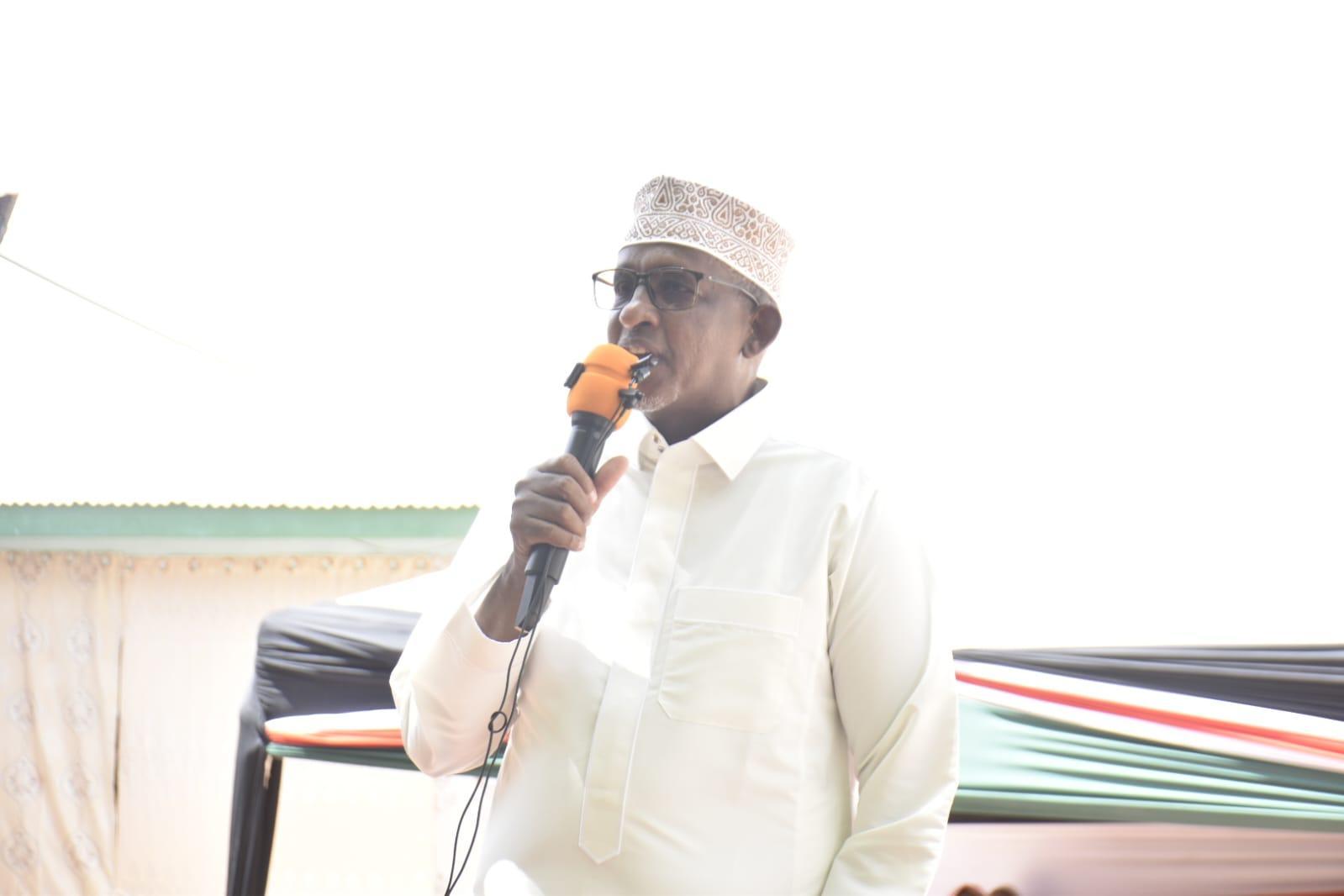
Africa-Press – Kenya. Speaking in Garissa town during a graduation ceremony at Madarasa Munawar, where he was the chief guest, Duale dismissed claims that the government was dragging its feet in settling hospital bills, saying SHA was following the law by conducting forensic audits, clinical reviews, and verification of claims before releasing funds.
“We will only pay after we do due diligence. SHA will conduct due diligence, forensic audits and clinical reviews to make sure that the services you have offered are the right ones and that the Kenyan patient has actually received them,” Duale said.
He explained that hospitals claiming non-payment were largely those whose submissions were still under review.
“You know there are people saying SHA is not paying them. We have contracted over 10,272 public, private and faith-based facilities across the country. We have paid close to Sh13 billion for primary healthcare alone,” Duale said.
The CS said SHA has also paid close to Sh75 billion under the Social Health Insurance Fund (SHIF), Sh3.5 billion under the Public Servants Medical Scheme, and about Sh1 billion for emergency, chronic and critical illness funds.
“This month alone, SHA has paid close to Sh6 billion. The law allows us a window of 90 days to pay after review, verification, and forensic audit. We pay on the 14th of every month, and SHA has enough money in its bank accounts,” he said.
However, Duale emphasized that the authority would not compromise on accountability.
“We will not pay for fictitious claims that Kenyans have not received,” Duale said.
The Health CS also warned health facilities against charging patients for services covered under SHA, calling on Kenyans to report such facilities so that action can be taken.
“We have started with Bomet Health Centre, and we are now putting a charter in every hospital to clearly show that it is walk-in, walk-out,” Duale said.
Meanwhile, Duale announced that from April 1, all security forces will be enrolled under the Public Servants Medical Scheme, which will also be managed by SHA.
“We want to ensure our men and women in uniform—the National Police Service—working with the Inspector General and the Ministry of Interior receive quality healthcare. They work under difficult conditions, and they and their dependents deserve the best healthcare delivery system,” Duale said.
SHA was established in late 2024 to replace the National Hospital Insurance Fund (NHIF), inheriting billions of shillings in unpaid debts that placed the new authority on weak financial footing from the start.
As SHA began processing claims around October 2024, many hospitals complained of delayed or unpaid claims, prompting groups such as the Rural and Urban Private Hospitals Association (RUPHA) to suspend SHA services and demand cash payments from patients.
RUPHA has said delayed payments have affected hospitals’ ability to pay staff, stock medicines and maintain quality care, with some facilities refusing to accept SHA cover altogether.