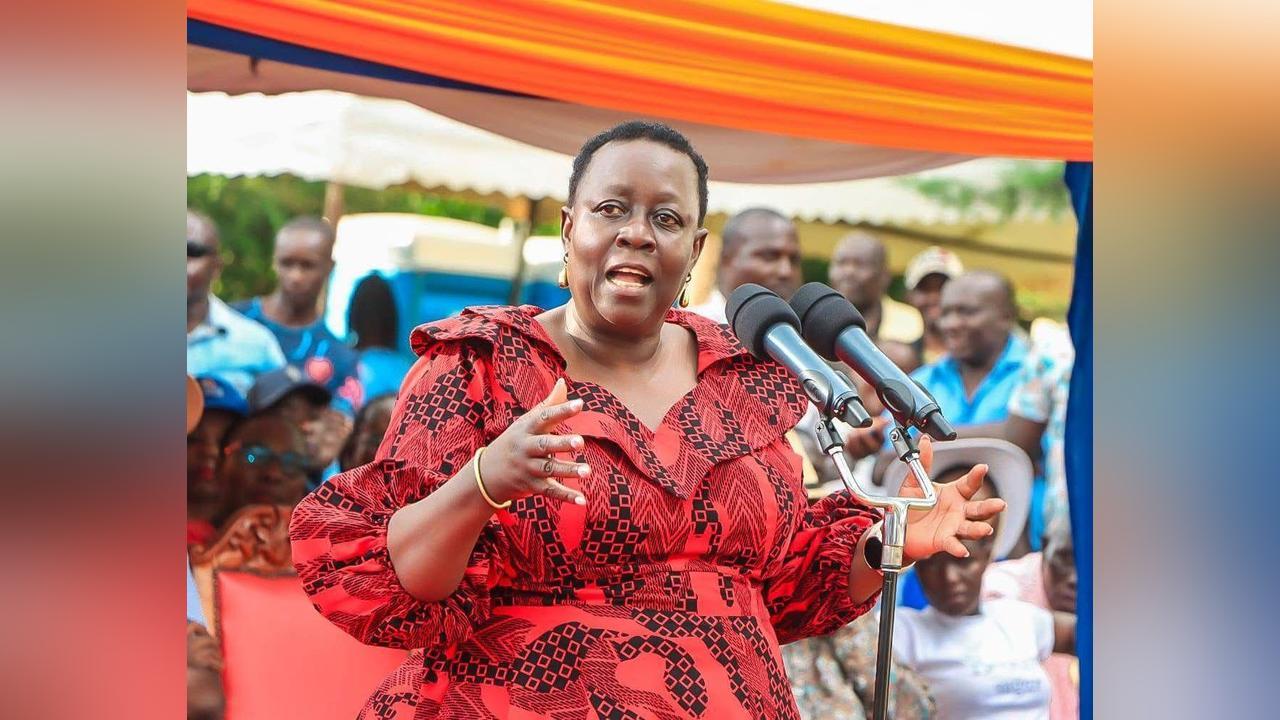
Africa-Press – Kenya. Kisumu Woman Representative Ruth Odinga has called for a candid review of the implementation of the ten-point agenda that underpins Kenya’s broad-based government. The Legislator said that the progress made since March 2025 remains uneven and unsatisfactory to many Kenyans.
In a statement issued on Tuesday, February 3, Ruth said the ten-point agenda was the foundation of the current political arrangement and must be evaluated honestly to determine whether its objectives are being met.
“As we approach March, the month slated for the review of the ten-point agenda’s implementation, it is important that we evaluate the progress made since March 2025. This agenda serves as the very foundation of the broad-based government,” she said.
“We must pursue the 10-point agenda, which includes the implementation of the National Dialogue Committee (NADCO) Report. On Electoral Justice, the Report proposed a 9-member panel to reconstitute the IEBC, which has since been achieved.”
Central to the agenda, the Kisumu Woman Representative noted, was the implementation of the National Dialogue Committee (NADCO) report. Ruth acknowledged progress in the reconstitution of the Independent Electoral and Boundaries Commission (IEBC) through a nine-member selection panel, as proposed by NADCO.
However, she said key elements remain unaddressed, including the audit of the 2022 presidential election by independent experts and the establishment of a framework for reviewing electoral boundary delimitations.
She also raised concerns over the lack of compensation for victims of state violence during demonstrations, describing it as one of the most critical unresolved issues.
Ruth said the right to peaceful assembly and compensation for victims of rights violations were central to the agenda championed by former Prime Minister Raila Odinga.
According to her, the Kenya National Commission on Human Rights bears responsibility for developing a compensation framework, but no victim has been compensated to date, a situation she attributed to a lack of political goodwill.
She questioned whether meaningful progress would now be made following the work of the Panel of Experts on Compensation of Victims of Demonstrations and Public Protests.
Ruth dismissed claims by some individuals that Raila Odinga held private conversations with them on a wide range of political issues, saying such narratives distort his values and legacy. She said Raila Odinga’s beliefs were clearly articulated in the ten-point agenda and were well understood by those who worked closely with him.
“Those claiming that Raila Odinga told them this and that should speak about the values he believed in, which were well captured in the ten-point agenda, whose implementation success remains a subject of debate, with many Kenyans not satisfied. Raila Odinga was not a gossiper,” she added.
She reiterated that she is not opposed to negotiations ahead of the 2027 General Election, but said this should not prevent Kenyans from interrogating the commitments made under the ten-point agenda. Ruth warned that divergent opinions should not be misconstrued as opposition to dialogue.
“Like I have always said, I am not against negotiations ahead of the 2027 elections, and it is sad that any divergent opinion is misconstrued to mean this. But that should not stop us from asking questions, particularly around the ten-point agenda that was the basis for the broad-based government.”
On governance reforms, she noted that full implementation of the NADCO report could face legal and constitutional hurdles, particularly proposals to establish new state offices such as the Office of the Leader of the Official Opposition and the Office of the Prime Minister.
She said these proposals raise constitutional questions given Kenya’s presidential system under the 2010 Constitution. Similar challenges, she added, apply to proposals aimed at resolving the one-third gender rule.
Ruth Oding called for greater scrutiny of inclusivity in budgetary allocations and public appointments, protection of devolution, and increased economic investment in the youth, citing the NYOTA programme as a positive step. She also urged renewed focus on leadership, integrity and curbing opulence in public office.
Other priority areas, she said, require urgent attention include an audit of the national debt and its utilisation, the fight against corruption, elimination of wastage of public resources, and the protection of constitutionalism, the rule of law, press freedom and the sovereignty of the people, including an end to abductions.
She said the upcoming March review should provide an opportunity for the government to demonstrate tangible progress and restore public confidence in the reform agenda.