Africa-Press – Kenya. The Ethics and Anti-Corruption Commission (EACC) has reshuffled its top management in changes aimed at streamlining operations.
EACC Chief Executive Officer Abdi Mohamud announced the changes, which include the transfer of Director of Investigations Paschal Mweu, who has been moved to head the Ethics and Leadership directorate.
Mweu swapped positions with John Lolkolai, who has been appointed the new Director of Investigations.
Deputy Director of Asset Tracing George Ojowi was transferred to the South Nyanza Regional Office, where he has been named regional manager.
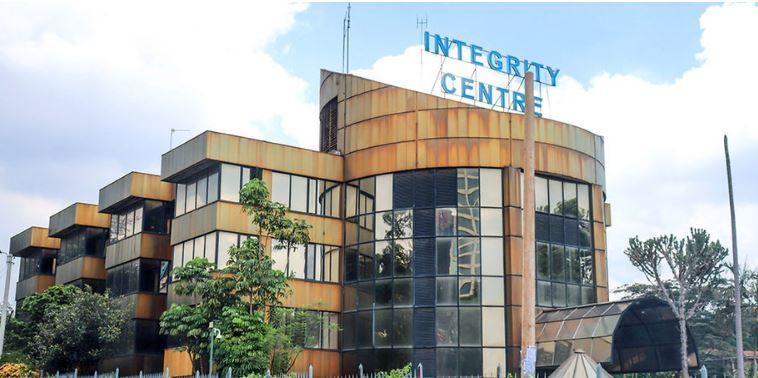
South Nyanza Regional Office Manager Ignatius Wekesa was moved to the headquarters at Integrity Centre and appointed Deputy Director of Forensic Investigations, while Deputy Director of Coordination Enoch Otiko was named Deputy Director of Asset Tracing.
Deputy Director of Forensic Investigations Humphrey Mahiva was transferred and appointed Deputy Director of Coordination, while Gorai Galgalo was moved to the Kenya Ethics and Anti-Corruption Academy as a Senior Education Officer.
Mohamud said the changes were routine and intended to enhance efficiency at the commission.
The reshuffle comes amid heightened EACC operations to curb the rising rate of corruption in the country.
In 2024, the commission handed over 35 title deeds valued at Sh5 billion and cash assets worth Sh511 million to the National Treasury as part of its anti-corruption efforts.
EACC said asset tracing remains one of its key pillars in the fight against corruption.
Last week, Mohamud urged African anti-corruption and oversight institutions to adopt artificial intelligence and other digital technologies to strengthen the fight against corruption and financial crimes.
He was speaking at the 13th International Symposium of the Forum of State Inspections of Africa and Assimilated Institutions (FIGE), held in Djibouti from February 3 to 5, 2026.
Mohamud said emerging technologies such as artificial intelligence, blockchain, and data mining are increasingly critical in investigating complex financial crimes, particularly those involving virtual assets and cross-border transactions.
He highlighted Kenya’s Digital Super Highway initiative, saying expanded digital infrastructure and e-government services have improved transparency and accountability in public service delivery.
Mohamud added that Kenya is among the few African countries that have enacted legislation regulating virtual assets, helping to address risks of money laundering and illicit financial flows.
“These developments require enforcement agencies to build advanced technical capacity,” he said, noting that technology-driven investigations are essential to counter increasingly sophisticated corruption networks.
He disclosed that the EACC has automated 58 per cent of its processes and is working towards full digitisation.
The commission has invested in strong ICT systems and uses digital tools to manage resources, analyse electronic evidence, and support investigations.
Mohamud said wider adoption of artificial intelligence will enhance analysis of large data volumes and improve detection of suspicious financial transactions.
He also announced that Kenya will host the Centre for Anti-Corruption Studies and Research in Africa (CEREAC), set to be launched in June 2026 during the Annual General Meeting of the Association of Anti-Corruption Agencies of Africa.
He urged anti-corruption agencies across the continent to use the centre to develop locally driven and innovative approaches to fighting corruption and fraud.
The symposium, themed “New Digital Technologies Serving Audits and Control Institutions and Good Governance: What Contribution and What Limits,” was officially opened by Djibouti President Ismael Omar Guelleh.