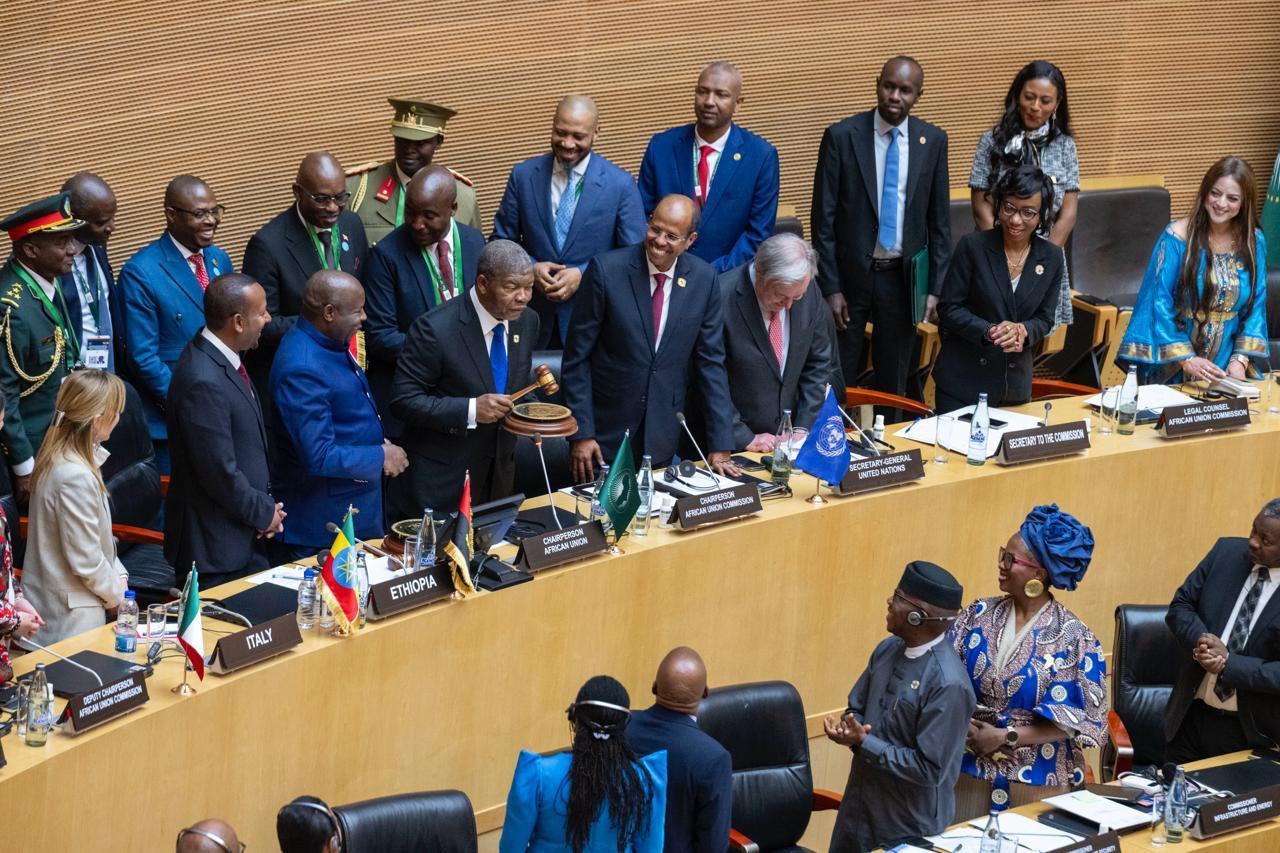
Africa-Press – Kenya. Burundi President Évariste Ndayishimiye has been elected Chairperson of the African Union (AU) for 2026, succeeding Angola’s President João Lourenço during the 39th Ordinary Session of the AU Assembly of Heads of State and Government held in Addis Ababa, Ethiopia.
Taking over the rotating leadership of the continental body, President Ndayishimiye pledged to prioritise unity, integration and tangible outcomes for African citizens, saying the continent’s vast potential must translate into real progress.
“Africa has immense potential, and our leadership must ensure that integration, peace, and sustainable development are not just goals on paper but realities for our citizens,” he said in his acceptance address.
He emphasised the need for stronger collaboration among member states, adding: “We must work together, sharing resources and knowledge, to meet the expectations of our youth and communities across the continent.”
The Assembly also approved the composition of the AU Bureau for 2026.
Burundi will serve as Chair, with Ghana as First Vice Chair representing West Africa, Tanzania as Second Vice Chair for the East African region, a Third Vice Chair to be confirmed from North Africa, and Angola as Rapporteur representing Southern Africa.
President William Ruto congratulated Ndayishimiye on his election, expressing Kenya’s readiness to support his leadership and push for reforms within the continental body.
“Our best wishes to President Évariste Ndayishimiye of Burundi as he takes over as Chairperson of the African Union. We look forward to working with him to drive meaningful reforms of the African Union,” Ruto said.
He also thanked outgoing Chairperson João Lourenço “for his dedicated leadership and service to the African Union.”
In his final remarks as AU Chair, President Lourenço outlined achievements made during Angola’s tenure, including efforts to advance the implementation of Agenda 2063, mobilise investment for infrastructure, and deepen continental integration through the African Continental Free Trade Area (AfCFTA).
He noted that improving the efficiency of AU institutions and reducing bureaucracy had also been key priorities during his term.
On peace and security, Lourenço warned that Africa’s development ambitions would remain unattainable without stability across the continent.
He called for intensified efforts to “silence the guns,” particularly in conflict zones such as Sudan and the eastern Democratic Republic of the Congo, while also highlighting the need to combat terrorism in the Sahel and the Horn of Africa.
The Angolan leader reaffirmed the AU’s firm opposition to unconstitutional changes of government, cautioning against the practice of legitimising military coups through subsequent elections.
As he handed over the chairmanship, Lourenço urged African leaders to adopt measurable commitments that deliver practical results for citizens and strengthen a resilient, integrated and prosperous continent in line with Agenda 2063.
Ndayishimiye now assumes leadership of the 55-member bloc at a time when the AU faces growing expectations to accelerate economic integration, respond to security challenges and deliver visible development gains for Africa’s rapidly expanding population.
His tenure is expected to focus on strengthening cooperation among member states and translating continental policies into action on the ground.
The transition marks Burundi’s stewardship of the continental body for the next year, with Ndayishimiye set to represent the AU and guide its political, development, and diplomatic agenda during his tenure.
The summit, convened at the AU headquarters, is being held under the theme “Assuring Sustainable Water Availability and Safe Sanitation Systems to Achieve the Goals of Agenda 2063,” underscoring the continent’s commitment to water security, sanitation, and foundational development priorities as outlined in the AU’s long‐term strategic framework.