
Africa-Press – Kenya. The Anti-Doping Agency of Kenya (ADAK) believes the tide is finally turning in the fight against anti-doping rule violations, with the body reporting that cases are beginning to stabilise as testing intensifies locally and abroad.
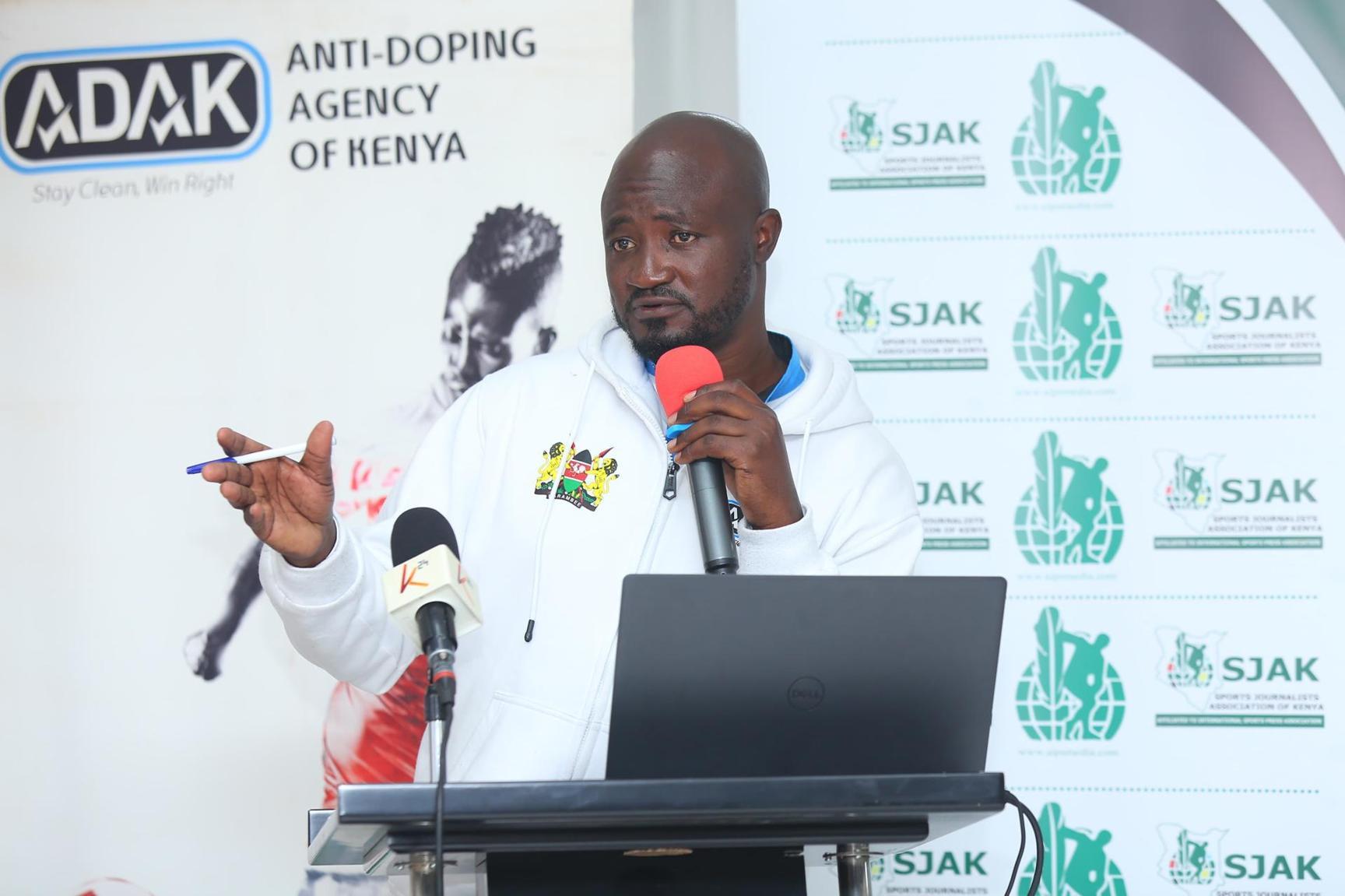
Speaking to the Star, ADAK’s head of anti-doping education and research, Martin Yauma, said the agency has significantly scaled up its programmes, widening the testing net in a show of intent to protect the integrity of Kenyan sport and moreso athletics.
“Our programme for testing is very extensive; we have up-scaled our tests. Previously, I think two or three years ago, we were doing about 900 to 1,000 tests,” Yauma said.
“Right now we are doing between 4,500 and 5,000. This shows our programme has expanded threefold. We conducted 4,300 tests for the 2024/25 calendar year.”
“In the 2023/24 calendar year we did 4,000. For the 2025/26 calendar year we are doing 5,000 tests, so we are just scaling higher.”
The expansion, he revealed, is not confined within Kenya’s borders. ADAK has stretched its reach to training bases in the United States, Japan and China, where a sizeable number of Kenyan athletes pitch camp.
“The programme has not only expanded in Kenya but also in foreign countries like the USA, Japan and China where we have some Kenyan athletes. We have partnered with anti-doping jurisdictions in those countries.”
According to Yauma, the aggressive approach is already bearing fruit. The number of athletes flagged for violations has dropped sharply compared to previous seasons.
“We had approximately 30 athletes who had discrepancies in the 2024/25 calendar year. In 2023/24 we had around 70.”
“That scale is coming down and that shows the willingness of our athletes to put in the hard work and train using the right methodologies, which is a positive indication.”
Buoyed by the trend, Yauma is convinced Kenya is gaining the upper hand in a battle that has, for years, threatened to tarnish its global reputation.
“I would confidently say we are winning the war against doping. The kind of collaboration from World Anti-Doping Agency, the government and Athletics Kenya, as well as the athletes who have turned their guns against doping, has been crucial.”
“We want to ensure that we prove scientifically to the world that our athletes are clean,” he added.
Still, Adak is not easing off the accelerator. Yauma fired a warning shot at competitors tempted to cheat and at the shadowy cartels accused of pushing banned substances.
“There are athletes who still think they cannot compete clean and they go ahead to use performance-enhancing supplements. We also have some cartels supplying these substances.”
“We are trying to curb those cartels and investigate them to ensure our athletes are subjected to the anti-doping obligations,” he noted.
Among the most common drugs on Adak’s find is EPO (erythropoietin), a hormone naturally produced by the kidneys to stimulate the creation of red blood cells responsible for transporting oxygen in the body.
While it plays an essential medical role in treating conditions such as anaemia related to chronic kidney disease or cancer, its synthetic version has long been abused in sport to supercharge endurance.
“At the moment the most used substance is EPO which enhances blood levels,” Yauma explained.
“EPO in the natural form is a hormone that facilitates production of red blood cells. When athletes want to fill the gap to have endurance in performance, we have artificial EPO which is created and can be injected into the bloodstream.”
“If we find an athlete to have used EPO we provisionally suspend them. EPO has been categorised as a non-specified substance. This means if we find you to have used EPO, it tells us it is a deliberate move because you have to deliberately inject it.”
Beyond enforcement, Adak is investing heavily in prevention, rolling out education programmes aimed at streamlining athletes early before they fall prey to dangerous shortcuts.
“There is high vulnerability for young athletes to dope because they may want quick wins when they get into the wrong influence,” he said.
“That is why we want to capture their minds as early as possible so that we make sure they make informed decisions and use their God-given talents.”