
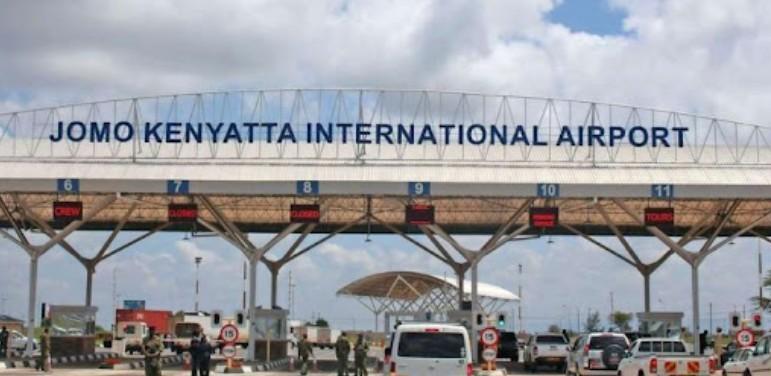
Africa-Press – Kenya. The government has announced plans to tap local engineering talent in the upcoming multi-billion expansions of Jomo Kenyatta International Airport (JKIA).
Principal Secretary for Aviation and Aerospace Development Teresia Mbaika said the government is working with professional bodies to strengthen engineering capacity as part of aviation reforms and infrastructure upgrades.
She said the state department is upgrading communication, navigation and surveillance systems, integrating sustainable aviation fuel frameworks and updating regulations for unmanned aircraft systems — developments that require highly skilled engineers and regulators.
“We invite engineers to engage in upcoming JKIA master plan discussions, which will guide modernisation and new infrastructure aligned with growing traveler numbers,” she said.
However, industry leaders warn that Kenya’s aviation ambitions risk stalling without stronger investment in technical skills and training.
Engineers and policymakers who spoke at the Institution of Engineers of Kenya Aviation Sector Conference 2026, said that large-scale infrastructure projects such as the JKIA master plan must be matched with capacity building for local professionals to keep pace with rapidly evolving aviation technology.
IEK President Shammah Kiteme said Kenya’s aviation future depends as much on skilled people as on new terminals or runways.
“Aviation is not merely about aircraft in the sky. It is about engineering on the ground, safety in the air and regulation with foresight. Training and technical capacity must keep up with emerging systems and increasingly complex operational environments,” said Kiteme.
The Kenya Airports Authority is expected to unveil details of a JKIA modernization master plan aimed at expanding capacity and improving resilience as passenger numbers rebound.
According to the PS, tapping local engineers will help reduce costs, build domestic expertise and ensure long-term maintenance capability for complex airport systems.
Data from the Kenya Civil Aviation Authority shows passenger traffic through Kenyan airports surpassed 12 million in 2024, nearing pre-pandemic levels as regional connectivity strengthened.
Industry players say this rebound, alongside new investments in digital aircraft systems, navigation upgrades and sustainability initiatives is putting pressure on engineering standards and regulatory oversight.
According to the Kenya National Bureau of Statistics Economic Survey 2025, the air transport and storage sector grew 6.3 percent in 2024, supported by rising passenger traffic and cargo volumes.
Kenya Airports Authority, general manager for engineering services Meshack Ochieng, said airport projects must anticipate future demand.
“Capacity, resilience and operational efficiency must be designed in from the start. As systems become more digitized, the engineering skill set must evolve just as quickly,” he said.
Training institutions warned that without sustained investment, Kenya risks shortages in specialised fields such as aircraft maintenance, airworthiness inspection and air traffic systems engineering.
East African School of Aviation’s Serah Waitiki said aviation growth will expose skill gaps unless training expands alongside infrastructure investment.
Airlines are also grappling with increasingly complex aircraft systems. Kenya Airways’ Captain Paul Njoroge noted that modern fleets rely heavily on predictive maintenance and integrated digital technologies, raising training demands.
Kenya is exploring sustainable aviation fuel production as part of efforts to decarbonize aviation. Engineers say green aviation goals will further increase the need for technical research and innovation.
Kenya is positioning itself as an East African aviation hub, with JKIA expansion expected to play a key role in handling growing passenger and cargo volumes.
But industry leaders say infrastructure alone will not guarantee competitiveness.