What You Need to Know
President William Ruto has announced plans for a new highway linking Mombasa to Nairobi, part of a larger infrastructure expansion aimed at enhancing regional trade and economic growth. The project, which is expected to cost between Sh1.3 trillion and Sh1.9 trillion, is part of a broader initiative to develop 2,800 kilometers of new roads across Kenya.
Africa-Press – Kenya. President William Ruto has announced that the government will soon advertise the construction of a new highway linking Mombasa to Nairobi, as part of an ambitious multi-trillion-shilling infrastructure expansion plan aimed at boosting regional trade and economic growth.
The President said the proposed highway forms part of a broader rollout of 2,800 kilometres of new roads across the country.
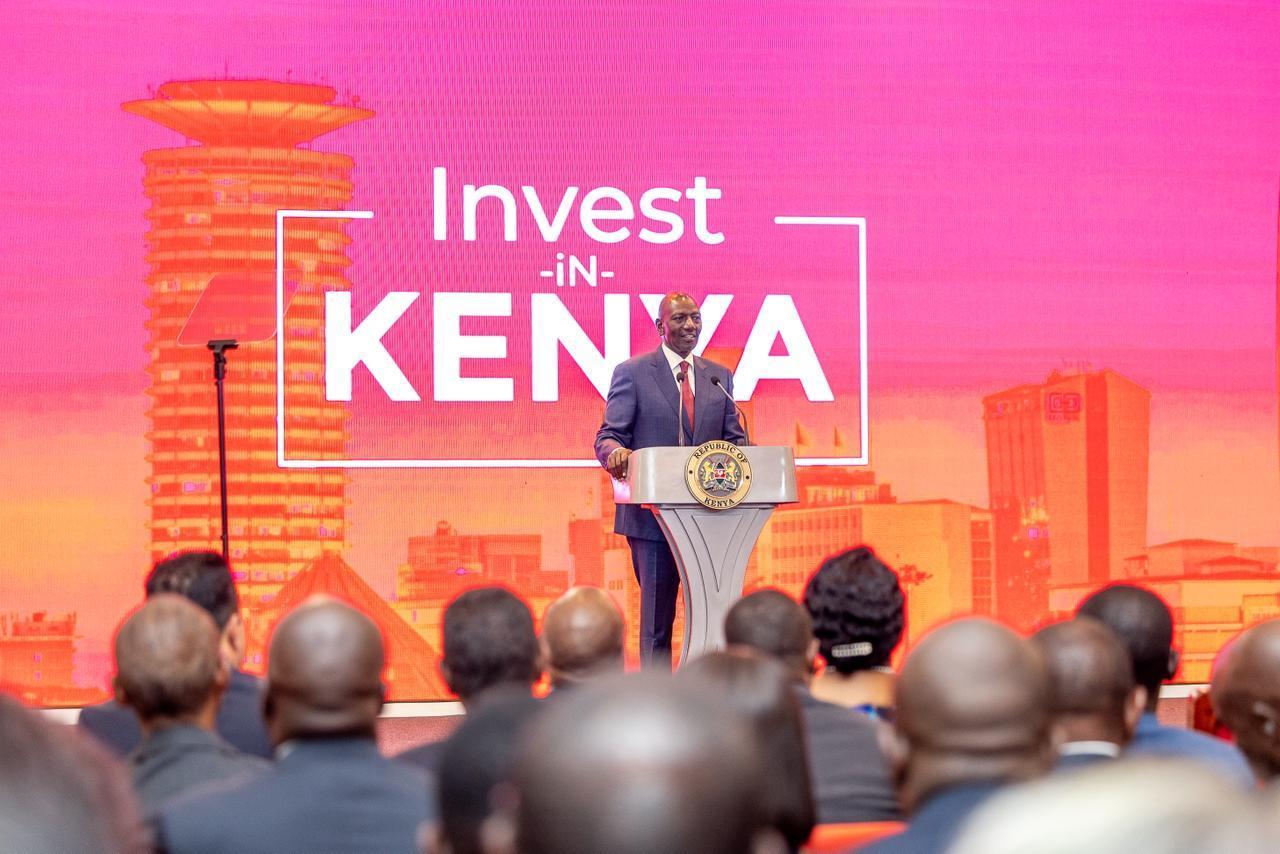
Speaking in Nairobi on Wednesday during the International Conference on Nuclear Energy, Ruto said the projects are expected to cost between Sh1.3 trillion and Sh1.9 trillion.
“We will be advertising another highway from Mombasa to Nairobi, as well as another 2,800 km of highways. This investment is expected to cost about Sh1.3 trillion to Sh1.9 trillion. We are slowly finding innovative mechanisms on how to deploy resources in that space,” Ruto said.
The planned Mombasa–Nairobi highway is expected to complement existing transport infrastructure, easing congestion along the busy corridor that serves as the backbone of Kenya’s trade network and a key link to the wider East African region.
This comes amid a broader government strategy to scale up infrastructure development and enhance connectivity within the East African Community, a market of more than 330 million people.
The President noted that in the next seven years, the government aims to double the country’s road network, including expanding highways to improve the movement of goods and services.
Ruto highlighted ongoing efforts to extend the Nairobi–Nakuru highway to Malaba, ultimately connecting Kenya to Uganda and strengthening regional integration.
He also referenced the recent launch of the extension of the Standard Gauge Railway, which is set to link Kenya with Uganda and the Democratic Republic of Congo, further improving logistics and trade efficiency.
“Business is about finding ways to move goods cost-effectively. While we have significantly invested in road infrastructure, we believe what we have done is not sufficient,” he said.
According to the President, the infrastructure push is part of a wider economic strategy that seeks to position Kenya as a leading investment destination.
During the Kenya International Investment Conference held in Nairobi, which Ruto co-presided over with Mozambique President Daniel Chapo, the government unveiled investment commitments worth $2.9 billion from 20 investors across nine countries.
The investments span key sectors including agriculture, manufacturing, ICT, business process outsourcing, healthcare, energy, and real estate.
According to the President, the government is aligning export processing zones and special economic zones, while investing in infrastructure and skills development to create a competitive workforce.
He added that reforms aimed at improving the ease of doing business, including tax adjustments, the establishment of a One-Stop Investment Centre, and energy tariff reductions, are designed to attract both local and international investors.
“These initiatives are positioning Kenya as a premium investment destination, offering stability, predictability, and openness, anchored on strong macroeconomic and microeconomic fundamentals,” Ruto said.
The President said that the planned Mombasa–Nairobi highway is expected to play a central role in supporting these ambitions by enhancing transport efficiency along one of the country’s most critical economic corridors.
Kenya has been focusing on infrastructure development as a key driver of economic growth, particularly in the context of regional integration within East Africa. The Mombasa–Nairobi corridor is crucial for trade, serving as a vital link for goods moving in and out of the country. Recent investments in transport infrastructure, including roads and railways, aim to improve connectivity and efficiency, supporting Kenya’s ambitions to become a leading investment destination in the region. The government’s commitment to expanding its road network reflects a strategic approach to bolster economic activity and attract foreign investment.