Africa-Press – Kenya. SECOND-hand car importers and dealers have raised fresh concerns over mounting operational challenges, warning that a mix of rising costs, policy uncertainty and weakening consumer demand is choking the sector.
Industry players say the business environment has become increasingly difficult over the past year, with higher import duties, fluctuating exchange rates and costly compliance requirements eating into already thin margins.
Dealers note that the current depreciation of the shilling has also raised the landed cost of vehicles, forcing many to either increase prices or absorb losses.
“We are operating in a very constrained environment. By the time a unit lands in the country, the cost has gone up so much that it becomes unaffordable for the average buyer,” said a Nairobi-based dealer.
This reflects the Car Importers Association of Kenya (CIAK)’s concerns on frequent changes in taxation and regulatory frameworks, which they say make planning difficult.
It includes the Current Retail Selling Price (CRSP) schedule used by Kenya Revenue Authority (KRA) to compute customs value for used motor vehicle and determine taxes.
KRA is pushing for an upward revision of the CRSP which seeks to expand the database to over 5,200 models from 3,000, incorporate higher import duties (35 per cent) and increase excise duties.
Under the new proposal, which has been challenged on court, import duty on many vehicles is set to increase to 35 per cent up from 25 per cent, while excise duty for certain units will range up to 35 per cent.
CRSP sets the base price of a new model, from which depreciation is applied based on age (up to 65%) to determine the Customs Value for used vehicles.
“The greatest enemy of any business is not high taxes, it is unpredictable taxes. Currently, our members are operating in a state of customs roulette,” CIAK chairman Peter Otieno said.
“Imagine a Kenyan who has saved for years or taken a bank loan. They calculate their total landing cost at Sh2 million. They borrow exactly that. But upon arrival, a sudden, unexplained ruling pushes that cost to Sh2.5 million.Where does a Kenyan get an extra half-million shillings on 24 hours’ notice?.”
This has seen vehicles abandoned, the importer loses their deposit, clients lose their savings or end up paying loans with no vehicle delivered, and the vehicle is eventually auctioned by the KRA for a fraction of its value.The government also loses the full tax revenue.
The introduction and adjustment of levies such as import duty, excise tax and railway development levy have created uncertainty, with dealers arguing that abrupt shifts disrupt supply chains and pricing models.
In addition, players cite delays at the port and rising logistics costs as major bottlenecks. Shipping fees have remained volatile, while clearance timelines have lengthened, tying up capital and slowing inventory turnover.
CIAK also warns that reduced access to credit is dampening demand.
With high interest rates and tighter lending conditions, fewer Kenyans are able to finance vehicle purchases, leading to a noticeable slowdown in sales volumes.
This has left many yards holding stock for longer periods, further straining cash flow.
Import volumes have also dropped from a peak of 126,415 units in 2021 to 70,275 with last year numbers also remaining lower than 2021 by about 43 per cent.
Used car importers, who dominate Kenya’s vehicle market say the situation is compounded by increased scrutiny on age limits and environmental compliance.
While they acknowledge the need for cleaner and safer vehicles, they argue that stricter rules without supportive incentives risk pushing affordable options out of reach for many consumers.
“We support modernisation of the fleet, but it must be done in a way that does not lock out ordinary Kenyans,” another importer said.
They want the revival of the Mombasa CRSP Committee which used to make decisions on valuation and a “clearance forecast system”, where dealers are able to know the exact landing costs before importation.
“A system where the KRA honors its pre-arrival valuation is the only way to restore professionalism,” Otieno said.
The dealers have also called for an end to “punitive rulings”, saying no clearing agent should be penalised or fined for using the officially available CRSP.
“If the KRA makes an error in its own database, the burden must not fall on the importer,” said Otieno who has further proposed a standing liaison desk between CIAK and KRA to solve emerging valuation issues in real-time before they escalate into legal tussles.
There are also concerns over competition from informal traders and undervaluation practices, which legitimate dealers say create an uneven playing field.
Some operators reportedly bypass full tax obligations, allowing them to sell at lower prices and undercut compliant businesses.
Industry stakeholders are pushing for a review of the tax regime, improved efficiency at entry points and measures to stabilize the currency.
They also want incentives to promote the adoption of newer, fuel-efficient vehicles, including potential tax breaks or financing support for buyers.
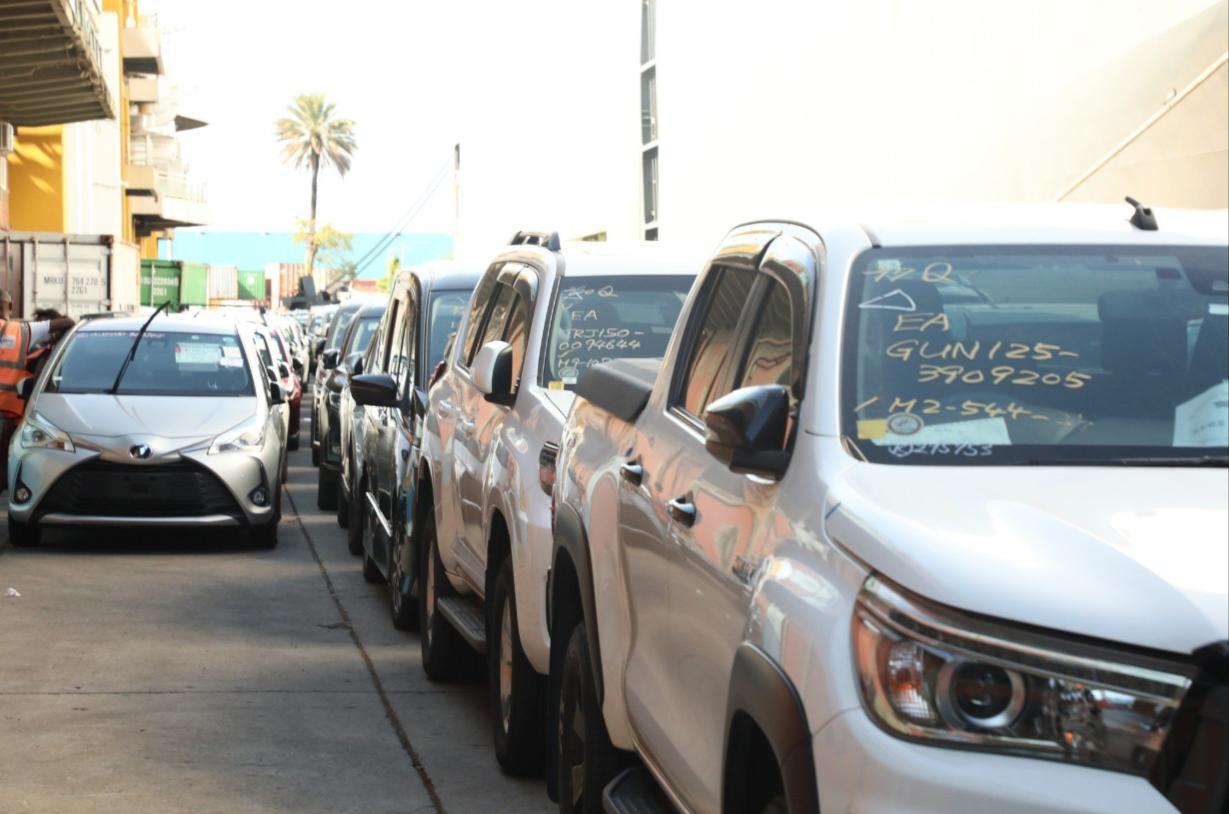
Kenya imports an average 7,000-9,000 units a month, mainly from Japan (80 per cent).