What You Need to Know
President William Ruto has announced plans for tax reforms and cheaper power tariffs to attract foreign direct investment (FDI) in Kenya. Speaking at the Kenya International Investment Conference, he highlighted the need for regulatory reforms to address high operating costs and improve the investment climate, aiming to create over 63,000 jobs across various sectors.
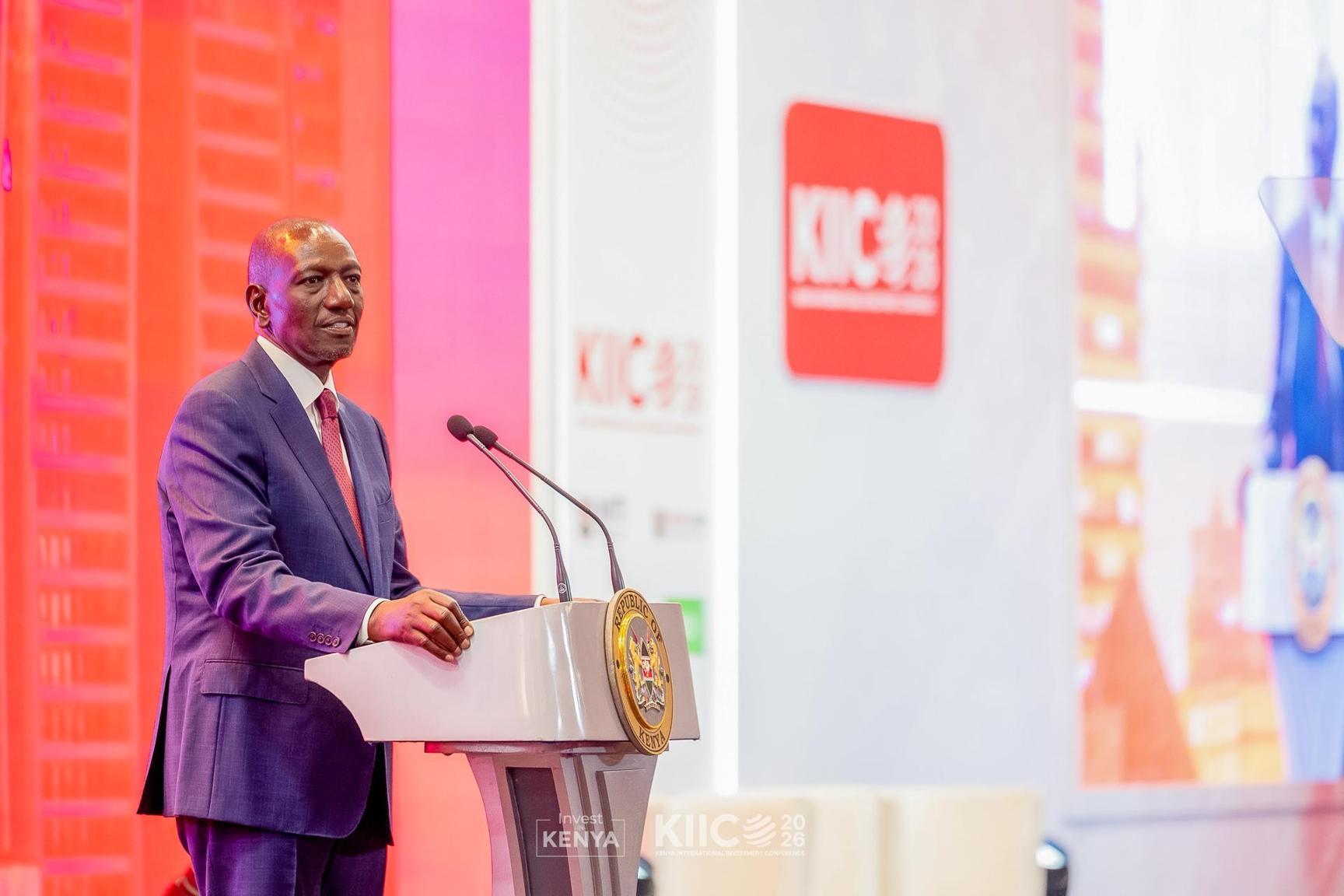
Africa-Press – Kenya. President Ruto delivers keynote remarks at the Kenya International Investment Conference (KIICO) 2026.
President William Ruto has promised regulatory reforms, tax incentives, and a review of the country’s power tariffs, in the latest move to drive Foreign Direct Investments.
This comes as the country secured 20 deals valued at $2.9 billion (Sh375.8 billion) at this year’s Kenya International Investment Conference (KIICO 2026), in Nairobi.
They span agriculture, real estate, manufacturing, mining, Business Process Outsourcing and telecommunications, healthcare, and energy sectors, expected to create at least 63,240 jobs across 10 counties.
High operating costs, including costly electricity, high taxation and an unpredictable regulatory environment, stood out among the challenges investors and other businesses face in the country.
According to the World Bank, Kenya has one of the highest energy costs in the region and compared to other competing key markets.
This, in addition to other operating costs and regular policy changes are making it uncompetitive.
While the country has come up with good policies, implementing them has remained a challenge, according to the World Bank.
“Investors hate inconsistency and uncertainty,” said Qimiao Fan, division director for Kenya, Rwanda, Somalia, Uganda, Africa at the World Bank.
Manufacturers in the country have also been calling on the government to urgently implement reforms to address the rising cost of regulation and duplication of levies that are undermining local industries’ competitiveness.
These are adding to the production costs that have traditionally been pushed up by the high cost of power and costly raw materials, amid a lack of predictability.
President Ruto yesterday affirmed his government’s commitment to addressing industry challenges.
He said the government is deepening reforms and executing policies that enhance competitiveness, streamline processes, and create a more enabling and investor-friendly climate.
These reforms include zero-rating VAT on exported services, tax reforms that allow corporates to offset verified tax claims against future liabilities, and the removal of the 30 per cent domestic equity requirement for ICT companies.
“We are improving energy competitiveness through ongoing tariff reforms and expanded power generation, ensuring more predictable and cost-effective electricity for energy-intensive industries,” the President added.
Ruto noted that despite global headwinds, FDI inflows in 2025 grew by over 15 per cent, exceeding $2 billion (Sh259.2 billion) for the first time.
He fronted Special Economic Zones, Export Processing Zones and County Aggregation and Industrial Parks across the country as key areas where investors could put their money.
Investment, Trade and Industry CS Lee Kinyanjui said: “ Whenever there is a problem and you have a solution, the government is waiting to listen to you.”
This year’s KIICO has participation from 63 countries.
“This is a powerful affirmation of Kenya’s growing relevance in the global investment landscape,” Invest Kenya CEO John Mwenda said.
From the 20 deals signed, agriculture, manufacturing, mining and real estate account for a substantial share, with a combined value of over $2 billion.
In agriculture and agro-processing, investments of approximately $890 million will expand value-addition in the sector and support smallholder farmers in rice, sugar and horticultural production while creating over 27,000 new jobs opportunities.
Manufacturing attracted new capital to the tune of $600 million through eight deals in fertiliser production, textiles, solar panel manufacturing, plastics recycling and glass bottle manufacturing, which have strong export linkages under AfCFTA and AGOA frameworks.
In the mining sector, the Buru REE project by Australia-based NGX Limited will inject $350 million in Kericho, unlocking new mineral value chains and boosting export earnings.
Meanwhile, $630 million has been committed to real estate developments led by Mombasa Creekside Gardens at a $380 million investment, which anchors Mombasa’s urban infrastructure development and Nairobi Belle Vue Arch with $250 million capital injection.
These two projects represent significant Gulf-linked investment into Kenya’s two biggest cities, where infrastructure and housing demand is high.
With the country’s push toward universal health coverage, healthcare has attracted key private sector investments, including Bounty Management Global in Nairobi ($60 million), RVL Healthcare Ltd ($50million, Nairobi), and Balmer Healthcare ($200 million, Uasin Gishu).
These projects are expected to expand access to specialised care, strengthen regional healthcare infrastructure, and reduce the need for Kenyans to seek treatment abroad.
Kenya has been striving to enhance its investment climate to attract foreign direct investments, which are crucial for economic growth. The country has faced challenges such as high energy costs and regulatory inconsistencies that deter potential investors. Recent efforts by the government aim to streamline processes and implement reforms that can make Kenya a more competitive destination for investment, particularly in sectors like agriculture, manufacturing, and healthcare. The Kenya International Investment Conference serves as a platform to showcase these initiatives and secure investment deals.