What You Need to Know
First Lady Rachel Ruto has revealed that the Kenyan government holds weekly spiritual gatherings known as keshas at State House every Friday. These prayer sessions aim to provide spiritual renewal and guidance for leaders, reflecting Kenya’s deep-rooted faith culture. Ruto emphasized the importance of humility and reliance on God in leadership, amidst ongoing debates about the role of religion in,
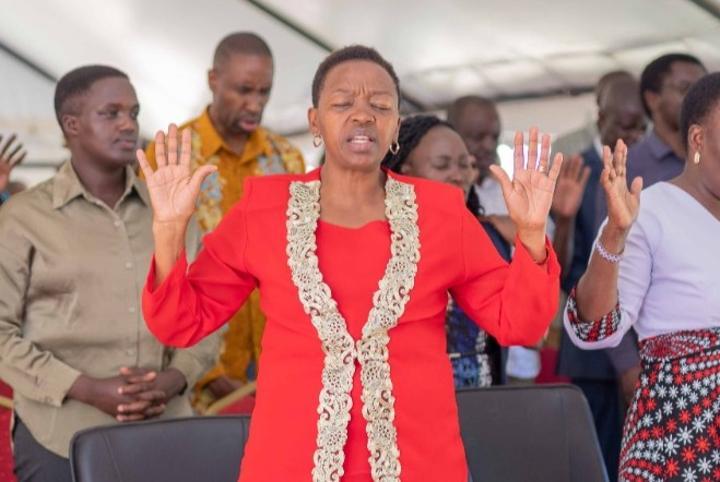
Africa-Press – Kenya. First Lady Rachel Ruto has disclosed that government officials regularly hold spiritual gatherings, including overnight prayer sessions at State House every Friday.
She said the sessions bring together leaders and individuals who seek spiritual renewal and divine wisdom and that prayer plays a central role in Kenya’s leadership,
“We have overnight prayers every Friday in the State House. Yes, we call them keshas,” she said, underscoring the consistency of the practice at the highest level of government.
Rachel Ruto described Kenya as a nation deeply rooted in faith, where public and private institutions frequently turn to prayer as a source of guidance.
She said leaders across different levels of government seek divine intervention to help them navigate the challenges of leadership and decision-making.
“Kenya for you is a country where the leadership loves God,” Rachel said. “We have prayers in government offices, we have prayers in private offices and we have prayers everywhere.”
According to her, prayer is not limited to formal settings but is a common practice across the country. She said it is not unusual to find groups of Kenyans gathered in public spaces such as parks, engaged in collective prayer sessions.
These moments, she said, reflect a broader national culture that prioritises faith as a guiding principle.
Rachel said effective leadership requires a recognition of human limitations and a willingness to rely on God for guidance.
“We’re not saying that to brag about it, but to say that it is in going down that the Lord comes,” she added, pointing to humility as a key value underpinning the practice.
Her remarks come at a time when the role of religion in governance continues to spark debate in Kenya, a country where faith remains a significant influence in public life.
Supporters often argue that spiritual grounding helps leaders remain accountable and morally upright, while critics sometimes question the intersection between religion and state affairs.
Nevertheless, the First Lady’s comments reinforce the image of an administration that openly embraces faith as part of its leadership approach.
By highlighting the routine nature of prayer within government spaces, she painted a picture of leaders who actively seek divine support in executing their duties.
Rachel’s remarks suggest that, for many in leadership, prayer remains a key pillar in their pursuit of solutions and effective governance.
Kenya has a rich history of intertwining faith and governance, with prayer often seen as a vital component of leadership. The practice of holding spiritual gatherings in government spaces is not new, as many leaders have historically sought divine guidance to navigate the complexities of their roles. This cultural inclination towards prayer reflects a broader societal belief in the power of faith to influence decision-making and public accountability. The ongoing discussions about the role of religion in governance highlight the delicate balance between spiritual beliefs and secular responsibilities in the country.