
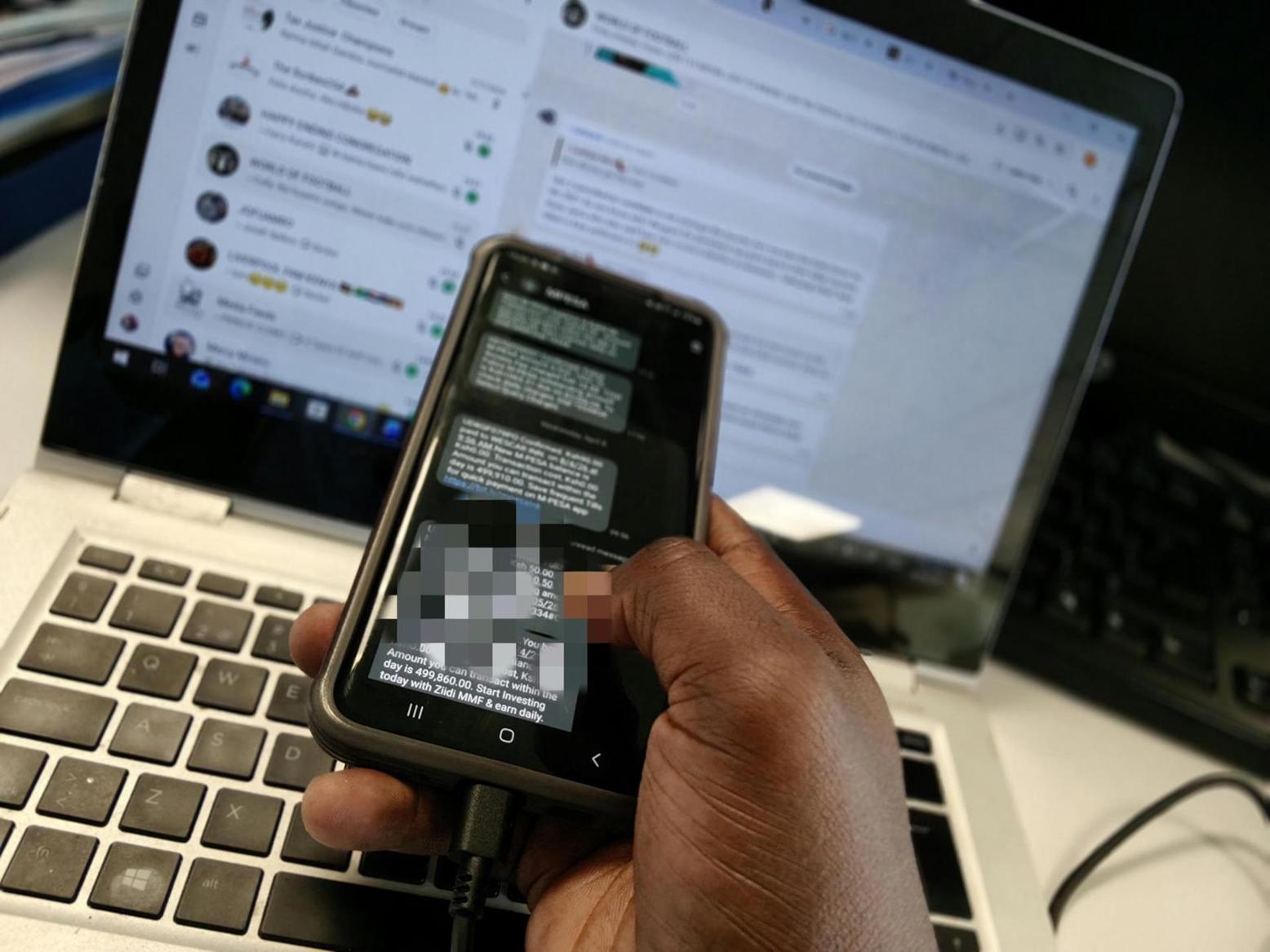
Africa-Press – Kenya. Kenya’s telecommunications firms are facing a quiet but potentially costly disruption as SMS once a core revenue stream, continues to decline even as overall mobile usage rises.
Latest sector data shows that total SMS traffic dropped to 14.4 billion messages in the final quarter of 2025, down from 14.7 billion recorded in the previous quarter.
The decline comes at a time when mobile voice traffic and data consumption are both increasing, signaling a fundamental shift in how Kenyans communicate.
For instance, in the period to March last year, Kenya’s leading telco Safaricom earned Sh12.56 billion from text messaging.
“SMS traffic declined to 14.4 billion from 14.7 billion recorded last quarter probably due to growing uptake of internet-based messaging services,” Communication Authority said in its latest quarterly report.
The fall in SMS usage is largely attributed to the rapid rise of over-the-top (OTT) messaging services such as WhatsApp and Telegram, which allow users to send messages over the internet at little or no cost.
These platforms have become deeply embedded in everyday communication, from personal chats and business transactions to media distribution and customer engagement effectively replacing SMS in most use cases.
Data by the regulator shows that Safaricom still dominates the local messaging landscape accounting for 91.55 per cent of all text messages sent.
Airtel comes second with 8.4 per cent, while Telkom Kenya, Equitel and Jamii Telekom command less than 0.1 percent of the market.
SMS has historically been one of the highest-margin services in the telecoms business, requiring minimal infrastructure investment compared to voice and data.
CA data shows that Safaricom maintained its market leadership in both voice and SMS.
“The company handled 19.59 billion voice minutes in Q4 2025, up from 18.32 billion in the previous quarter. Its SMS volume stood at 13.16 billion, slightly down from 13.35 billion in Q3,” CA data shows.
Airtel Networks Kenya came in second, recording 11.83 billion voice minutes and 1.21 billion SMS messages in the October–December period.
Telkom Kenya (TKL) posted 30.43 million voice minutes and 2.93 million SMS, while Finserve and JTL handled a combined 2.7 million SMSs.
Its gradual decline therefore represents not just a change in user behaviour, but a direct hit to profitability.
With smartphone penetration rising to 48.7 million devices, up 9.1 per cent in the quarter more Kenyans now have access to cheaper, data-driven messaging alternatives that offer richer features, including multimedia sharing, group chats and voice notes.
While operators have offset some of these losses through increased data usage, analysts warn that the economics are not equivalent.
The shift is being reinforced by broader digital trends. Mobile broadband subscriptions rose by 9.3 per cent to 51.5 million, while smartphone adoption jumped by 9.1 per cent to 48.7 million devices, giving more users access to data-driven messaging services.
Industry data shows that SMS rates under Pay-As-You-Go (PAYG) tariffs are remarkably uniform and affordable across major operators.
The average SMS rate across the market stands at just Sh1.18 per SMS. Safaricom charges Sh1.20 for both peak and off-peak periods, Telkom Kenya offers the lowest rate at Sh1.15 per SMS and Airtel matches Safaricom at Sh1.20 per SMS.
The tight clustering of SMS prices, ranging from Sh1.15 to Sh1.20 points to a strong price competition in the SMS segment, with minimal variation between operators and time bands.
This near-uniform pricing suggests that SMS has become a low-margin, commoditised service in Kenya’s mobile market, where operators compete more aggressively on voice and data bundles rather than standalone text messaging.
The drop shows that the industry recorded a drop of 300 million messages in three months with an average cost of Sh1.18 per SMS, implying that about Sh354 million was lost in SMS revenue in the three months.
Despite the decline, SMS remains deeply embedded in Kenya’s digital and financial ecosystem.
Banks, government agencies and even telecom operators themselves continue to rely on SMS for essential services such as one-time passwords (OTPs), transaction alerts and security notifications.