Africa-Press – Kenya. President William Ruto has castigated persons comparing Kenya’s cost of fuel and those of its neighbours while explaining the discrepancy.
According to Ruto, Kenya being a middle-level economy will see the fuel prices comparatively higher than some of its neighbours who import the precious commodity through the port of Mombasa.
“Many people keep asking why prices in Kenya differ from those in our neighbouring countries. It is important to clarify that Kenya is a middle-income country, while many of our neighbours are classified as least developed countries, and that creates a significant difference,” he said.
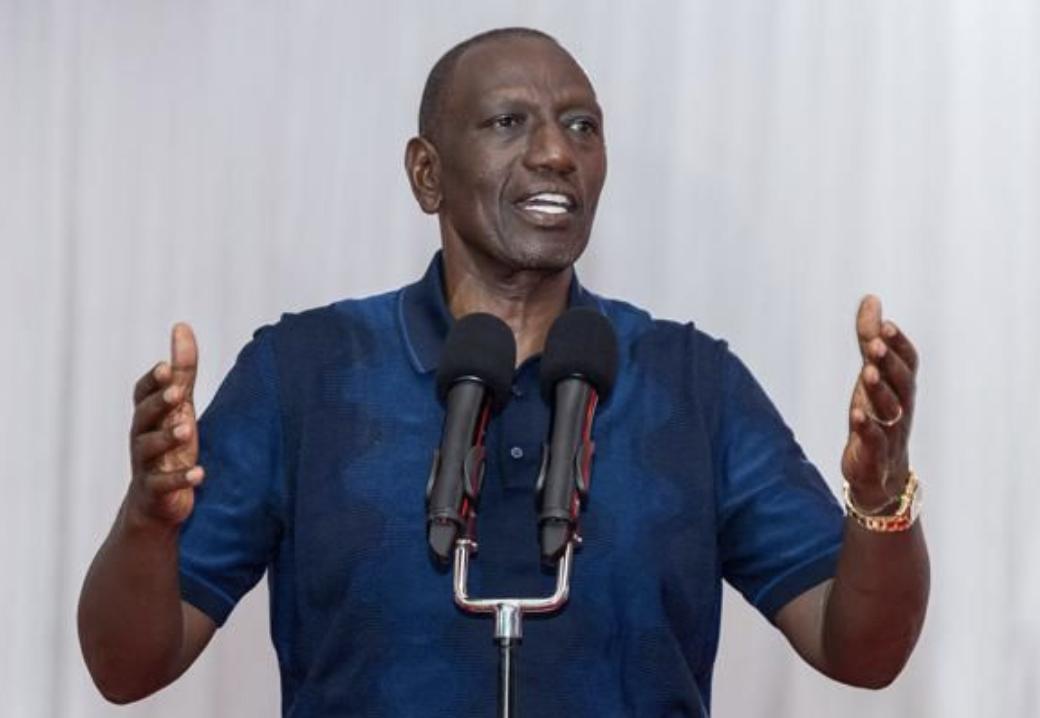
Speaking on Sunday morning during a church service at the AGC Karen, in Nairobi, Ruto said Kenya’s neighbours are considered less developed and don’t play in the same league as Kenya.
“If you want to compare Kenya fairly with others, compare Kenya with other middle-income countries. That is when you will get the figures right,” he told the congregants.
He attributed higher fuel prices to road maintenance levies, noting that a significant portion of the fuel price goes directly into maintaining these roads.
“Kenyans need to understand that we currently maintain over 20,000 kilometres of tarmac roads across the country and have another 6,000 kilometres under construction,” Ruto said.
Kenyan consumers pay a total of nine different taxes and levies, some which have gone up, wiping out gains from other adjustments and price stabilisation moves. Taxes and levies account for up to 40 per cent of the final pump prices.
Railway Development Levy has gone up to Sh2.05 per litre of petrol from Sh1.43, diesel’s levy has gone up to Sh2.58 from Sh1.57 while RDL on kerosene has jumped to Sh3.32 per litre from Sh1.59.
Import Declaration Fee (calculated on a percentage of the CIF value (Cost, Insurance, and Freight), has gone up to Sh2.56 from Sh1.79 per litre of petrol, Sh3.22 on diesel from Sh1.97 and Sh4.15 on kerosene up from Sh1.99.
Kenyans also pay excise duty at Sh21.95 per litre of petrol and Sh11.37 on every litre of diesel and kerosene bought.
Road maintenance levy is charged at Sh25 per litre of petrol and diesel, having gone up from Sh18 during the 2024-25 financial year. It is not charged on kerosene.
Petrol regulatory levy is at 75 cents per litre of each product bought, anti-adulteration is charged at Sh18 per litre of kerosene, while merchant shipping levy is at Sh0.03 per litre of every petroleum product.
These taxes and levies pushed up the product costs (landed costs), which were at Sh107.23, Sh133.89 and Sh170.86 for the three products, with other charges being storage and distribution costs.
This has seen fuel products remain elevated in Kenya compared to key neighbouring East African Community member economies.
For instance, a litre of petrol is higher by Sh22.47 in Nairobi, where it has gone up to Sh206.97, compared to Kampala (Uganda) where a litre is Sh184.50.
Diesel in Kampala is cheaper by Sh29, retailing at Sh177.17 compared to Nairobi’s Sh177.17, even as Uganda’s fuel products are shipped through Kenya.
In Tanzania, consumers in Dar es Salaam are buying a litrer of petrol and diesel at an equivalent of Sh190.19 and Sh189.49, respectively, compared to Kenya’s cheapest point of Mombasa, where prices are slightly below the Sh200 mark.
The two port cities have proximity to the sea and hence enjoy cheaper fuel prices compared to inland destinations where delivery costs add up to final pump prices.
Ruto explained that the 20,000 kilometres of tarmac roads Kenya maintains exceed the combined tarmac road network of all the East African countries, including Uganda and Tanzania.
The President defended his administration from the accusations of overtaxation, saying the fuel prices are not arbitrary but designed to support transport infrastructure that benefits the economy through improved connectivity, trade, and mobility.
In addition to the 6,000 kilometres under construction, the head of state said an additional 28,000 kilometres will be constructed over the next seven years.
“So, the thousands of kilometres we have in Kenya are more than all the countries in the EAC. The 6,000 kilometres is equivalent to all the tarmacs in a neighbouring country, which has been built for 60 years. And we are setting the standards even higher, we want to have 28,000 kilometres in the next few years,” he declared.