What You Need to Know
The ongoing rivalry between President William Ruto and former Deputy President Rigathi Gachagua is reshaping the political landscape in the Mt Kenya region. As alliances shift and some MPs adopt a cautious stance, the region’s once-unified leadership is becoming increasingly fragmented, reflecting a broader recalibration in local politics.
Africa-Press – Kenya. The intensifying battle for control of the Mt Kenya region between President William Ruto and former DP Rigathi Gachagua has left the regional leadership fragmented, even as some MPs opt for silence in a wait-and-see stance.
Emerging alignments now show a bloc that is no longer uniformly quiet but still deeply cautious.
While most MPs across the region remain aligned to the President, underscoring his continued grip on elected leaders, Gachagua has intensified his ‘Operation Fagia’, a de-campaign push for MPs whom he accuses of betrayal.
In Kiambu, key figures, such as Kimani Ichung’wah (Kikuyu), Githua Wamacukuru (Kabete), Njuguna Kawaniku (Kiambaa), Alice Ng’ang’a (Thika Town) and Woman Rep Anne Wamuratha have maintained firm pro-government positions.
On the other hand, area Senator Karungo wa Thangwah is a close ally of Gachagua.
The same trend is visible in Nakuru, Meru and Tharaka Nithi, where most legislators have stayed within the government fold.
In Nakuru, MPs including David Gikaria (Town East), Kuria Kimani (Molo) and Samuel Gachobe (Subukia) remain firmly in Ruto’s camp, while in Tharaka Nithi, the entire parliamentary delegation of Patrick Munene (Chuka/Igambang’ombe), Kareke Mbiuki (Maara) and Gitonga Murugara (Tharaka) is aligned to the President.
But beneath this numerical advantage are shifting alliances and fence-sitting by some leaders.
In Murang’a, once considered a key pillar of Ruto’s support base, the political ground is shifting. Kiharu MP Ndindi Nyoro, who was a close ally of the President and served as Budget chairman, has emerged as a notable critic.Gatanga MP Edward Muriu and Kandara’s Chege Njuguna are increasingly associated with Gachagua’s camp, albeit cautiously.
Maragua MP Mary Wamaua, who had previously been critical of the government, drifted back to Ruto, a move that caused her difficulties at the grassroots.
The same is the case in Kiambu, where Githunguri MP Gathoni Wamuchomba and Gerge Koimburi have shifted alliance from Gachagua back to Ruto, reflecting the fluidity of current alignments.
Notably, Wamuchomba recently signalled she might as well decamp again “at the right time” after she milks development from the government.
Nyeri, Gachagua’s political backyard, presents a more divided picture. While Mathira’s Eric Wamumbi, Kieni’s Njoroge Wainaina, Nyeri Town’s Duncan Mathenge and Othaya’s Wambugu Wainaina remain aligned to the President, Mukurweini MP John Kaguchia and Tetu’s Geoffrey Wandeto are firmly in Gachagua’s camp.
Area Woman Rep Rahab Mukami has been aligning with Ruto but has avoided a direct confrontation with Gachagua.
Similar pockets of dissent are emerging elsewhere. In Nyandarua, Kipipiri MP Wanjiku Muhia is a Gachagua ally, even as most of her colleagues remain either pro-Ruto or publicly non-committal.
In Embu, Manyatta MP Gitonga Mukunji has aligned with Gachagua, contrasting with his county counterparts, who largely back the President.
In Nakuru, Naivasha MP Jayne Kihara stands out as one of the more vocal figures leaning towards Gachagua, even as the county remains largely pro-Ruto.
Yet, even as these alignments take shape, a significant number of MPs continue to avoid taking definitive public positions.
Legislators in constituencies such as Ruiru (Simon King’ara), Kigumo (Joseph Munyoro), Mbeere South (Nebart Muriuki) and several in Meru and Kirinyaga have maintained a low political profile, steering clear of both camps’ mobilisations.
This ‘quiet middle’ is driven less by indecision than by strategic calculation.
“These MPs are not neutral. They are managing risk,” Dr Charles Nga’ng’a opined.
“They are watching how the ground shifts before committing to a side that could determine their political survival in 2027.”
The shift from silence to ‘selective positioning’ reflects a broader recalibration in Mt Kenya politics.
Rather than a clean split, the region is developing into a layered political arena, with a dominant pro-Ruto elected leaders bloc, a smaller but assertive Gachagua-aligned faction and a sizeable group of MPs choosing to hedge their bets.
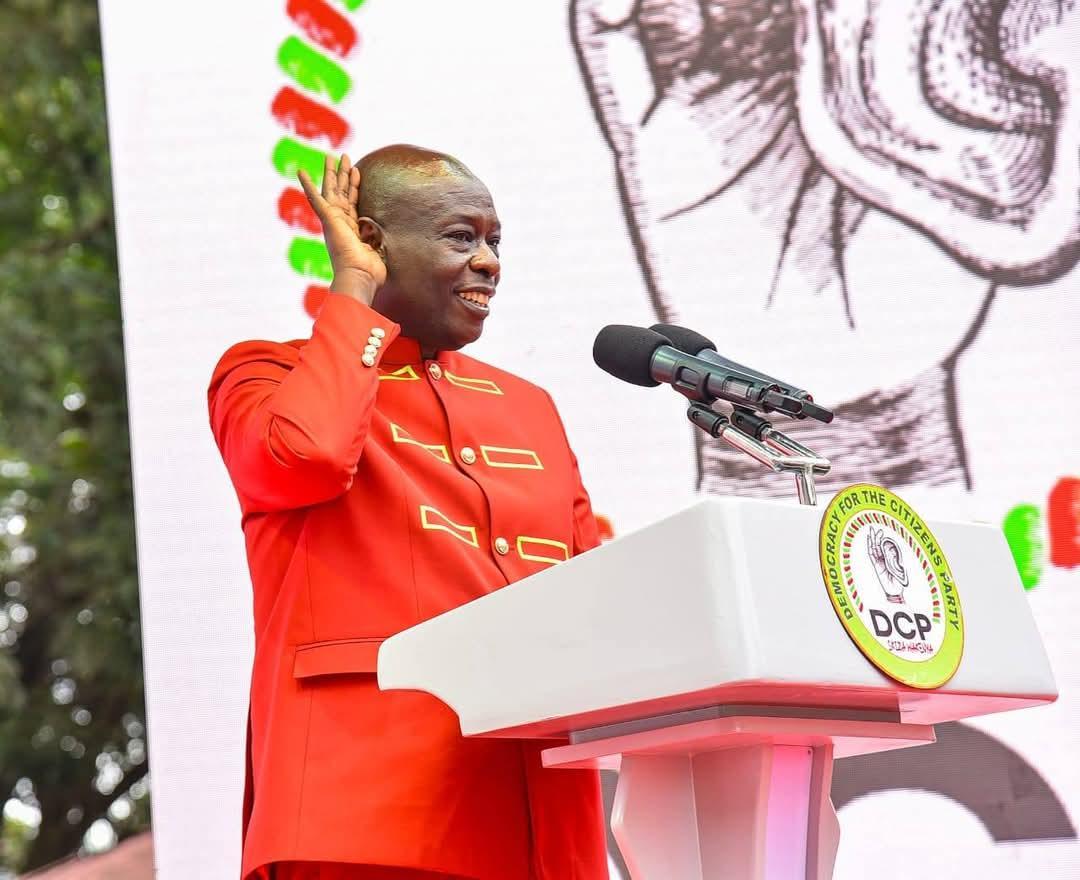
The DCP leader’s ‘Operation Fagia’ is of particular worry to some MPs, who risk being consumed by the wave.
The former DP is tapping on former area MPs and new entrants in a calculated move to dislodge the pro-Ruto MPs, whom he accuses of betraying him and the community.
However, the implications for the region are significant.
Long regarded as a cohesive voting bloc with decisive influence in national elections, Mt Kenya now appears to be entering a phase of fragmentation, one where internal competition, rather than collective bargaining, defines its politics.
As the rivalry between Ruto and Gachagua continues to unfold, the region’s MPs are no longer uniformly aligned.
The Mt Kenya region has historically been a significant political stronghold in Kenya, often influencing national elections due to its cohesive voting bloc. However, recent political dynamics have introduced fragmentation, particularly following the 2022 elections, where internal competition among leaders has intensified. The rivalry between Ruto and Gachagua marks a pivotal shift, as former allies now find themselves on opposing sides, complicating the region’s political landscape and raising questions about its future influence.