
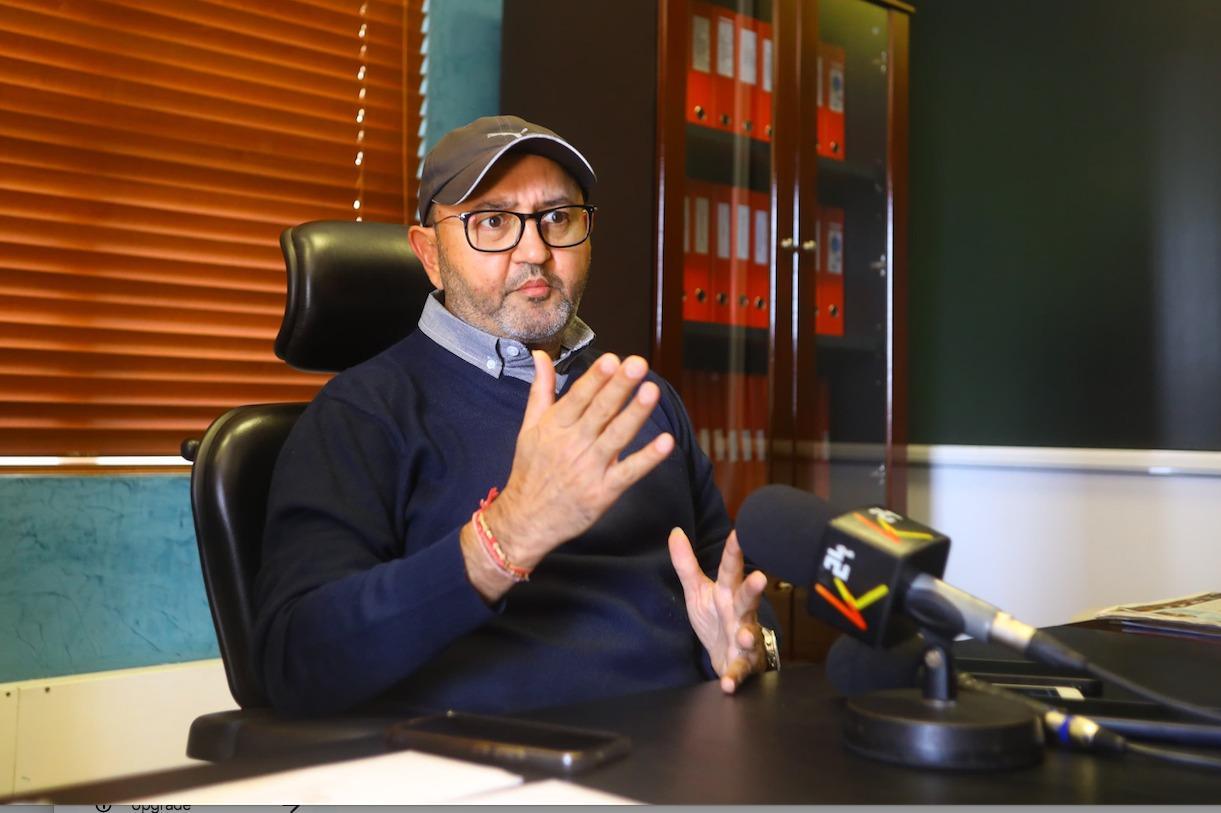
Africa-Press – Kenya. Bhavesh Gohil walks into the office with a promise as bold as it is urgent: fix a fractured game and make cricket matter again.
Fresh from a bruising election that exposed deep fault lines within Cricket Kenya, the new chairman is under no illusions about the scale of the task ahead.
Governance battles, dwindling trust, shrinking finances and a fading international footprint have left the sport gasping for direction.
Gohil’s answer? Start again—almost from scratch. “My vision is to make cricket a unifying national sport in Kenya—accessible, competitive, and financially sustainable,” he says, setting the tone for what he frames as a four-year rebuild.
“I want to see cricket played in every county, with a clear pathway from school cricket to elite performance.”
It is an ambitious pitch, but one rooted in a brutal diagnosis of what has gone wrong. “Cricket Kenya has suffered from fragmented leadership, weak governance, and neglect of grassroots development,” Gohil admits. “The result has been declining performance and loss of trust.”
SCLPS Youth League’s opener, Darsh Panchani/HANDOUTFor years, the federation has lurched from one crisis to another—boardroom wrangles spilling into courtrooms, players caught in the crossfire, sponsors drifting away.
The game that once carried Kenya to global recognition has struggled to find its footing. Gohil believes the reset begins with something simple but often elusive in Kenyan sport: trust.
“Trust begins with transparency,” he says. “We will have open communication—regular forums, published reports, and clear accountability.”
“I bring a track record of organisational turnaround, stakeholder engagement, and transparent leadership. I understand both the administrative and sporting sides of cricket, and I am committed to rebuilding from the ground up, “he added.
But words alone will not repair a system many stakeholders view with suspicion. Gohil is betting on inclusion, bringing players, counties and sponsors into decision-making, as the glue to bind a divided fraternity.
His most immediate battlefield, however, lies at the grassroots. “Grassroots cricket is the heartbeat of the game,” he insists.
“We will partner with schools, county governments and NGOs to provide equipment, training and competitions.”
In a country where talent often goes unnoticed outside traditional cricketing pockets, Gohil is promising a deliberate shift outward—mobile coaching clinics, rural outreach, and structured talent identification.
“No child should be left out,” he says. At the other end of the spectrum sits Kenya’s struggling national team. Here, Gohil’s plan leans heavily on structure and exposure.
“We will hire top-level coaches, increase international fixtures, and establish a high-performance centre,” he says.
“We must also build a strong domestic league to prepare players for global competition.”
It is a dual-track strategy—feed the base while sharpening the tip. Gohil is clear that neither can survive without the other.
“Grassroots ensures a pipeline of talent, while elite development ensures competitiveness,” he says, outlining a 60-40 resource split in favour of grassroots investment.
Yet, perhaps the most delicate challenge lies in the federation’s fragile finances. Cricket Kenya has struggled to attract and retain sponsors, leaving programs underfunded and ambitions stalled. Gohil wants to rebrand the sport itself. “We will position cricket as a symbol of youth, unity and opportunity,” he says.
“Sponsors must see value, through leagues, school programs and digital platforms.”
He is also open to new money—and new ideas. “I welcome private investment and league models, as long as they are transparent and benefit both players and the federation,” he adds, hinting at a possible franchise-style competition that could inject life—and cash—into the game.
Still, the biggest test may not be financial or structural, but political. Cricket Kenya remains deeply divided, with factions hardened by years of mistrust. Gohil knows his victory alone does not heal those wounds.
“My first act will be to reach out to all factions,” he says. “Cricket Kenya cannot afford division; we must move forward as one family.”
It is a conciliatory tone, but one that will require deft handling in a landscape where alliances shift quickly, and grievances run deep. Ultimately, Gohil is inviting scrutiny—and setting clear markers for his tenure.
“Kenyans should judge me by the number of schools and counties playing cricket, improvement in ICC rankings, financial stability, governance reforms, and player satisfaction,” he says. Those benchmarks leave little room for ambiguity—or excuses.