
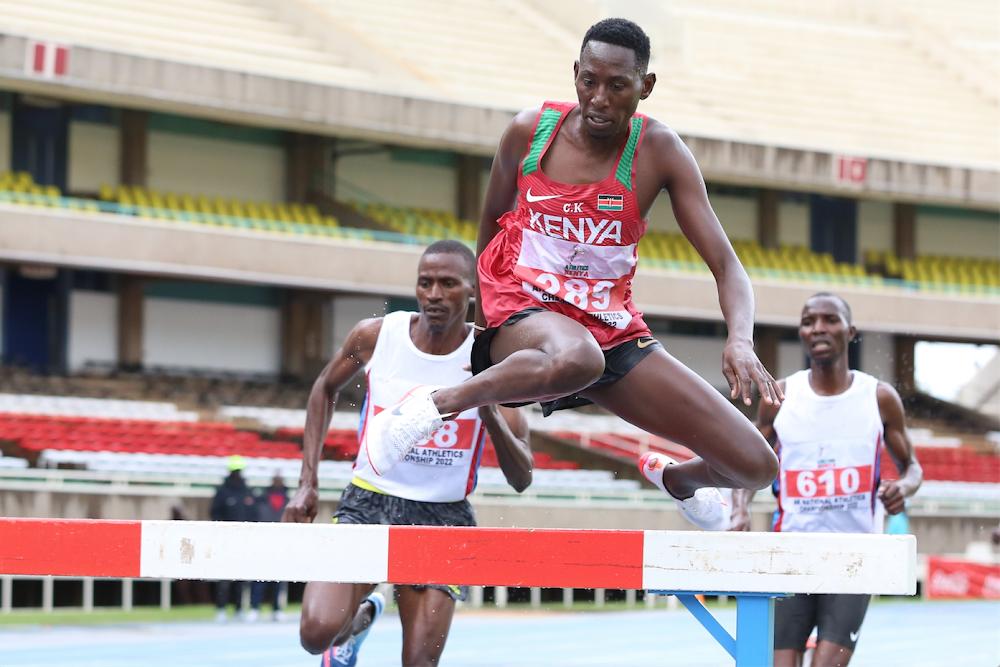
Africa-Press – Kenya. Olympic and two-time world champion Conseslus Kipruto is among world-class elite athletes headed for the Lausanne Diamond League slated for August 26.
The world 3000m SC bronze medalist has not had a smooth season due to a bout of injuries which slowed him down during the world championships and Commonwealth Games.
At the world championships in Oregon, Kipruto placed third in 8:27.92 while at the Commonwealth Games in Birmingham, he finished a distant sixth in 8:34.96. He has a personal best time of 8:00.12.
Kipruto will be accompanied by Kenyan compatriots Commonwealth Games champion Abraham Kibiwot, bronze medallist Amos Serem, Lawrence Kemboi and Wilberforce Kones.
The Kenyan quintet is bound to face tough competition from Moroccan Olympic and world champion Soufiane El Bakkali and Ethiopians Girma Lamecha, Getnet Wale, Amare Hailemariyam and Sime Abrham. Japan’s Muira Ryuji, who has a personal best time of 8:09:92 will also be in the race.
Bakkali is the fastest among the competitors with a personal best time of 7:58:15.
Lamecha is the second fastest with a personal best time of 7:58:68. He is an Olympic and world silver medalist. Wale, Hailemariyam and Abrham have personal best times of 8:05:21, 8:06:29 and 8:12:11 respectively.
Other athletes in the race will be Eritrea’s Yemane Haileselassie, Italian Abdelwahed Ahmed, India’s Avinash Mukund and USA’s Hillary Bor who have personal best times of 8:11:22, 8:10.29, 8:11.20 and 8:08.41 respectively.
Meanwhile, Dina Asher-Smith has called for more research into the effect of periods on performance after her cycle caused her to pull up with cramp at Munich 2022.
Defending champion Asher-Smith initially thought her recovery strategy or hydration may be to blame after she limped out of Tuesday’s 100m final.
But, after qualifying fastest for Friday’s 200m final, Asher-Smith said “girls’ stuff” caused her calf cramp.
“It is a huge topic for women in sport,” the Briton told BBC Sport.
“It is something I think more people need to research from a sports science perspective.
“Sometimes you see girls who have been so consistent have a random dip, and behind the scenes they have been really struggling.
“It could do with more funding because if it was a men’s issue we would have a million different ways to combat things.”
The end of Asher-Smith’s 100m title defence was the latest in a run of bad luck.
Her Tokyo Olympics campaign was badly hampered by a hamstring injury, and she was forced out of this year’s Commonwealth Games with a muscle strain sustained while competing in the relay at July’s World Championships.
However, the world bronze medallist looked in impressive form as she powered to a comfortable 22.53-second victory in her 200m semi-final in Germany.
Switzerland’s Mujinga Kambundji, the only other European to make the final in Oregon, won her heat in 22.76secs. Britain’s Jodie Williams also made the final, qualifying fifth fastest.
“I just want to retain my European title, so the aim was to come out here and qualify and run fast tomorrow,” Asher-Smith added.
For More News And Analysis About Kenya Follow Africa-Press