
Africa-Press – Kenya. You are advised to check on your weight to minimise your chances of developing osteoarthritis.
Osteoarthritis is a type of arthritis that occurs when flexible tissue at the end of the bones known as cartilage wears down.
The wearing down of the cartilage occurs gradually and worsens over time.
The condition mostly affects the base of thumb, the hips, the joints of the fingers and the knee joints.
Health experts have warned obesity is a predisposing factor for developing the condition, adding that those people whose Body Mass Index is above 25 are at risk of suffering from the disease.
Wycliffe Tatayo, a physiotherapist at the Kenyatta National Hospital orthopedics unit, said if the BMI is more than 25 then you are prone to getting the disease because of what he has termed as axial loading.
“You are loading your knee, your hip and they are the common areas affected by osteoarthritis so that wear and tear is most likely to occur,” he said.
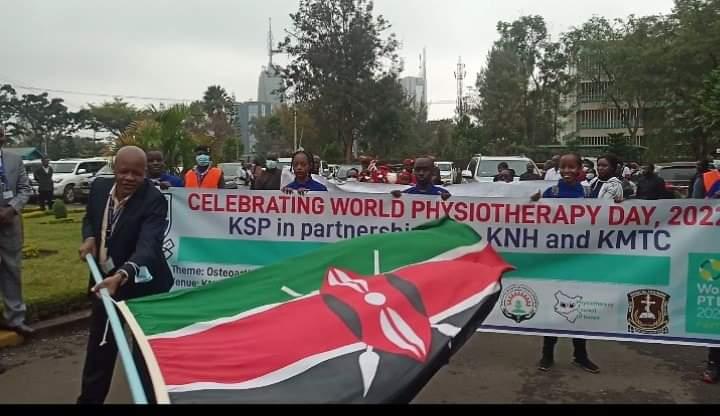
On Thursday, Kenya joined the rest of the world in marking the World Physiotherapy Day at the Kenyatta National Hospital.
The day is observed globally on September 8 of every year to generate awareness about the crucial contribution physiotherapists make to society to enable people to be mobile, well and independent.
Tatayo said that as people age, the wear and tear of the cartilage is expected even though in some instances it happens a bit earlier.
“As we age the articular cartilage wears off because we have been loading it time and again at times in the improper way,” hesaid.
“The female gender is more affected and the only explanation I got to that is especially the ones who are post-menopausal because of hormonal changes. Oestrogen plays a very huge role in protecting the bone so when you get to menopause it becomes a risk factor.”
According to the medic, globally 3.3 to 3.6 per cent of the population is affected by osteoarthritis, while about 43 million people get severe disability globally.
People of the age above 45 are more prone to the condition but experts also link the condition to genetics or family history and anatomical factors where someone was born with a deformity.
Agripina Matasio, a senior physiotherapist and the co-coordinator of the running of the outpatient clinic at the KNH, said majority of people present at the facility have knee problems.
“Here about 70 to 80 per cent come with osteoarthritis not necessarily for the knee, but even for the spine so it is rampant and a burden in our population,” she said.
According to Mayo Clinic, the doctor may use a needle to draw fluid from an affected joint. The fluid is then tested for inflammation to determine whether the pain is caused by gout or an infection rather than osteoarthritis.
Even though the condition cannot be reversed, treatments and physiotherapy can help reduce pain and help the patient move better.
In some instances, the patient might have to undergo a joint replacement surgery where the surgeon removes the damaged joint surfaces and replaces them with plastic and metal parts.
(edited by Amol Awuor)
For More News And Analysis About Kenya Follow Africa-Press