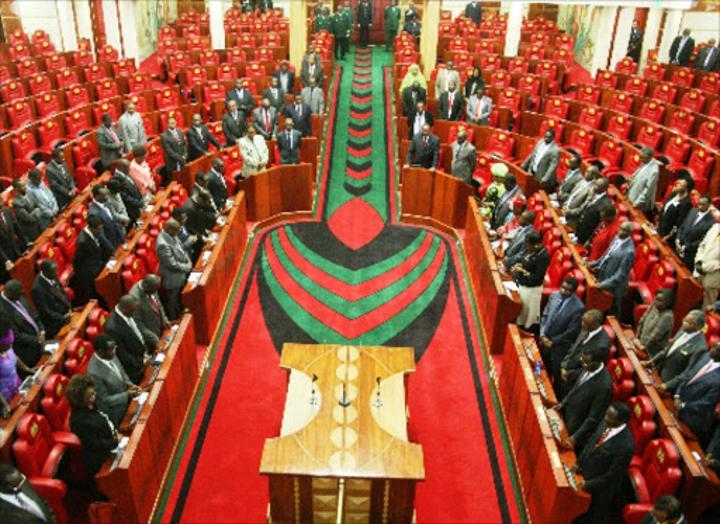
Africa-Press – Kenya. Parliament should take oversight over debt management and reforms seriously, accountants now say, even as the government moves to implement measures to mitigate a debt crisis.
This includes a reduction in the country’s fiscal deficit by increasing tax revenues to tame borrowing, in funding the Sh3.7 trillion budget for the next financial year, starting July 1.
According to the Institute of Certified Public Accountants of Kenya (ICPAK), oversight over debt management and reforms remains weak and crucial debt information is inaccessible.
“Whereas the government has outlined several measures to mitigate debt the crisis, including policy reforms, fiscal consolidation, measures to reduce waste, debt moratorium with external lenders, political accountability remains low,” ICPAK said in a post-Budget statement on Friday.
It has expressed doubts if the reforms go deep enough to arrest private vested interests in the management of debt.
“This is a role that parliament should take seriously,” the statutory body of accountants said.
Kenya’s debt stood at Sh9.4 trillion as of March, Central Bank of Kenya (CBK) data shows.
The country’s debt remains, according to financial experts, but is categorized as facing high risk of debt distress (IMF Country Report No. 22/383).
The Present Value (PV) of external debt-to-export and Public and Publicly Guaranteed (PPG) of debt-service-to-exports indicators remain above the thresholds over the medium-term projection period.
As the economy recovers from global shocks and fiscal consolidation continues, Kenya’s debt indicators are expected to improve, ICPAK noted.
The gross public debt is comprised of 50 percent external debt and 50 percent domestic debt.
The total public debt is projected to reach Sh11.5 trillion by June 2025, on account of expanding fiscal deficit.
During his budget speech on Thursday, National Treasury and Economic Planning CS Njuguna Ndung’u said the government will continue to support economic recovery by pursuing prudent macroeconomic policies, geared towards reducing debt vulnerabilities and supporting sustainable and inclusive development.
“The fiscal policy stance over the medium term aims at supporting the government’s Bottom-Up Economic Transformation Agenda through a growth-friendly fiscal consolidation plan, designed to slow down the annual growth in public debt,” CS Njuguna said.
He said the government would implement an effective liability management strategy, without compromising service delivery to citizens. This, he said will improve the country’s debt sustainability position.
Although the debt burden has risen, Kenya has not accumulated debt service arrears and the government is committed to honour all public debt obligations as they fall due, the CS affirmed.
Over the medium term, the revenue-driven fiscal consolidation policy stance is expected to improve further the country’s debt sustainability ratios and debt-carrying capacity.
The government intends to change the public debt ceiling from a numerical number to a Debt Anchor in form of a ratio of public debt to GDP in present value terms.
Currently, the limit of public debt as approved in 2020 by MPs, is Sh10 trillion.
The proposed change, the CS said, provides an appropriate guide for optimal level of public debt based on the country’s ability to pay.
The country’s external debt service is projected to increase to Sh475.6 billion in the financial year 2023/24 from Sh242.1 billion in the current financial year, mainly reflecting the redemption of the $2 billion (Sh279.9 billion)Eurobond.
In preparation for the redemption of the maturing bond, National Treasury issued an expression of interest, to bring on board a Lead Manager to advise the government on liability management options towards the resolution of the Eurobond 2024.
The government plans to borrow Sh131.5 billion externally (equivalent to 0.8 percent of GDP) and net domestic financing of Sh586.5 billion (equivalent to 3.6 percent of GDP), to bridge the fiscal deficit in the next financial year, starting July 1.
“I wish to assure Kenyans and investors that our fiscal position remains strong and the government remains committed to meet all maturing obligations, as and when they fall due, including the maturing Eurobond,” Ndung’u said.
Meanwhile, ICPAK has noted that public debt repayment is crowding out the amount available for the division of revenue and hurting counties’ allocation.
Public debt repayments continue to take the lion’s share of ordinary revenue, expected to account for 48.6 per cent in 2023-24.
This is especially concerning in the context of current talks to increase the debt ceiling (to 55% of GDP), which would ideally provide the government with more space to borrow, ICPAK said.
It has called on Parliament to seek more clarity on the deficit levels, seeing as the deficit levels influence debt levels and have an implication to adherence to debt ceilings.
“Parliament should also seek clarity on the reasons for the deviation in the borrowing strategy mix recommended by the PDMO in the MTDS of 2023 and that included in the current BPS 2023,” ICPAK said.
This is a concern that has also been raised by the National Assembly’s Budget and Appropriations Committee.
Public debt servicing is projected to increase by 34 per cent in the year 2023 from Sh930.35 billion to Sh1.24 trillion.
For More News And Analysis About Kenya Follow Africa-Press